

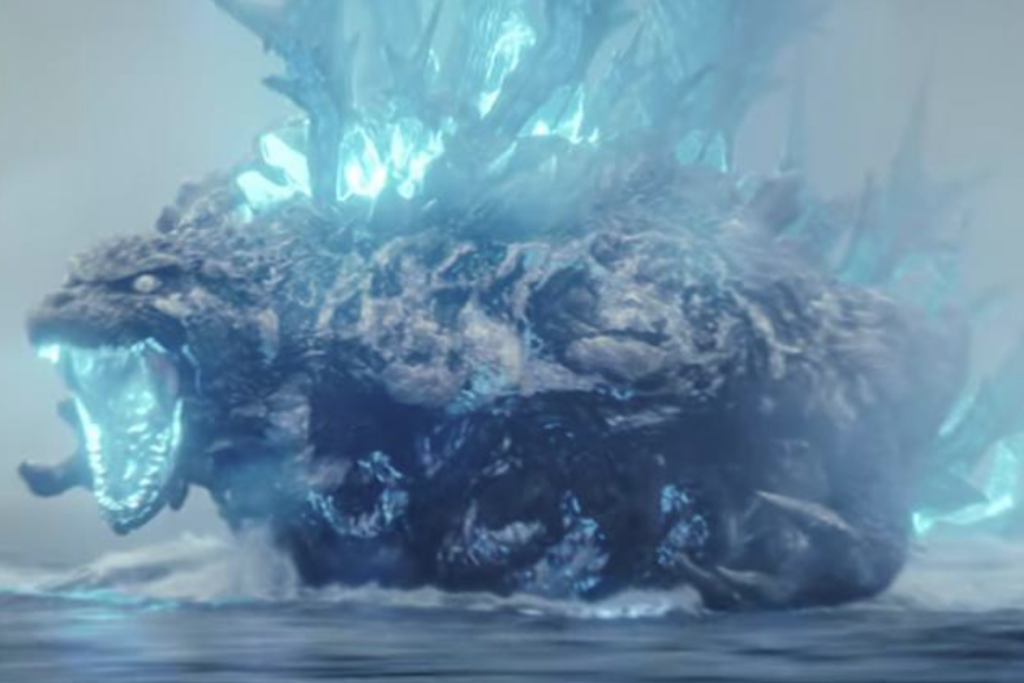
A giant radioactive lizard chasing a fishing boat shouldn’t remind anyone of Arnold Schwarzenegger. Yet the more Takashi Yamazaki talks about Godzilla Minus Zero, the more sense it makes.
The director behind the Oscar-winning Godzilla Minus One has named James Cameron‘s Aliens (1986) and Terminator 2: Judgment Day (1991) as influences on his approach to the sequel.
Wait, what?! As The Playlist reported from his interview with Empire, Yamazaki admires Cameron’s knack for returning to a familiar story from “a slightly different angle.”
That sounds simple enough until someone remembers what Cameron actually did. He turned one alien into an army, made an unstoppable killing machine even harder to kill, and transformed yesterday’s villain into tomorrow’s protector.
Three lessons. Two legendary sequels. One very angry Godzilla.
And with Godzilla Minus Zero heading to North American theaters Nov. 6, Yamazaki has an opportunity to show what he learned.
Before Godzilla Minus Zero, Japan Had a Monster Problem
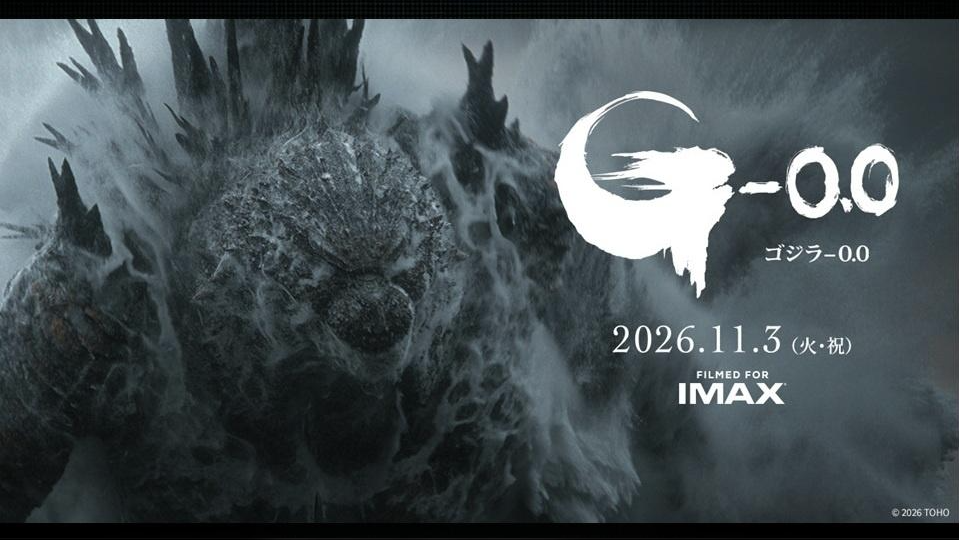
Godzilla was never supposed to be cuddly.
When director Ishirō Honda introduced the great kaiju in 1954, Japan was still living with the consequences of World War II and nuclear devastation. Godzilla embodied the fear of destruction humanity had unleashed but could no longer control.
He didn’t protect cities. He demolished them. Then Toho discovered something extraordinary: People loved Godzilla. He was the first anti-hero among creatures. They cheered for him, lauded the movies that hosted him, and couldn’t get enough of him.
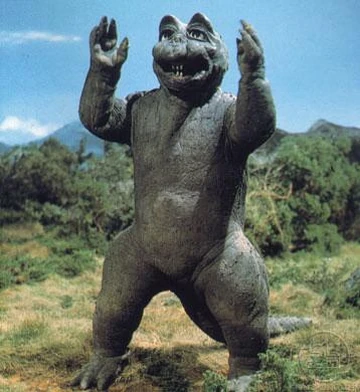
Over the following decades, Godzilla battled other kaiju, occasionally defended humanity, and became an unlikely pop-culture hero. By Godzilla vs. Mechagodzilla II (1993), the franchise had introduced Baby Godzilla.
Apparently, even nuclear annihilation needed a family-friendly spinoff. And why not? Look at that radioactive bundle of joy. It was at this point that Toho became the precursor to “jumping the shark.”
Toho occasionally revisited Godzilla’s terrifying origins, notably in The Return of Godzilla (1984), Godzilla, Mothra and King Ghidorah: Giant Monsters All-Out Attack (2001) and Shin Godzilla (2016).
But Yamazaki remembered something different.
In a 2023 interview with Daily Dead, he recalled being frightened by the original black-and-white film as a child. That memory stayed with him through a career that included a Godzilla sequence in Always: Sunset on Third Street 2 (2007) and the Godzilla the Ride attraction.
When Godzilla Minus One finally arrived in 2023, Yamazaki brought the monster back to postwar Japan. He also gave audiences people worth worrying about.
Former kamikaze pilot Koichi Shikishima (Ryunosuke Kamiki) was struggling with survivor’s guilt while building a fragile family with Noriko (Minami Hamabe) and the orphaned Akiko.
Godzilla threatened everything they’d managed to survive. The film made the monster frightening again. More importantly, he was back to being the sardonic creature from the deep.
Godzilla Minus Zero now faces a familiar Hollywood problem: How do you follow that?
Aliens: Cameron Changed What Audiences Feared Losing
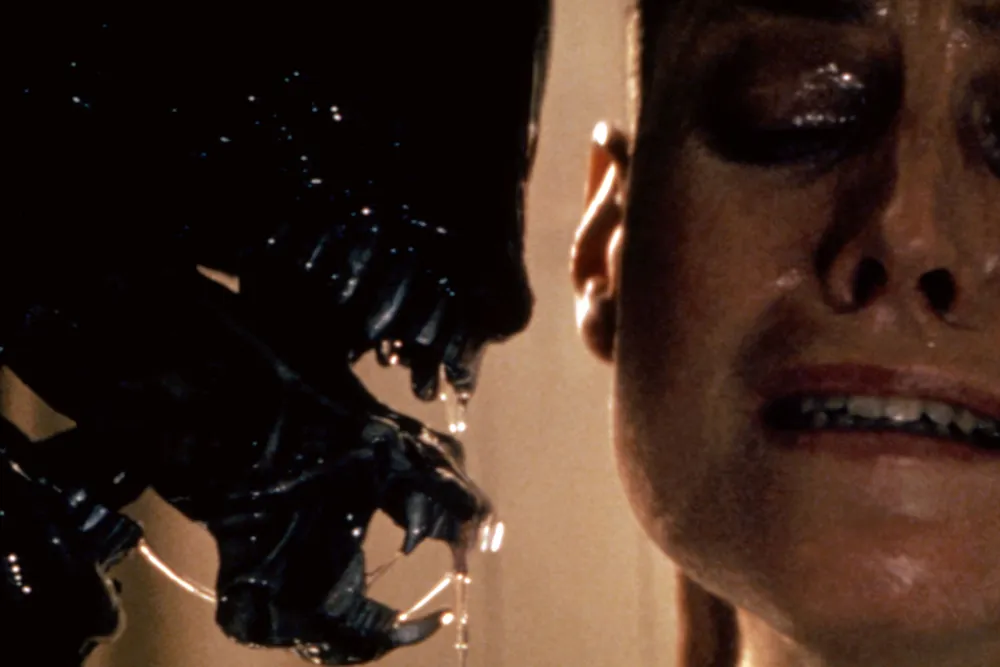
Ridley Scott’s Alien (1979) was essentially a haunted-house movie aboard a spaceship. One Xenomorph stalked seven people through corridors, cargo holds, and ventilation shafts.
Cameron’s Aliens changed the arrangement.
Ellen Ripley (Sigourney Weaver, Ghostbusters) returned with the Colonial Marines, who brought enough firepower to suggest that somebody had finally taken the threat seriously. And the Xenomorphs were unimpressed.
Cameron multiplied the creatures, expanded the action, and introduced Newt (Carrie Henn), a young girl Ripley became determined to protect. Suddenly, the horror had another dimension. Ripley was fighting for somebody else’s future.
And that is the connection Yamazaki was missing. He wasn’t looking for Godzilla to orbit the moon. He made a similar creative choice in Godzilla Minus One. The audience already understood what a gigantic radioactive monster could do to a city. Shikishima’s relationship with Noriko and Akiko made the destruction personal.
That emotional foundation matters even more for Godzilla Minus Zero.
The official North American distributor, GKIDS, places the sequel two years after the events of Minus One. Japan is rebuilding, and the Shikishima family has begun reclaiming something resembling normal life.
Yamazaki has said the family’s recovery is central to his new story. It’s a useful connection to Cameron, although the director hasn’t claimed he modeled Shikishima’s family directly on Ripley and Newt.
Both films understand how much more frightening a monster becomes when audiences care about the people running from it. And in Godzilla Minus Zero, there seem to be a ton of people running.
Terminator 2: The T-1000 and Godzilla Refuse to Stay Dead
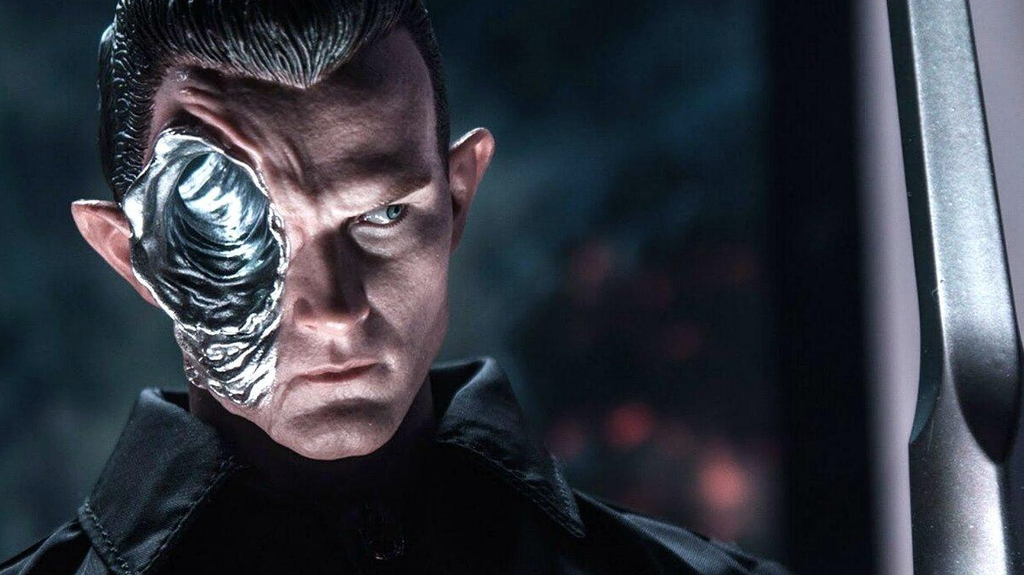
Robert Patrick’s T-1000 was a spectacularly unpleasant upgrade.
In The Terminator (1984), Cameron introduced an unstoppable cyborg assassin pursuing Sarah Connor (Linda Hamilton, Children of the Corn). The “machine “T-800” could absorb enormous punishment, but at least its metal skeleton followed recognizable rules.
Then came Terminator 2.
The “T-1000” could imitate people, reshape its liquid-metal body, and recover from injuries that would destroy almost anything else. Bullets offered temporary relief. Locked doors were barely worth the effort. Even blowing a hole clean through his eye socket just gave Patrick’s Terminator a splitting headache.
It was the cinematic equivalent of discovering that the old nightmare had learned new tricks.
Godzilla’s regenerative abilities present a similar problem. In Godzilla Minus One, the monster withstands extraordinary punishment, rendering conventional weapons almost useless. Even a naval mine detonating inside his mouth isn’t enough to settle the matter.
Yamazaki also borrowed another Hollywood trick.
That extraordinary ocean pursuit, with Godzilla bearing down on a tiny wooden boat, recalls Steven Spielberg‘s Jaws (1975). Yamazaki discussed revisiting Spielberg’s film while developing Minus One.
The comparison works because the people aboard the boat are painfully vulnerable. The monster is enormous, the water offers no escape and everybody knows exactly what’s coming.
The T-1000 and Godzilla don’t behave identically. Yamazaki hasn’t said Patrick’s character inspired Godzilla’s regenerative powers.
But both filmmakers understand the terror of an adversary that seems impossible to stop. The nuclear-blue imagery associated with Godzilla Minus Zero suggests the monster remains a spectacular threat.
Whether he’s found new ways to terrify audiences is another matter.
The T-800: Cameron Made the Monster a Hero
Here’s the more surprising connection.
In the original Terminator, Arnold Schwarzenegger played a T-800 programmed to kill Sarah Connor. He was relentless, emotionless, and considerably less interested in conversation than his future action-hero persona might suggest.
Seven years later, Cameron brought back the same model.
This time, the T-800 was programmed to protect Sarah’s son, John Connor (Edward Furlong, American History X). The old nightmare became the good guy.
Meanwhile, Patrick’s T-1000 took over the job of terrifying everybody. Cameron didn’t merely introduce a stronger villain. He changed the audience’s relationship with a familiar character.
Godzilla has spent decades moving between those same extremes. Fluidly. And it sucked because no one expected Godzilla to show up in the latest Toho conflict. (Although his partnership with Jet Jaguar was awesome and no one cared.)
He began as a destructive force, became humanity’s occasional defender, and sometimes saved Earth from creatures even more dangerous than himself. Yamazaki restored Godzilla’s frightening origins in Minus One.
Could Godzilla Minus Zero change the monster’s relationship with humanity again?
It’s possible, but there’s no confirmed indication that Yamazaki intends to turn Godzilla into a protector. The filmmaker’s stated admiration for Cameron concerns his approach to making sequels, not a specific character transformation.
That distinction is important.
The T-800 offers a lesson in changing expectations. The T-1000 demonstrates how to make a familiar threat feel overwhelming again. Cameron accomplished both in the same film.
And Yamazaki has already shown that he enjoys surprising audiences who think they’ve figured out where his story is headed.
Godzilla Minus Zero Has Something More Important Than a Bigger Monster
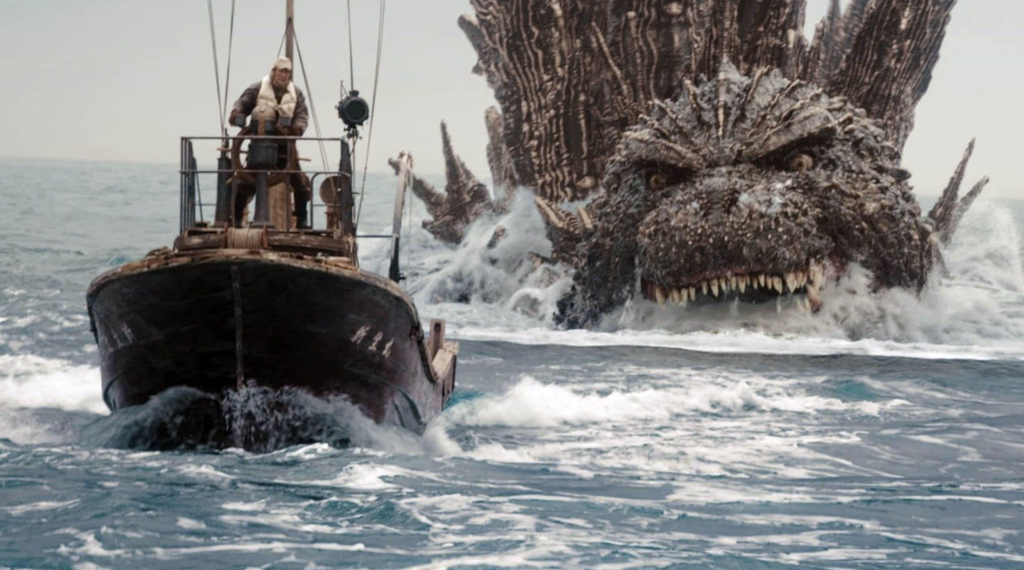
Yamazaki’s first Godzilla feature earned more than $100 million worldwide and became the first film in the franchise to win an Academy Award, taking home the Oscar for visual effects.
Those are difficult achievements to follow.
Making another spectacular monster movie would be relatively straightforward. Making audiences care as deeply about the people beneath Godzilla’s feet is considerably harder.
That’s where Cameron’s influence becomes especially interesting. Aliens gave Ripley someone to protect. Terminator 2 turned an established villain into a guardian while introducing a terrifying new adversary.
Both sequels expanded their predecessors without simply repeating them. Yamazaki appears determined to follow that example with Godzilla Minus Zero.
The Shikishima family has survived war, grief, and the monster’s first devastating assault. Japan has begun rebuilding. Ordinary life, once unimaginable, is becoming possible again.
That’s an awfully fragile thing to put in Godzilla’s path.
And perhaps that’s what Cameron understood better than almost anyone: The monster doesn’t have to become more powerful if the audience has more to lose.
In Godzilla Minus One, a little wooden boat was enough to make Godzilla terrifying. This time, there’s a family waiting onshore.
Add us as a preferred source on Google.