

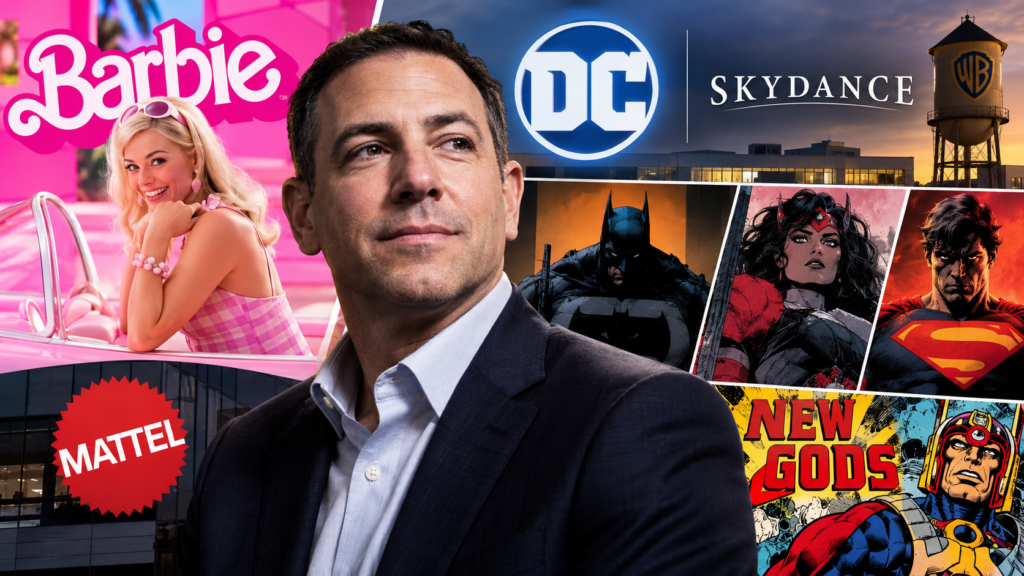
For DC Comics fans, that’s the sort of announcement that makes you look up from your pull list and wonder who moved the furniture in the Batcave.
Is Jim Lee no longer the man at DC Publishing? Wait…what?! Yeah. His name is Josh Silverman.
Say it with us: “Um, who?!”
Fair question. Lee is a comic book legend whose artwork helped define generations of superheroes. Silverman is a corporate executive whose greatest hits don’t come with variant covers and whose business card may not resonate with anyone outside of his mother and a few 1,000 employees.
Yet following the merger of Paramount Skydance and Warner Bros. Discovery, Silverman now oversees DC Comics as part of the new Skydance Products & Publishing division. Lee remains DC’s president, publisher, and chief creative officer, while general manager Anne DePies also continues in leadership.
The organizational change was reported by Variety in early October. For readers who’ve watched DC endure one corporate reshuffling after another, the natural response is suspicion, worry and a few dozen hemorrhoids flaring up.
- Another boss?
- Another division?
- Another name?
- Another merger?
- Another promise that everything will be wonderful once the accountants finish rearranging the Justice League?
But Silverman’s résumé offers a few reasons to be curious. More importantly, he’s arriving while DC’s publishing operation has something it hasn’t always enjoyed: momentum.
Meet Josh Silverman: The Man Who Helped Sell Barbie to Everybody

Before you hurl your bucket of expired fruit at your monitors, get this: Silverman spent nearly a decade at Marvel Entertainment. Yeah, really! He started in business and legal affairs before moving into global licensing, strategy, and business development. Following Disney’s acquisition of Marvel, he worked across the company’s divisions on brand management and commercial partnerships.
He later moved into senior licensing roles at Disney, where he helped oversee a consumer-products operation whose reported global retail sales grew from $37.5 billion to $54 billion over a decade.
Those are impressive numbers, although they’re company-wide results, not sales Silverman generated single-handedly. His more revealing accomplishment came at Mattel.
As chief franchise officer, Silverman helped turn the excitement surrounding Greta Gerwig’s 2023 Barbie movie into an enormous consumer-products campaign. According to Paramount’s announcement of his hiring, he spearheaded more than 165 partnerships and retail tie-ins connected to the film.
He also helped expand initiatives including the World of Barbie traveling experience and Hot Wheels Monster Trucks Live. All of this hoopla tells us considerably more than a string of executive titles. In short, dude’s got skills.
Silverman understands how to make a fictional property visible beyond its original medium. He knows how to connect licensing, retail, experiences, and publishing so that enthusiasm for a character can reach people who weren’t necessarily looking for that character in the first place.
It’s an intriguing skill set for a company that owns the trinity of comics (e.g., Batman, Superman, Wonder Woman), and enough lesser-known heroes to keep a convention trivia contest going until retirement.
But there’s an important distinction. Barbie’s success doesn’t prove Silverman can make readers buy more comics. Selling merchandise to people who already love a character and persuading somebody to follow a monthly story are different challenges.
Fortunately, the man who’ll be working with him knows a little about that second one.
Jim Lee Has Been Selling Comics Since Before Some Fans Could Read

It’s difficult to explain Jim Lee’s importance to someone who wasn’t standing in a comic shop during the early 1990s. His artwork was an event.
Lee’s X-Men #1, published by Marvel in 1991, became a sales phenomenon. DC’s official biography credits his work on the title with a record of approximately eight million copies sold in a month.
His characters practically leaped off the page, all explosive movement, intricate costumes, impossible anatomy, and enough detail to keep aspiring artists busy for years.
In 1992, he co-founded Image Comics and established WildStorm, helping demonstrate that superstar creators could build their own publishing businesses. DC eventually acquired WildStorm in 1998.
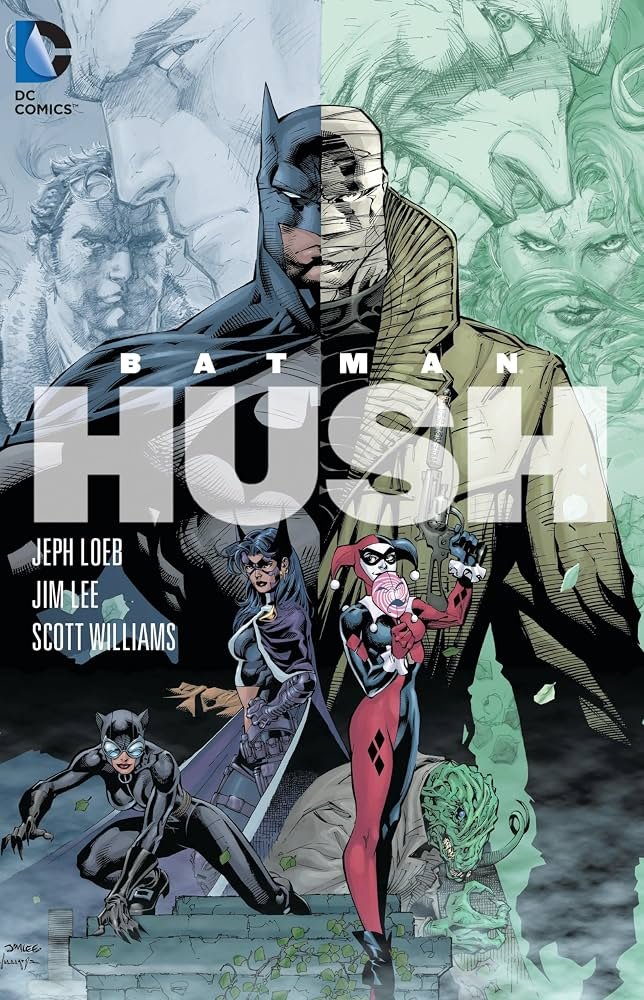
Then came Batman: Hush.
Working with writer Jeph Loeb and collaborators including inker Scott Williams, Lee helped turn the 2002–2003 Batman storyline into a modern classic.
The artwork became so recognizable that DC itself has noted how frequently it appeared on licensed merchandise.
(And yes, this intrepid reporter believes Hush was alluded to during the credits scene of The Batman.)
There’s a wonderful irony here: long before Silverman arrived to oversee DC’s commercial opportunities, Lee was creating images that helped sell DC products far beyond comic shops.
Lee later helped shape the visual identity of DC’s 2011 New 52 relaunch, became DC’s president in 2023, and returned to the drawing board for Batman: H2SH in 2025.
He isn’t merely an executive who once drew comics. He’s still connected to the creative work that made him famous. Jim Lee will be buried at his DC desk, and fittingly, that should be in the Batcave of whatever building they call home.
And under DC’s current publishing leadership, the company has found another hit.
The Absolute Universe Is Proof Readers Still Want Comic Books
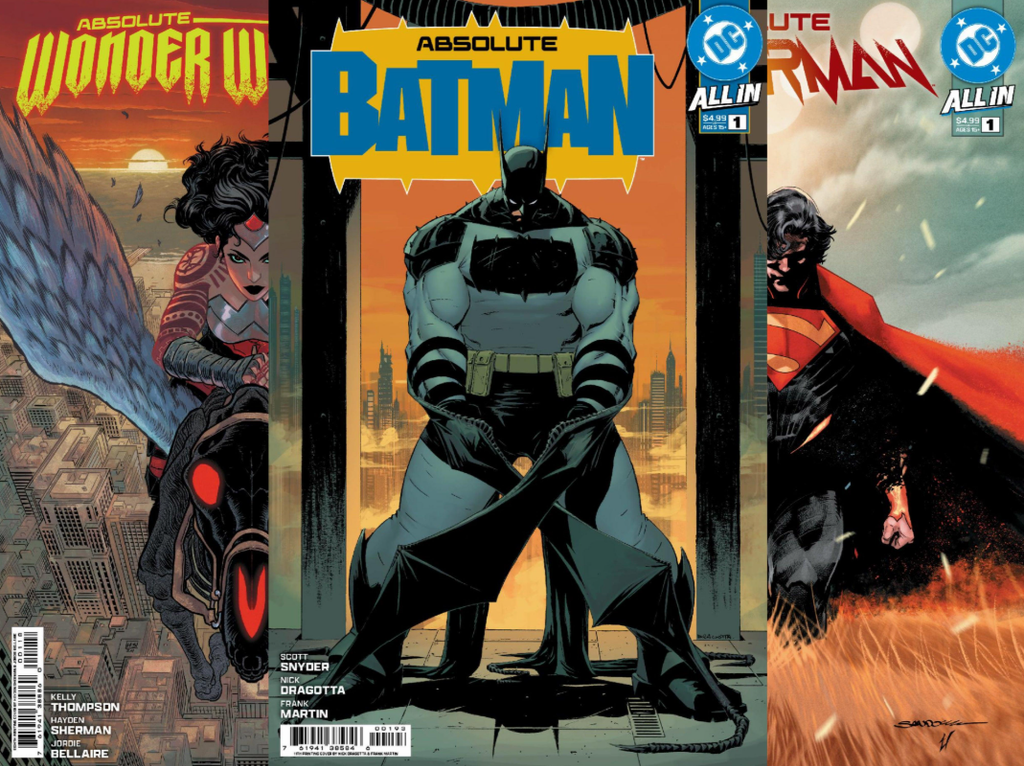
The biggest reason for optimism isn’t Silverman’s appointment. It’s what DC has already accomplished.
The Absolute Universe, launched in 2024, reimagines DC’s best-known heroes without many of the familiar advantages that defined them (despite that massive ink blot Batman logo on Bruce’s chest).
In Absolute Batman, Scott Snyder and Nick Dragotta give readers a Bruce Wayne without the family fortune, mansion, or butler. Kelly Thompson and Hayden Sherman rework Wonder Woman’s origins in Absolute Wonder Woman. And Jason Aaron and Rafa Sandoval offer a dramatically different Superman that is almost mesmerizing.
The results have been hard to ignore.
Acoording to ICv2, demand was strong enough that DC sent multiple Absolute series back to press in early 2026, even as collected editions were selling briskly. At San Diego Comic-Con, Lee described 2025 as “DC’s best sales year ever.”
That’s a useful reminder whenever somebody declares that readers have abandoned comic books. They haven’t abandoned the possibility of discovering a terrific story. What they may have abandoned is the assumption that every new issue deserves their money.
The Absolute line gives Silverman something valuable: Evidence that a bold publishing idea can create excitement without waiting for a movie studio to approve it.
DC has continued expanding the line, announcing Absolute Green Arrow and Absolute Catwoman in 2026. The opportunity now is to help those books reach beyond the people who already know what an Absolute Universe is.
Imagine more accessible collected editions, bookstore campaigns, creator interviews, digital sampling, and coordinated promotion that introduces curious moviegoers to the comics themselves.
Silverman’s background suggests he knows how to build those connections. Whether he’ll invest in them is the question.
Silverman’s Memo Gives DC Fans Something to Examine
The strongest evidence of how Silverman intends to approach his new responsibilities comes from a memo he sent to employees following the merger.
Variety published the memo, with Silverman describing a combined organization bringing together consumer products, publishing, and DC. He acknowledged that the merger represented substantial change and told employees their everyday processes would not change immediately.
Then came the phrase worth examining:
“deepen and extend our fans’ emotional connection”
That’s how Silverman described part of the new division’s mission. It’s a good ambition. It’s also broad enough to cover everything from a new graphic novel to a Batman-shaped waffle maker.
And there’s the challenge.
Comic book readers form emotional connections with characters because writers and artists give those characters something meaningful to experience. Merchandise can celebrate that attachment, but it rarely creates it on its own.
Silverman also specifically welcomed Lee, DePies, and the DC team, recognizing their long history of engaging audiences. That acknowledgment suggests he understands DC isn’t simply another licensing catalog.
Still, his memo is a statement of intent, not a publishing plan.
It doesn’t promise additional investment in comics, expanded editorial teams, better creator compensation, or new opportunities for smaller titles. That matters because the wider merger carries real uncertainty. Variety reported that Skydance’s senior leadership acknowledged workforce reductions would accompany the integration.
A reassuring memo can’t answer every concern about what happens when two enormous entertainment companies combine.
For DC fans, the encouraging part is that Silverman explicitly recognizes the publisher’s leadership and audience relationships. The unanswered question is how much freedom and support he’ll give them.
Could Silverman Help DC Find Its Next Big Franchise?
This is where Silverman’s experience becomes especially intriguing.
DC Studios co-CEOs James Gunn and Peter Safran are building a connected film and television universe. The temptation is to judge every comic book property by whether it might eventually earn a place on that slate.
But what if the comics themselves became the starting point for a more ambitious audience-building strategy?
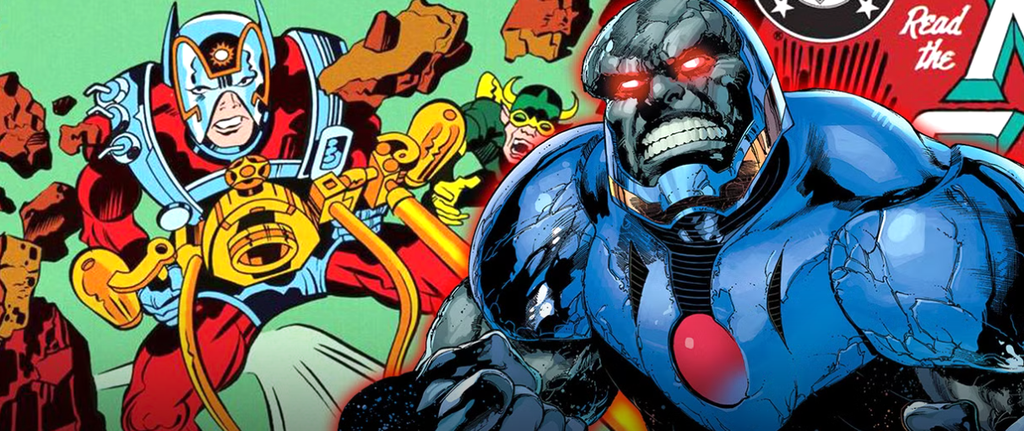
Consider Justice League Dark, which brings together DC’s supernatural characters, including Zatanna, Swamp Thing, and John Constantine. We almost had it with Guillermo del Toro at the helm, but naturally, DC loves to hijack the dreams of its fans.
Its world of occult mysteries, strange creatures, and morally complex heroes offers a different experience from that of the traditional Justice League. With the right publishing support, it could become a destination for readers who enjoy horror and dark fantasy but rarely buy superhero comics.
Or look at the Absolute books. Their alternate takes on famous characters offer an unusually accessible invitation to readers who don’t want to do decades of continuity homework.
Silverman has demonstrated that he can help recognizable properties reach new audiences. The most exciting application of that experience wouldn’t necessarily be turning every comic into a movie pitch. It would be making more people want to read the comics.
Of course, none of this is an announced strategy. There’s no confirmed plan connecting Silverman’s appointment to a Justice League Dark adaptation or to the Absolute line appearing in Gunn’s DC Universe.
Those possibilities are worth exploring precisely because DC already owns the stories, characters, and creative relationships needed to pursue them.
The publishing business should be more than Hollywood’s idea warehouse.
Can DC Finally Enjoy Some Good News Without Waiting for the Catch?
DC fans have developed an understandable reflex.
Something promising gets announced, everyone starts celebrating, and then the details arrive like somebody opening the grill to discover that the glorious smell of dinner came from a fish nobody should have cooked. (Supergirl was from a rancid, 1990s microwave in the breakroom.)
They’ve seen ambitious relaunches, abandoned screen projects, leadership changes, and plenty of corporate language about exciting new chapters.
So here’s what makes Silverman’s arrival different.
- He has actual accomplishments in franchise development.
- His Marvel experience means comic book properties aren’t unfamiliar territory for him.
- His work at Mattel demonstrates that he understands how to build commercial momentum around characters people love.
- And Jim Lee isn’t waiting for somebody to teach him how to publish a successful comic. DC’s recent results suggest his team has already found ways to bring readers back.
There are risks, especially if Skydance begins treating every publishing decision as an opportunity to sell more licensed products. But there’s also a credible opportunity to connect DC’s creative momentum with stronger marketing, distribution, and audience development.
That’s the partnership worth watching.
Jim Lee has spent decades giving DC characters an unmistakable visual heartbeat. Josh Silverman now has the chance to help that heartbeat reach people who’ve never opened one of those books. Whether that happens will depend less on his memo than on the publishing decisions that follow.
For now, DC fans have something better than another promise of a fresh start.
They have a publisher that’s already moving in the right direction and a new executive who might know how to help it go further.
You May Also Like:
Add us as a preferred source on Google.