

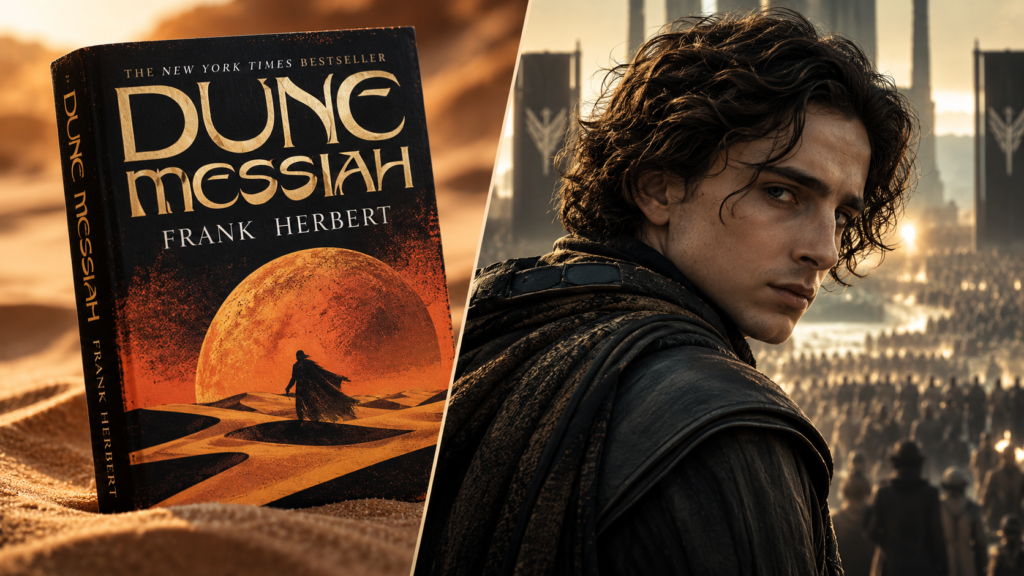
Frank Herbert’s sequel turns a conquering hero into a cautionary tale. As Dune: Part Three approaches, the real question isn’t whether Paul Atreides can save his empire. It’s whether there’s anything left of the man who built it.
Book spoiler advisory: This article discusses major events from Frank Herbert‘s Dune Messiah and later novels. Those events are not necessarily confirmed plot points for Dune: Part Three.
If you know the universe, or are only a fan of the movies, you know that Paul Atreides had a rough childhood. His grandfather was a monster, his mother belonged to a secretive order of space witches, and his father was murdered in a political conspiracy. Somehow, that was the easy part.
In Frank Herbert’s Dune Messiah, Adulthood Proves Considerably Worse.
Paul now rules the known universe. His followers have also killed 61 billion people in his name, which isn’t exactly the legacy Dad had in mind.
Despite the countless battles we read in the book or see on the screen, there is the ultimate battle for which we should all prepare. It’s what will be happening inside Emperor Paul Atreides (Timothée Chalamet).
The official trailer finds him nearly two decades into his reign, surrounded by enemies and struggling to foresee what’s coming. Herbert’s original six Dune novels explain why his greatest threat may be the identity he created to survive.
What Happens in Dune Messiah?
Published in 1969, Dune Messiah begins roughly 12 years after Paul’s victory over House Harkonnen and Emperor Shaddam IV. His Fremen armies have carried out a devastating jihad across the Imperium, transforming their religious devotion into an instrument of conquest.
Paul acknowledges the death toll while speaking with Stilgar (Javier Bardem in the films), whose loyalty has become something closer to worship. Meanwhile, the Bene Gesserit, Spacing Guild, and Bene Tleilax are conspiring against him.
His political marriage to Princess Irulan (Florence Pugh) complicates his relationship with Chani (Zendaya), while his ability to perceive possible futures has become an extraordinary burden.
Villeneuve moves the story approximately 17 years beyond Paul’s ascension and appears to expand the conflict into a more openly violent struggle for imperial control.
The essential question remains: What happens when someone who can foresee disaster becomes convinced he cannot prevent it?
How Does Paul Atreides Become the Villain of His Own Story?
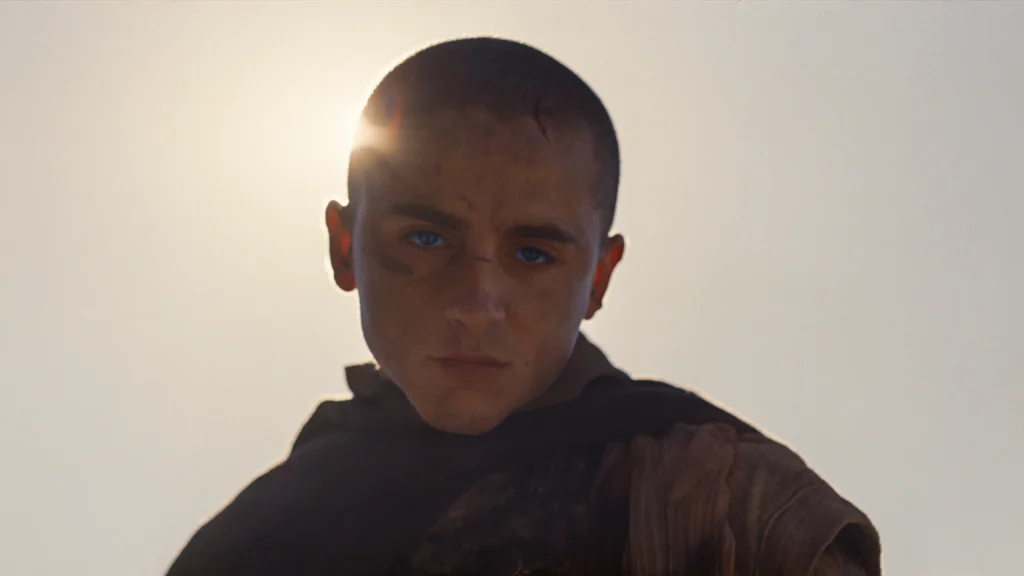
The young Paul from Dune wasn’t looking for a religious movement. Duke Leto (Oscar Isaac) taught him about leadership and responsibility, while Lady Jessica (Rebecca Ferguson) prepared him for abilities inherited through the Bene Gesserit bloodline.
Then came Arrakis, the Fremen, and the Water of Life.
Paul’s expanded prescience allowed him to perceive possible futures with extraordinary clarity. He embraced the messianic identity reinforced by the Bene Gesserit’s Missionaria Protectiva, defeated his enemies, and claimed the imperial throne. We see that in spades throughout the Dune trilogy and, ultimately, in Dune Messiah.
Audiences celebrated his victory. Herbert gave them the bill.
Lord Acton’s warning that absolute power corrupts absolutely applies, but Herbert complicates it. Paul recognizes the dangers of religious fanaticism. He sees terrible outcomes approaching, yet increasingly convinces himself that his decisions are necessary to prevent something worse.
His awareness doesn’t absolve him. It makes his responsibility harder to ignore.
Why Is Paul Atreides a Prisoner of Muad’Dib?
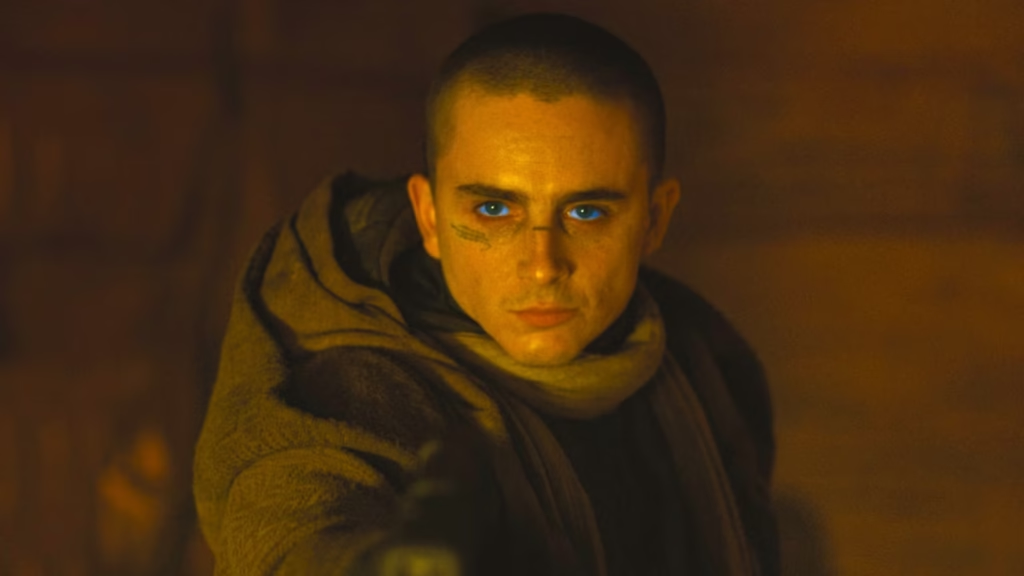
Paul still loves Chani. He remembers his father. He experiences guilt and grief. Somewhere beneath the imperial robes, the young man Duke Leto raised is still alive.
Unfortunately, that man has less influence over the emperor’s decisions. All of those excruciating details will be seen in the movie, but in Dune Messiah, those complex emotions are experienced. It’s almost necessary to read Dune Messiah before or after seeing the film. (It’s well worth it.)
Paul must govern the Imperium, contend with the Landsraad’s Great Houses, and maintain control over followers who consider him divine. Every compromise reinforces his public identity, while every act of violence becomes another consequence of a destiny he believes he cannot escape.
His survival increasingly depends on remaining Muad’Dib.
Paul didn’t lose himself because he became emperor. He lost himself because he became Muad’Dib.
The identity that helped Paul survive eventually becomes the identity he cannot escape. He adopted a role to protect himself and those he loved, only to discover that it had consumed nearly everything else.
The prison hasn’t erased Paul Atreides. It’s made Paul Atreides a prisoner of Muad’Dib.
Why Alia Atreides Matters to Paul’s Transformation?
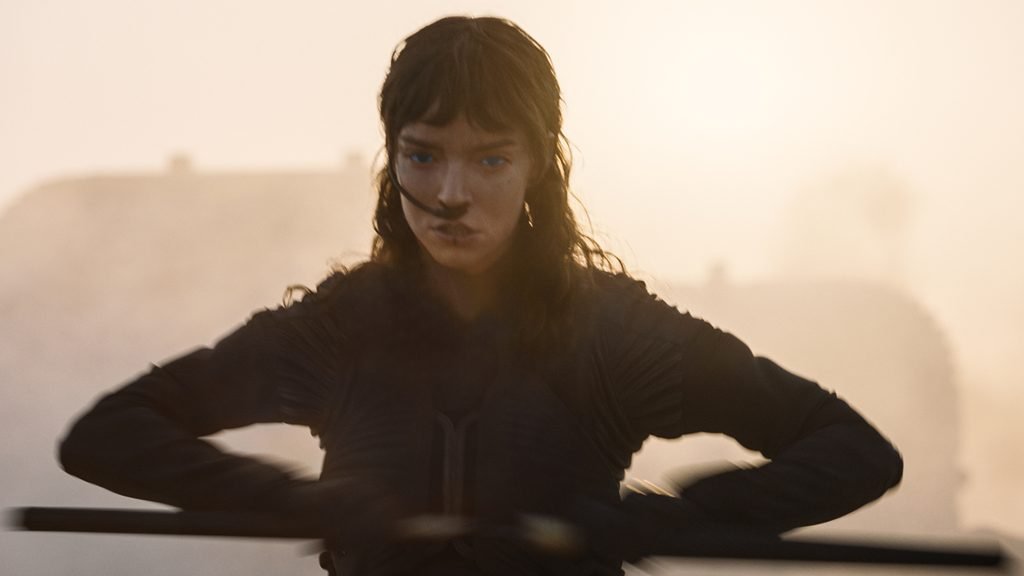
His sister, Alia Atreides (Anya Taylor-Joy), makes that imprisonment more painful.
Exposed to ancestral consciousness before birth, Alia possesses extraordinary knowledge and an intimate connection with Paul. She understands things about her brother that almost nobody else can.
In Herbert’s novel, Alia serves within Paul’s religious government. She’s devoted to him, even as their extraordinary abilities threaten their personal identities.
That creates an intriguing possibility for Villeneuve: Alia may be searching for the brother she remembers while helping preserve the emperor he’s become.
She doesn’t have to hate Muad’Dib to recognize what he’s done to Paul.
Her devotion could make that recognition more painful. She possesses memories and knowledge beyond her years, yet the person who once understood her better than anyone is disappearing behind a religious identity.
Herbert doesn’t explicitly frame Alia as Paul’s moral accuser. Still, their relationship could expose the distance between the brother she loves and the ruler the universe worships.
Why Is Chani Different in Dune 3?
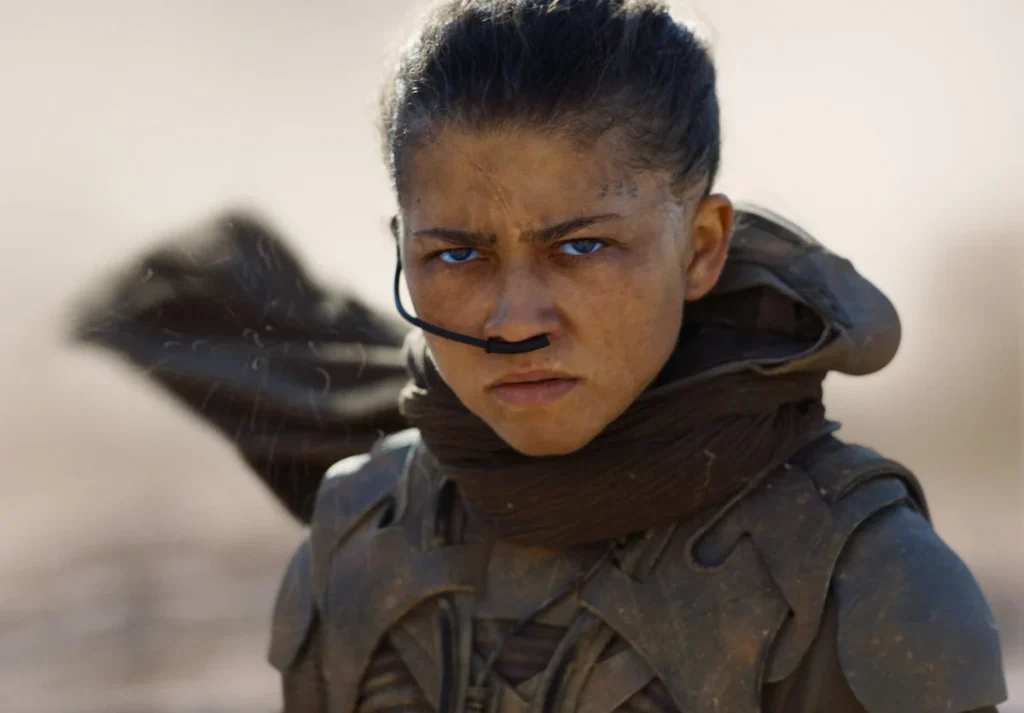
Of all Villeneuve’s departures from Herbert, Chani may be the most consequential.
In the novels, Chani remains Paul’s devoted partner after his political marriage to Irulan. Villeneuve’s Dune: Part Two ends differently: Chani watches Paul embrace the messianic identity she warned him against, then leaves after he claims the throne.
The Part Three trailers indicate they’ve reunited, but their relationship remains strained. Chani confronts him about a promise not to seize power in his own name.
In Herbert’s novel, Irulan secretly administers contraceptives to Chani as part of a conspiracy involving imperial succession. Chani eventually becomes pregnant, with devastating consequences.
Villeneuve has given Chani greater independence from Paul’s religious authority. Her resistance could make the film’s central conflict more personal. She remembers the young man who loved her before he became an object of worship, and unlike his followers, she has no reason to celebrate the transformation.
The March teaser offers another reminder of what Paul has lost. When he asks Jessica how his father managed leadership, she answers that Duke Leto never started a war.
Paul has spent years defending his choices as necessary. His mother responds with a comparison he cannot easily dismiss.
Why Is Robert Pattinson’s Scytale So Important?
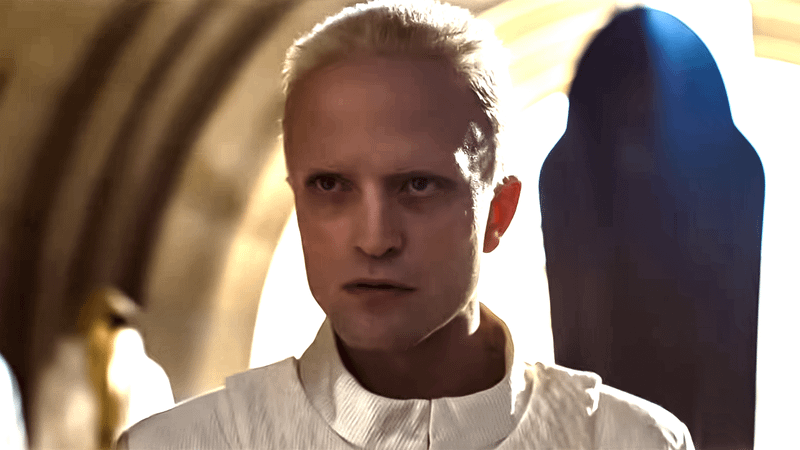
Robert Pattinson‘s Scytale may be one of Villeneuve’s most consequential expansions of Herbert’s story.
In Dune Messiah, Scytale is a Face Dancer, a shapeshifting agent of the Bene Tleilax involved in a conspiracy against Paul. His psychological manipulation makes him dangerous, but he operates within a larger political plot.
The July trailer gives him a more prominent, openly confrontational presence. He speaks of striking at imperial power and engineering regime change.
That could make Scytale more than a conspirator. He may become the character who forces Paul to confront the political consequences of his reign.
One of the most brilliant concepts from Dune Messiah is this—Scytale also brings a particularly cruel weapon: Duncan Idaho (Jason Momoa).
Duncan died protecting Paul and Jessica in the first film. In Herbert’s sequel, the Tleilaxu recreate him as a ghola named Hayt, using biological material from his remains. His return is designed to exploit Paul’s emotional attachments.
The original Duncan served Duke Leto and knew Paul before Muad’Dib existed. Now a manipulated version of that friend stands before an emperor who has also lost much of his former identity.
Duncan struggles to recover the person buried beneath his conditioning, while Paul struggles with the religious persona consuming his humanity.
If Villeneuve emphasizes that connection, Scytale’s greatest weapon may not be his ability to change faces. It may be his ability to make Paul remember his own.
What Happens to Paul’s Children in Dune Messiah?
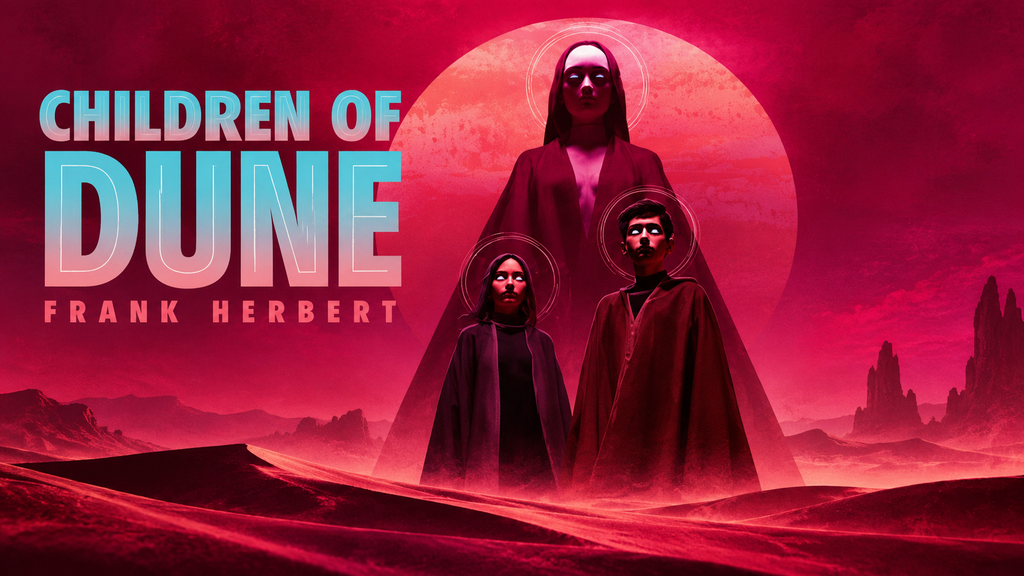
In Herbert’s novel Dune Messiah, Chani gives birth to twins, Leto II and Ghanima, before dying from complications surrounding childbirth. Paul subsequently loses his physical sight and eventually walks into the desert according to Fremen custom.
The children survive, and Alia assumes the regency.
The film includes Nakoa-Wolf Momoa as Leto II and Ida Brooke as Ghanima, suggesting Villeneuve intends to preserve their importance while potentially changing the original chronology.
Whether Chani’s fate and Paul’s departure unfold exactly as Herbert wrote them remains unknown. Their inclusion matters because Paul’s decisions don’t end with his reign. His children inherit the consequences.
Does God Emperor of Dune Explain Paul’s Greatest Failure?
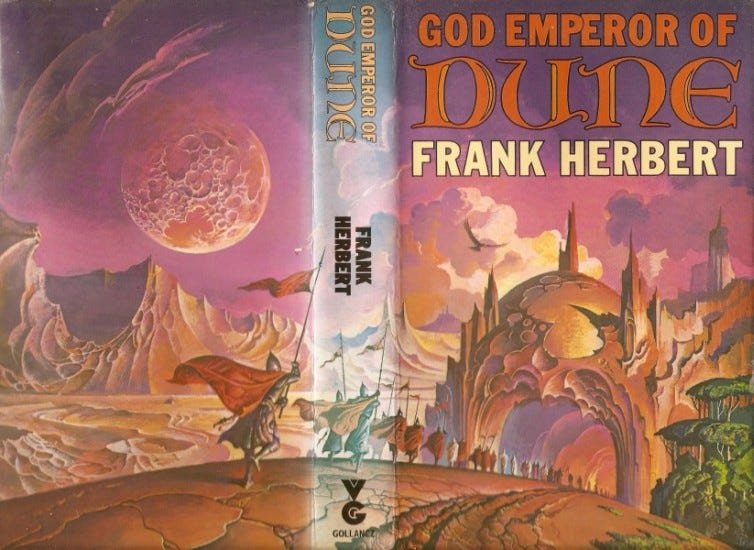
Herbert’s fourth novel, God Emperor of Dune, takes place thousands of years after Paul’s reign. Its events aren’t the direct source for Villeneuve’s film, but its philosophy illuminates the entire series.
Paul’s son, Leto II, follows the Golden Path, a long-term plan intended to ensure humanity’s survival. His choices involve authoritarian control and sacrifices so extreme that calling them uncomfortable would be generous.
Paul confronted aspects of that future but couldn’t bring himself to follow the same path. His son makes a different choice, although Herbert hardly makes him a conventional hero.
Both characters raise a disturbing question: Can someone justify terrible actions simply because he believes he knows what’s best for humanity?
The danger isn’t always that a ruler lies about his intentions. Sometimes he sincerely believes his own justification.
Would Duke Leto Recognize His Son?
Duke Leto wasn’t perfect. He understood political manipulation and governed a Great House within a ruthless system. But he earned loyalty through personal relationships and understood that leadership meant responsibility to others.
The most often missed point by casual Dune fans is that Paul never claimed to be humanity’s savior.
Paul inherited his father’s name, avenged his murder, and became the most powerful ruler in the universe. Yet the more authority he acquired, the further he moved from the man Leto tried to raise.
At the end of Dune Messiah, Paul abandons the throne and walks into the desert. It’s tempting to call that redemption, but he leaves behind an empire, a religion, and consequences his children must endure.
Walking away doesn’t resurrect 61 billion people. Nor does it erase Muad’Dib.
Peter Jackson’s The Lord of the Rings trilogy demonstrated how enormous literary worlds could retain their emotional power on screen. Villeneuve has a similar opportunity, although Herbert’s vision is considerably less reassuring.
Tolkien’s heroes struggle against the temptation of overwhelming power. Herbert asks what happens when the hero accepts it.
Duke Leto taught his son how to lead people. The prophecy taught him how to rule them.
Somewhere between the two, Paul Atreides disappeared.
You May Also Like:
Add us as a preferred source on Google.