

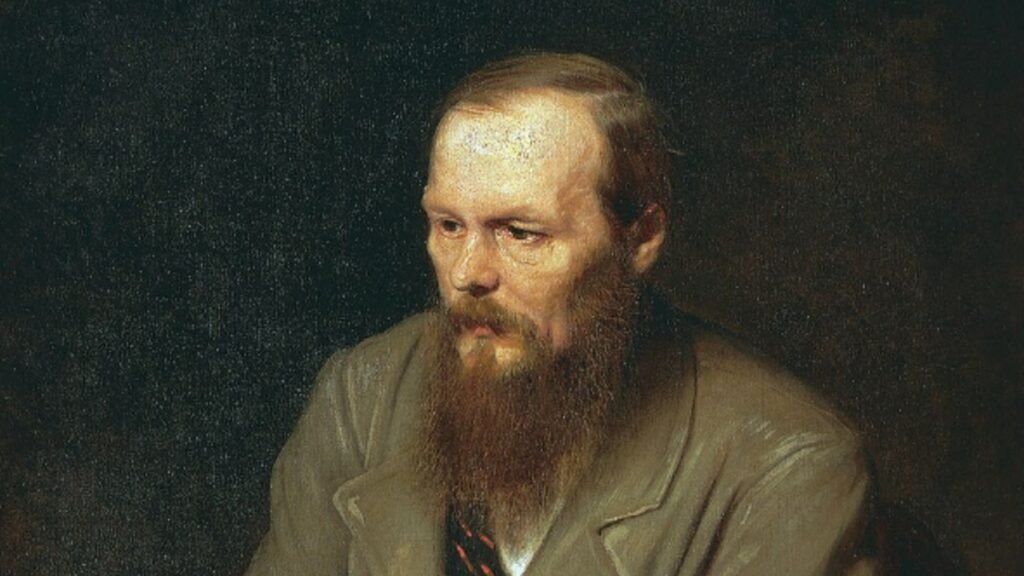
Can a person justify murder if it serves a higher goal? In Crime and Punishment, Fyodor Dostoevsky builds an entire novel around that question, and Rodion Raskolnikov pays for it page by page.
The novel first ran in the literary journal The Russian Messenger in twelve monthly installments during 1866, then came out as a single volume. It is the first great novel of Dostoevsky’s mature period and is often cited as one of the greatest works of world literature.
Crime and Punishment Summary: Who Is Raskolnikov?
Raskolnikov is an impoverished former law student in Saint Petersburg who plans to kill an unscrupulous pawnbroker, an old woman who stores money and valuables in her flat. He theorizes that the money could free him from poverty and let him perform great deeds. He also tries to convince himself that certain crimes are justified when they clear obstacles for extraordinary men.
Once the deed is done, confusion, paranoia and disgust take over, and his theory loses all its power. Dostoevsky fuses Raskolnikov’s personality with the novel’s anti-radical themes, so the murder grows out of a dangerous idea and its moral and psychological fallout. Every other feature of the book sharpens the dilemma he is caught in.
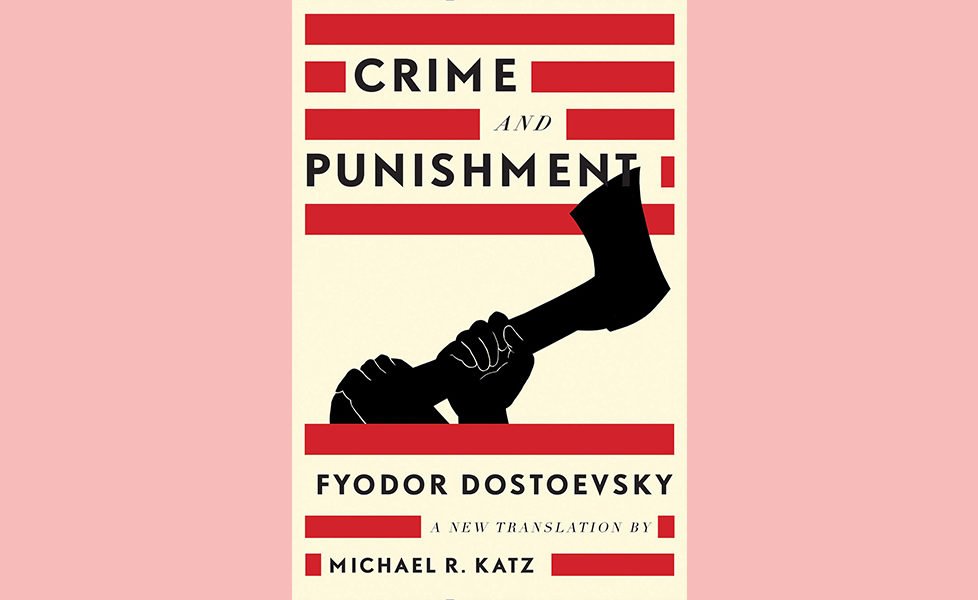
The plot also reworks a familiar nineteenth-century story of an innocent provincial who goes to the capital and loses his purity. Critic Gary Rosenshield points out that Raskolnikov falls to the temptations of rationalistic Petersburg, where Balzac’s Rastignac and Stendhal’s Julien Sorel fell to high society.
Why Did Dostoevsky Write Crime and Punishment?
At the time, Dostoevsky owed large sums to creditors and was trying to support the family of his brother Mikhail, who died in early 1864. After other appeals failed, he turned to publisher Mikhail Katkov for an advance, offering a story for The Russian Messenger.
The journal was prestigious, home to both Ivan Turgenev and Leo Tolstoy, and Dostoevsky had never published in it after his polemical debates with Katkov in the early 1860s. In a September 1865 letter, Dostoevsky described the work as the story of a young man who yields to certain strange, ‘unfinished’ ideas, yet floating in the air.
He planned to explore the dangers of radicalism and felt that would appeal to the conservative Katkov. By November 1865 his letters had upgraded the story to a novel, and it was referred to that way from then on.
Dostoevsky Explores Themes Of Guilt, Morality and Punishment
Criminality, morality and guilt are central to the book. Raskolnikov robs and murders the pawnbroker and her sister Lizaveta, an innocent bystander, then has to face his remorse, or his lack of it. His motive is never fully resolved, since he argues the pawnbroker did no good for society and later admits he does not understand why he killed.
Porfiry Petrovich, the investigator, and Zamyotov, a law clerk, notice his strange behavior early. His friend Razumikhin, sister Dunya and mother Pulcheria suspect the truth only after many days. His remorse and mental instability finally prove to him that he is ordinary, not extraordinary, so he confesses and receives eight years of hard labor in Siberia, where Sonya joins him.
Other characters brush against crime too. Sonya lives as a prostitute, her father Marmeladov is a drunk who cannot keep a job, and his wife Katerina beats her children. Svidrigailov keeps womanizing in Petersburg after trying to seduce Dunya, is rumored to have poisoned his wife Marfa, and later takes his own life.
The novel is a psychological study of how a person behaves when poverty and financial burden wear down his mind. He justifies illegal ways out of his problem, only to fall back into mental trauma as he recognizes his moral faults. He concludes that he has failed morally even though he succeeded physically.
What Dostoevsky wants readers to see is the moral punishment a criminal feels automatically after the crime, long before any authority steps in.
Over 160 years later, Crime and Punishment still asks readers what they would do, then makes them live with the answer.
You May Also Like:
Add us as a preferred source on Google.