

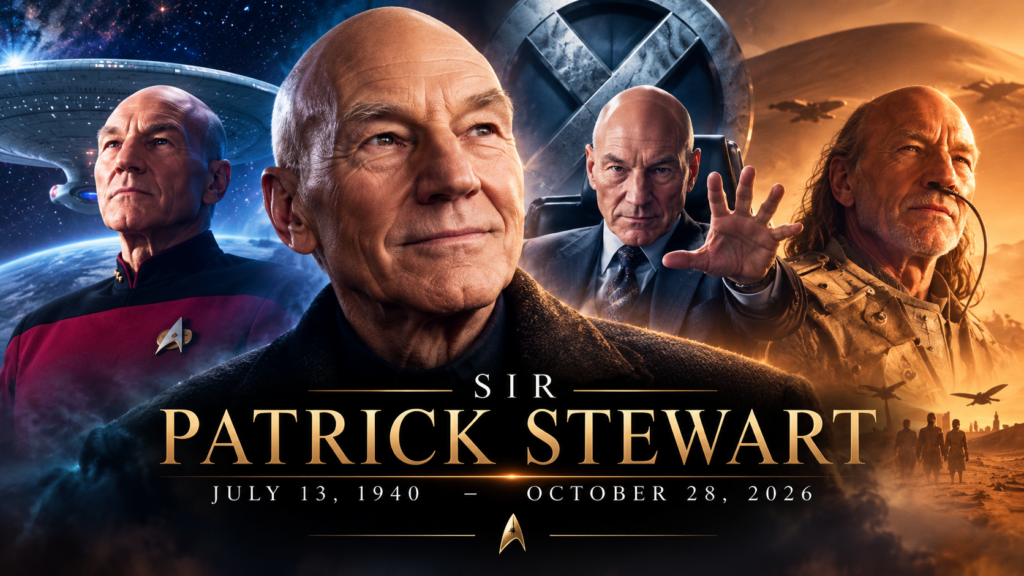
There was a time when putting someone other than William Shatner in the captain’s chair of the USS Enterprise sounded like a spectacularly bad idea. Sir Patrick Stewart thought differently.
Then Jean-Luc Picard sat down, straightened his uniform, and ordered the ship to engage. Suddenly, the future looked different.
Sir Patrick Stewart, the Shakespearean actor who gave science fiction one of its greatest captains and superhero cinema one of its most beloved mentors, died Wednesday, Oct. 28, at his Los Angeles home. He is survived by his wife, singer-songwriter Sunny Ozell, who was by his side, and his two children.
He was 86 years old.
His longtime spokesperson, Kelly Bush Novak, confirmed that Stewart died following a brief experience with Alzheimer’s disease and Lewy body dementia.
For generations of fans, Stewart was Captain Jean-Luc Picard of Star Trek: The Next Generation and Professor Charles Xavier of the X-Men films. He was also Gurney Halleck in David Lynch’s Dune, a Royal Shakespeare Company veteran and the kind of actor who could make an ordinary sentence sound like a declaration from the heavens.
But his greatest contribution to popular culture may have been considerably more difficult than delivering a memorable speech. He convinced audiences to believe in heroes who preferred thinking to fighting.
Sir Patrick Stewart Took Command of an Impossible Mission
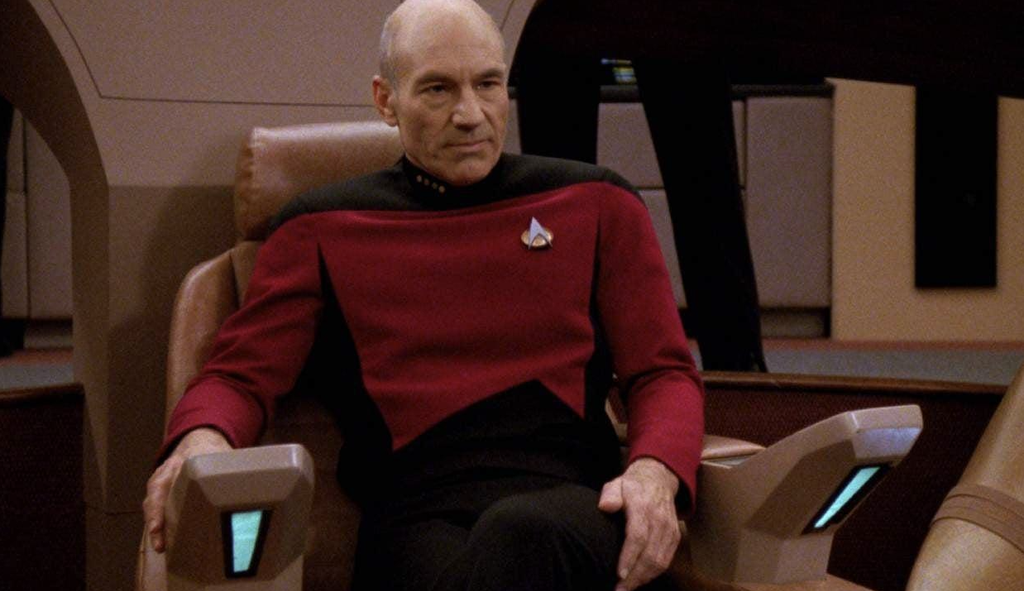
When Star Trek: The Next Generation premiered in 1987, the franchise was attempting something television rarely did successfully: replacing an iconic cast without abandoning the universe that made it famous.
The original Star Trek had become a cultural institution. James T. Kirk, Spock and Dr. McCoy were practically family to fans who had spent decades keeping Gene Roddenberry’s vision alive.
Now, somebody wanted them to accept a bald Englishman as captain.
Sir Patrick Stewart wasn’t an obvious successor to Shatner. He didn’t have Kirk’s swagger, his theatrical fistfights, or his apparently irresistible appeal to women from distant planets — black, white, green or otherwise.
Picard was reserved, intellectual and frequently more comfortable discussing philosophy than firing phasers. He also possessed something Kirk rarely had: the patience to listen before deciding.
Stewart made that quality compelling.
Over seven seasons, Picard became the moral center of The Next Generation, leading an ensemble that included Jonathan Frakes as William Riker, Brent Spiner as Data and the great LeVar Burton as Geordi La Forge.
The series expanded the franchise’s mythology and established a new generation of characters who could stand alongside the originals. And the gamble worked.
The Next Generation ran through 1994, produced four theatrical films, and eventually brought Stewart back for Star Trek: Picard, which concluded in 2023.
Picard didn’t simply inherit the Enterprise. He helped prove that Star Trek could survive beyond its original crew.
A Captain Who Knew the Cost of Command
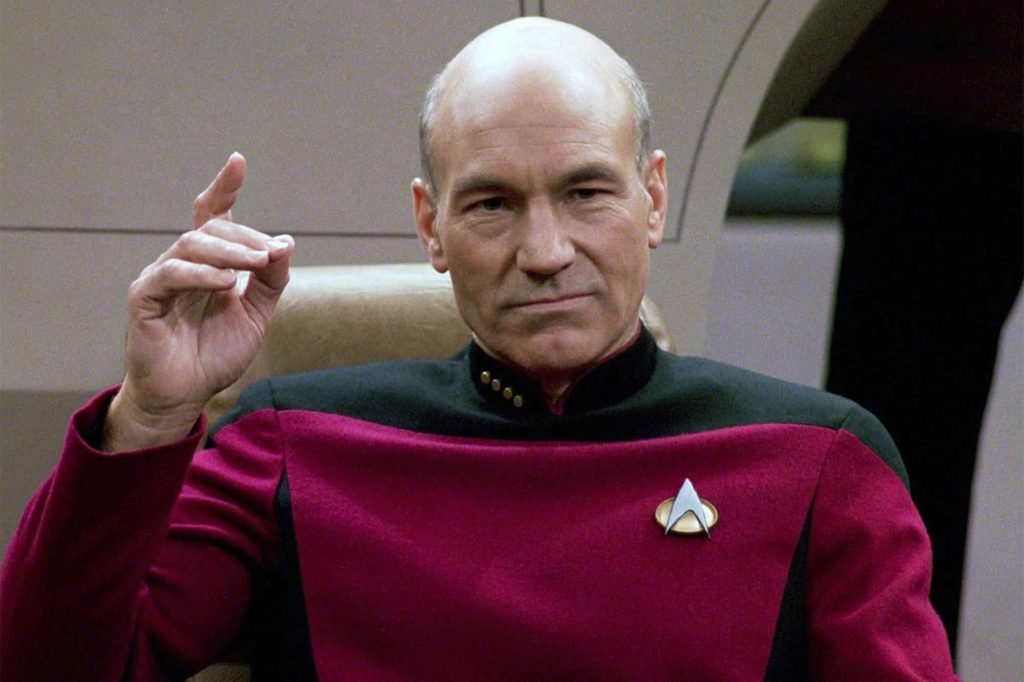
Sir Patrick Stewart’s Picard could be stern, stubborn and occasionally exasperating. He could also be deeply compassionate, which made his failures and suffering especially affecting.
In the two-part episode “The Best of Both Worlds,” the Borg assimilated Picard and transformed him into Locutus, using his knowledge against the Federation.
It remains one of television science fiction’s defining cliffhangers. Yet the story’s most lasting moment came afterward.
In “Family,” Picard returned to Earth and finally confronted the trauma of what had happened. The captain who could stare down an alien fleet broke down in front of his brother.
Stewart gave that moment the emotional weight of a Shakespearean tragedy without losing the humanity of a man who had been violated and was trying to recover.
That was his gift.
Picard could deliver a speech on the Federation’s principles that makes viewers want to be better people. He could also reveal the terrible personal cost of living up to those principles.
For many fans, Star Trek was an optimistic vision of humanity’s future. Patrick Stewart made that optimism feel earned.
Professor X Gave Marvel’s Mutants a Moral Compass
Thirteen years after taking command of the Enterprise, Stewart helped launch another franchise that faced considerable skepticism.
When Bryan Singer’s X-Men arrived in 2000, superhero films weren’t the reliable box-office juggernauts they would later become. Marvel‘s mutants needed a convincing cinematic introduction.
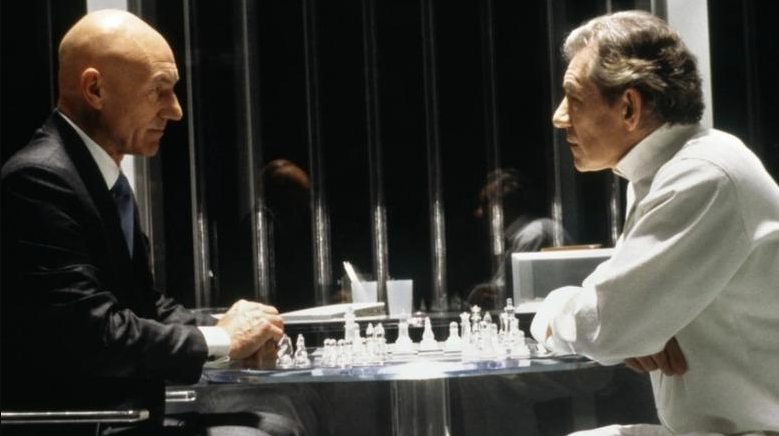
They found one in Sir Patrick Stewart’s Professor Charles Xavier.
The casting was almost absurdly perfect. Comic-book readers had spent years looking at Xavier’s bald head, thoughtful expression, and commanding presence.
Stewart looked as though he’d stepped directly off the page, but the resemblance was the least important part.
Charles Xavier believed humanity and mutants could coexist despite the fear, prejudice and violence surrounding them. His old friend Erik Lehnsherr, better known as Magneto, had reached a darker conclusion.
Played by Stewart’s longtime friend Ian McKellen, Magneto believed that survival demanded resistance and domination. Their philosophical conflict became the foundation of the films.
Stewart and McKellen gave that conflict the intimacy of a friendship neither man could quite surrender. The result was a superhero story about something more enduring than powers.
It was about what people do when the world fears them.
X-Men helped demonstrate that comic-book adaptations could support serious character drama, paving the way for the genre’s enormous expansion in the decades that followed.
Stewart would return repeatedly as Xavier, including a devastating final performance opposite Hugh Jackman’s Wolverine in Logan (2017). By then, the professor’s wisdom had become fragile, his extraordinary mind increasingly unreliable.
Watching Stewart portray that vulnerability was heartbreaking precisely because audiences remembered the man who once seemed to have all the answers.
From Shakespeare to Arrakis, Patrick Stewart Belonged Everywhere
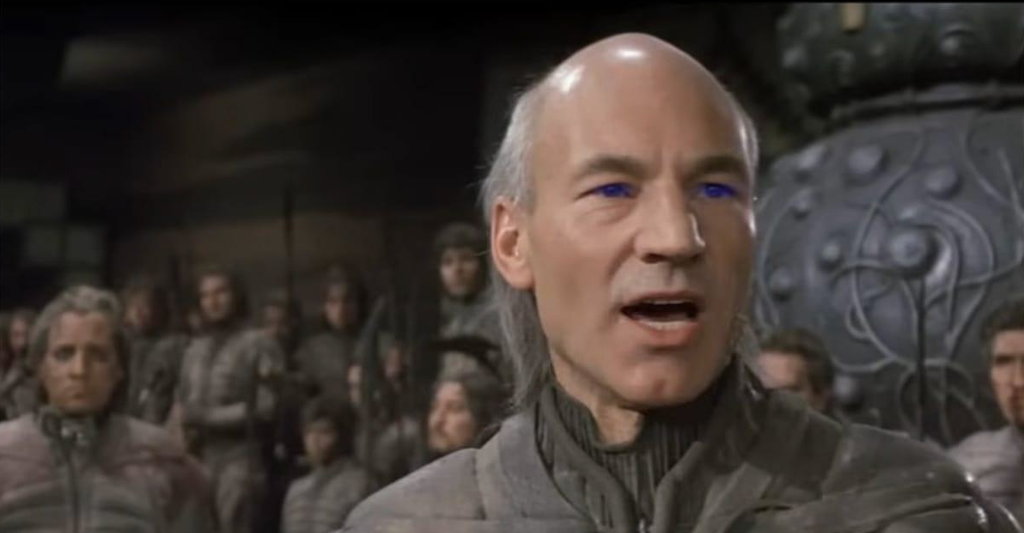
Long before he entered the Enterprise’s ready room or Xavier’s School for Gifted Youngsters, Stewart had built his career on the stage.
Born July 13, 1940, in Mirfield, Yorkshire, England, he grew up in a working-class household and discovered acting through school. He eventually joined the Royal Shakespeare Company, spending years performing the works of Shakespeare and other major playwrights.
The experience gave him remarkable vocal control, physical discipline and an ability to find meaning in dialogue that lesser actors might simply recite. Science-fiction audiences got an early taste of that presence in David Lynch’s Dune (1984).
Yes, Dune existed long before Denis Villeneuve revolutionized the universe.
As Gurney Halleck, Stewart played the loyal warrior and weapons master serving House Atreides. The adaptation was famously troubled, but Stewart’s commanding performance fit Frank Herbert‘s feudal universe remarkably well.
He later demonstrated an equally impressive willingness to laugh at himself.
Stewart voiced characters in American Dad! and Family Guy, appeared in comedies and delighted fans with the playful friendship he shared with McKellen.
The man who could deliver Shakespeare with absolute authority was also perfectly happy to be ridiculous. That combination made him irresistible.
He was knighted in 2010 for services to drama, becoming Sir Patrick Stewart. For his admirers, however, the title had always seemed inevitable.
His Final Frontier Reached Marvel’s Multiverse
Stewart’s relationship with Charles Xavier extended well beyond the original X-Men films.
He returned as a variant of Professor X in Marvel Studios’ Doctor Strange in the Multiverse of Madness (2022), giving longtime fans another opportunity to see the character on screen.
His legacy also extends Avengers: Doomsday, the upcoming Marvel ensemble film associated with the return of characters from the earlier X-Men era.
Any appearance there will now carry an entirely different emotional weight. But Stewart’s gravitas in the Marvel universe was secured long before the multiverse offered an excuse to bring familiar faces together.
He helped establish that superheroes could be thoughtful, wounded and morally complicated. That achievement echoes what he’d already accomplished aboard the Enterprise.
Three franchises. Three very different worlds. Three men who believed civilization was worth saving. And all were better because Patrick Stewart believed in them.
The Man Behind the Uniform
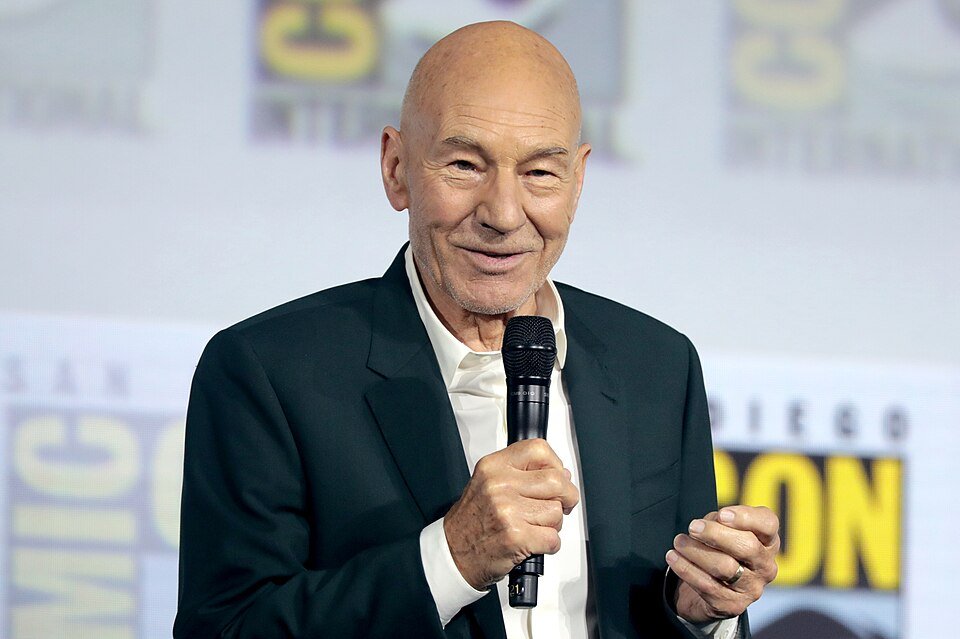
Stewart’s public life also reflected experiences far removed from the comforts of science fiction.
He spoke openly about witnessing domestic violence in his childhood home and became an advocate for organizations supporting survivors.
His 2023 memoir, Making It So, explored his upbringing, relationships and remarkable career with the candor of a man willing to examine his own shortcomings.
That willingness to acknowledge pain and imperfection may help explain why his fictional heroes felt so authentic. Picard and Xavier were men of extraordinary intellect and principle, but neither was immune to fear, grief or regret.
Stewart understood those emotions.
There will be tributes from actors, directors and fans around the world. There will be favorite episodes revisited, movie marathons scheduled, and countless impressions of that unmistakable voice.
Somebody will undoubtedly raise a glass of Earl Grey tea. Hot, naturally.
And somewhere, a fan who first discovered Star Trek or X-Men as a child will remember what it felt like to encounter an adult who treated intelligence, kindness and moral courage as genuine strengths.
Patrick Stewart never needed a phaser or mutant abilities to command a room.
He simply had to sit in the chair. Engage.
Add us as a preferred source on Google.