
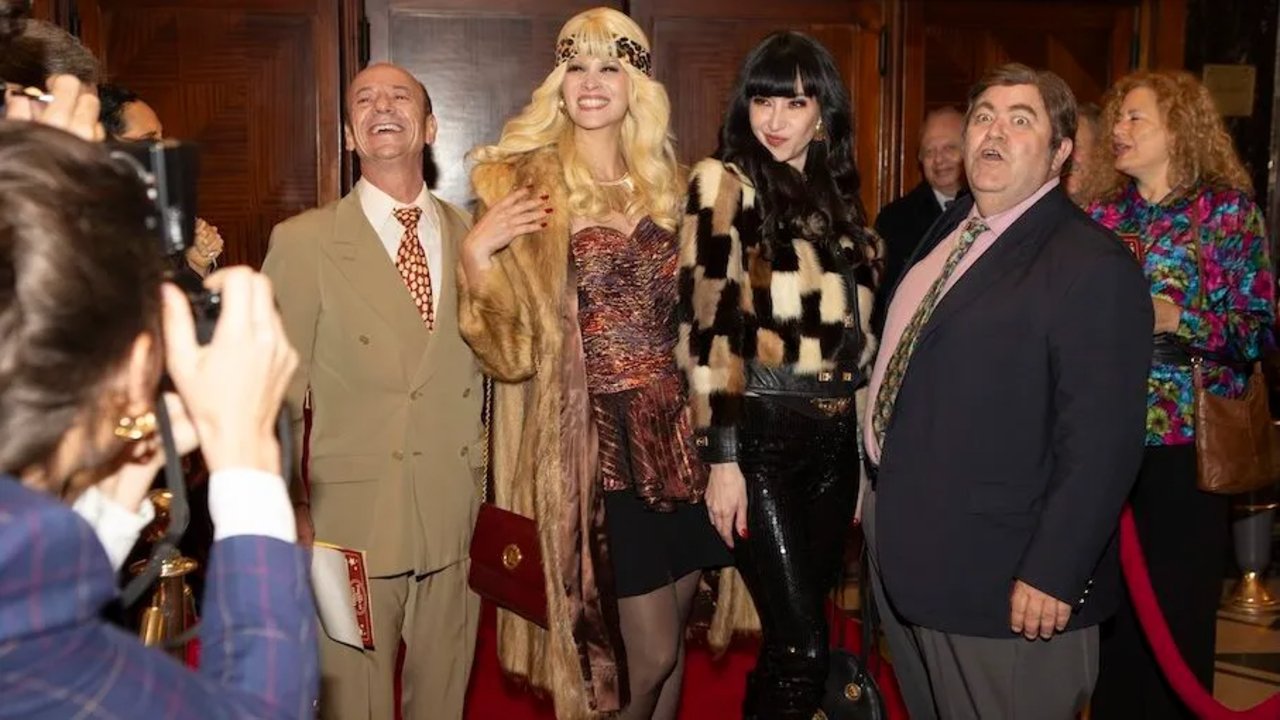
Netflix’s Moria brings the extraordinary life of Argentine entertainment icon Moria Casán to the screen, with the eight-episode series premiering globally on August 14, 2026, on her 80th birthday. Born Ana María Casanova, she built a career that moved through theater, television, and celebrity culture while turning her sharp personality and provocative style into a defining part of Argentine pop culture.
The series does not treat her life like a conventional chronological biopic. Instead, Moria uses three actresses to portray different stages of Casán’s life, while the real Moria remains involved in telling her own story. That unusual approach reflects the woman at its center, a performer who has spent decades controlling her image, reinventing herself and turning controversy into another part of her celebrity.
How Ana María Casanova Became Moria Casán
Born Ana María Casanova, she began building the identity that would eventually make her famous in Buenos Aires during the 1960s. Her early career took shape in teatro de revista, Argentina’s revue theater tradition, where she established herself as a vedette, a glamorous and commanding stage performer.
The role gave Casán a platform to develop the larger-than-life persona that would eventually become inseparable from her real identity. She was outspoken, provocative, and willing to challenge expectations surrounding women in entertainment. Rather than simply becoming another famous stage performer, she developed a public personality that could dominate conversations far beyond the theater.
Television expanded that influence. Casán became known for her sharp humor and willingness to address subjects that other entertainers avoided, including relationships, sexuality, celebrity rivalries, and social expectations surrounding women. Her television work also developed during a complicated period in Argentina, including the country’s military dictatorship, making her decision to remain provocative particularly significant.
One of her most recognizable expressions, “Si querés llorar, llorá,” meaning “If you want to cry, cry,” became part of Argentine popular culture. The phrase captures much of what made her persona so distinctive. There was little interest in softening her opinions or presenting herself as someone who needed approval.
Over the decades, that attitude allowed Casán to move between different forms of entertainment without losing her identity. She remained a recognizable presence even as television formats, celebrity culture and public expectations changed around her.
Her career has also included major controversies. The series explores her highly publicized rivalries and the incidents that repeatedly placed her in the headlines, including her infamous imprisonment in Paraguay. Rather than treating those episodes as isolated scandals, Moria uses them to examine how Casán constructed and protected the public identity that eventually became known as “La One.”
Read More: Who Was Charles Manson? The Real Story Behind Netflix’s New Documentary
Why Three Actresses Play Moria Casán
A conventional biopic could have followed Casán from her early career through her rise to national fame with a single actress. Moria takes a different approach because the creators wanted to represent the different versions of the performer that emerged throughout her life.
Sofía Gala Castiglione, Casán’s real-life daughter, plays a younger version of her mother. The casting gives the series a particularly personal connection, especially because the relationship between Moria and Sofía is itself an important part of the story.
Griselda Siciliani takes on another period of Casán’s life, portraying the star during some of her most significant television reinventions and media controversies. Cecilia Roth then plays the more mature version of the performer, representing the established figure who had already become a national icon.
That structure also allows the series to avoid presenting Casán as a single, unchanging personality. Her career has lasted for decades, and the woman who entered the entertainment industry was not necessarily the same person audiences encountered later on television.
Javier Van de Couter created and directed the series, which has been described as a “reality fiction” rather than a traditional biographical drama. That distinction is important because the real Moria Casán appears within the series herself, functioning almost like the person controlling the story.
Instead of leaving her younger counterparts to recreate her life without her involvement, Casán participates in the telling of her own history. She becomes both the subject and a presence within the narrative, allowing the series to play with the boundary between biography, performance and fiction.
That approach fits a performer whose career has always involved constructing a public persona. Moria Casán did not simply become famous. She turned her name, personality and image into part of the entertainment itself.
Her relationship with Sofía also gives the series a more intimate side. Behind the television appearances, public arguments and provocative persona is a complicated mother-daughter relationship that has developed under enormous public scrutiny.
By combining those personal elements with the larger story of Casán’s career, Moria presents “La One” as more than an Argentine celebrity. It explores how a woman who repeatedly challenged social expectations managed to remain relevant across generations and how much work goes into maintaining an identity powerful enough to become part of a country’s pop culture.
The result is a series built around a fascinating contradiction. Moria Casán spent decades creating a public version of herself, yet Moria asks what happens when the woman behind that carefully constructed image gets to tell the story herself.