

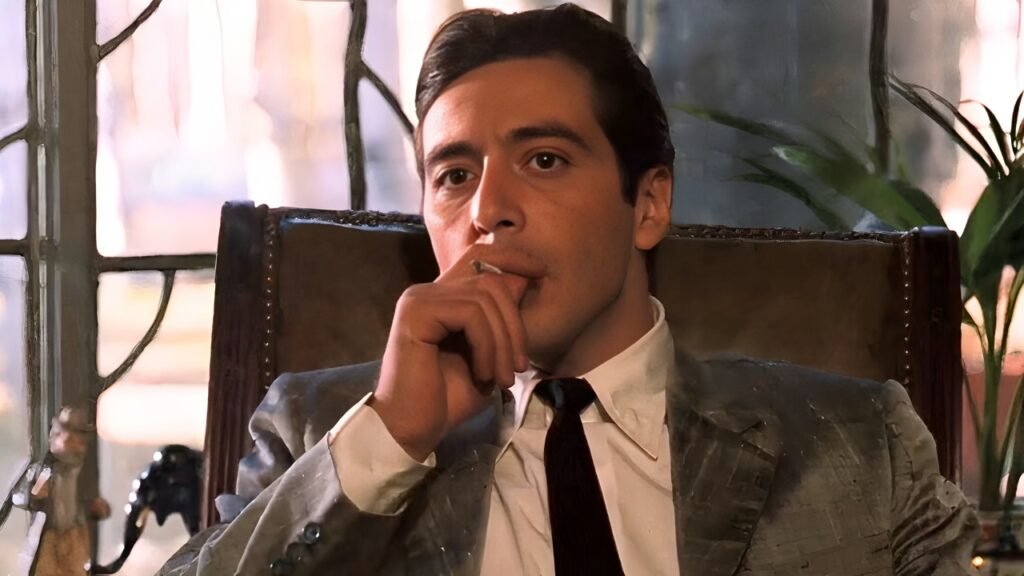
More than fifty years after its release, The Godfather remains one of the most quoted films ever made. Its dialogue has moved into business books, leadership seminars, and social media posts about success. The Corleones are held up as a blueprint for patience, discipline, and strategy.
That reading runs against what Francis Ford Coppola built. He described the story as a metaphor for American capitalism, and The Godfather and The Godfather Part II play as tragedies about what that pursuit costs.
The Corleone Empire Was Never The Reward
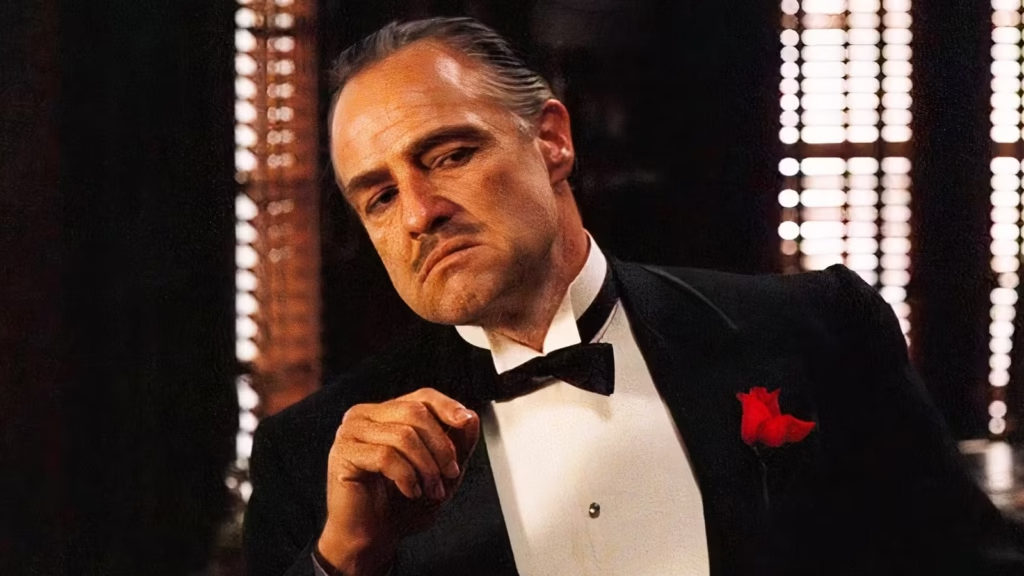
Part of the confusion comes from how compelling the Corleones are. Don Vito Corleone, played by Marlon Brando, carries wisdom, patience, and authority. Michael Corleone, played by Al Pacino, grows from a reluctant outsider into a leader who outmaneuvers every rival.
On the surface, their decisions look like lessons. The films keep undercutting that surface.
Michael’s most decisive victory is the baptism sequence in the first film. The film intercuts him renouncing Satan at the font with his men killing the heads of the rival families. He becomes a godfather in the church and in the underworld at the same moment, and the film wants the audience to feel how obscene that is.
The Family He Saves Is The Family He Destroys
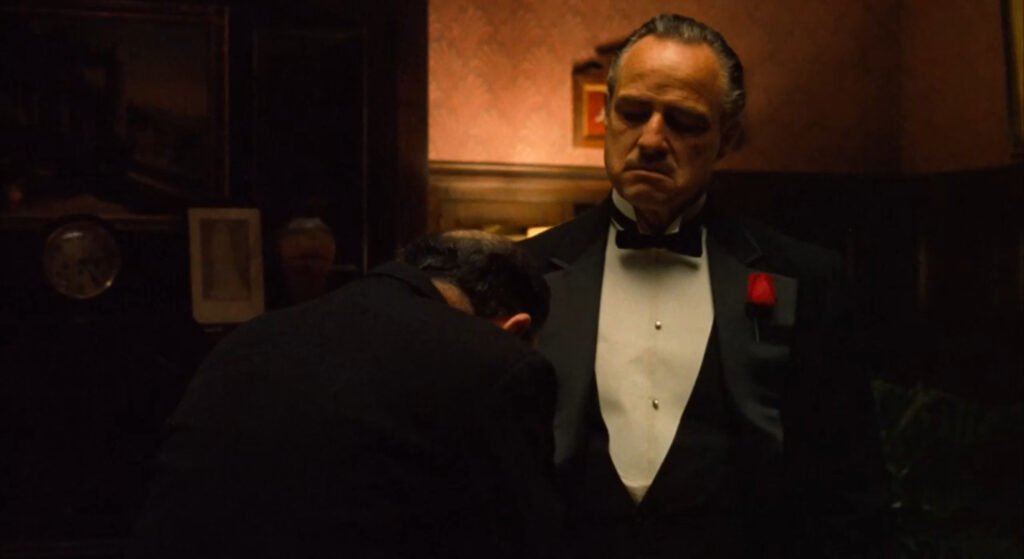
The justification for everything is the family. Vito builds his empire to protect his own and give them chances they would never have had. Michael wants no part of that world until an attempt on his father’s life pulls him in.
At first, protecting the family looks noble. Over time, the business consumes the thing it claims to defend.
The first film already shows the price. Michael has Carlo, his sister’s husband, killed, and Connie screams at him for it. Kay then asks him to deny it, and he lies to her face as the door closes between them.
By Part II, the damage is complete. Kay reveals that her supposed miscarriage was an abortion, a choice she made so she would not bring another Corleone child into the world. Michael then orders the death of his brother Fredo, but only after their mother has died, and he watches from the boathouse as it happens.
Michael protects the Family as an institution while losing his family as people.
Read More: What’s in the Briefcase in Pulp Fiction?
A Dark Reflection Of The American Dream
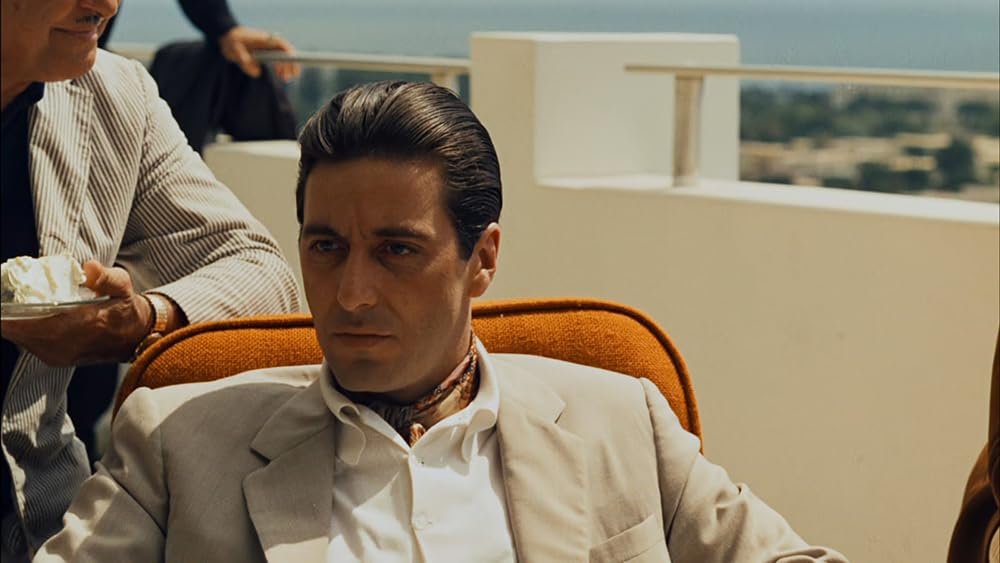
The first words of The Godfather are “I believe in America,” spoken by Bonasera, an undertaker who has been failed by the courts. He turns to Vito for the justice the system would not give him. The film opens on the American promise breaking down and a man of power stepping into the gap.
Vito arrives as an immigrant child and builds a life in a country that had little room for him. In the garden before his death, he tells Michael he hoped his son would one day hold the strings as a senator or governor. Michael builds well past anything Vito imagined, with casinos in Nevada, deals in Havana, and political connections, but legitimacy never arrives.
Part II makes the cost explicit by cutting between young Vito’s rise and Michael’s decline. The film is built from five Vito sequences and five Michael sequences, plus a short coda. Vito’s world is crowded and warm, and Michael’s grows quieter every time we return to it.
The final image makes the point. The film flashes back to 1941, when the family gathers for Vito’s birthday and Michael announces he has enlisted. The family leaves the table to greet Vito and Michael is left sitting alone, then the film cuts to him alone at Lake Tahoe in autumn.
The real lesson of The Godfather is not how to gain power. It is what power demands in return.
You May Also Like
Add us as a preferred source on Google.