

Futurama Season 14 takes a sudden trip into the world of early animation in Episode 4, “Lords of the Ring.”
After the Planet Express crew crash-lands on a planet inhabited by intelligent rats, Fry, Leela and Bender quickly put on rat disguises in an attempt to blend in. Their ridiculous plan leads to one of the episode’s most memorable sequences, a musical parody that recreates the look and feel of Disney’s 1928 classic Steamboat Willie.
The sequence goes much further than simply switching the animation to black and white. Writer Bill Odenkirk and director Crystal Chesney-Thompson explained that head writer David X. Cohen came up with the idea as a way to embrace the absurdity of the crew pretending to be rodents. Almost every visual detail then becomes part of the joke, from the animation style and dancing smokestacks to Fry taking on a very familiar role.
How Futurama Recreated The Classic Cartoon Style
The first thing viewers notice is the black-and-white presentation. That immediately places the sequence in the visual language of early animation, but the real reference comes through the way the characters move.
Chesney-Thompson and the animation team incorporated the classic “rubber-hose” style that became closely associated with cartoons from the 1920s. Characters created in this style typically had extremely flexible arms and legs without clearly defined joints, allowing their limbs to bend and stretch in exaggerated ways.
The episode also recreates another important technique from early animation: cycled movement. Instead of drawing every individual motion from scratch, animators could create a short series of frames and repeat them to create continuous movement. That approach was particularly useful for simple actions such as walking, dancing or bouncing.
Futurama turns that production technique into part of the joke. Fry, Leela and Bender repeatedly perform the same bouncy movements together, making them look as though they have been dropped directly into a cartoon from the 1920s.
The steamboat itself continues the reference. The intelligent rats use a vintage-looking riverboat that fits the visual style of the sequence, complete with bouncing smokestacks that puff clouds of smoke in rhythm with the music. The exaggerated movement makes the machinery feel almost alive, matching the playful visual language of early animation.
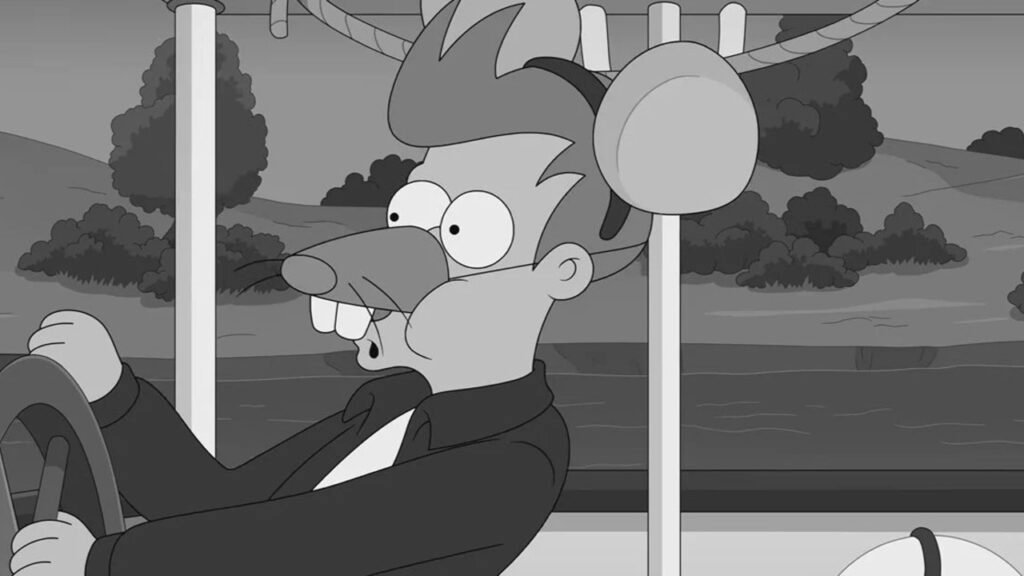
Fry then gets the most obvious character parallel. Although Leela normally serves as the captain of the Planet Express crew’s ship, Fry ends up at the wheel of the steamboat. His cheerful behavior and enthusiastic whistling make him the episode’s clear stand-in for Mickey Mouse.
That comparison becomes even more obvious when Fry starts enthusiastically spinning the wheel. The sequence does not simply copy the famous image of Mickey at the helm. It places a very Futurama version of that character into the same setup, giving the familiar scene a deliberately ridiculous twist.
Related: Who Are Dr. Vermius and Dr. Pestia? Futurama’s New Rat Characters Explained
The Slapstick Gags Make The Parody More Than A Visual Reference
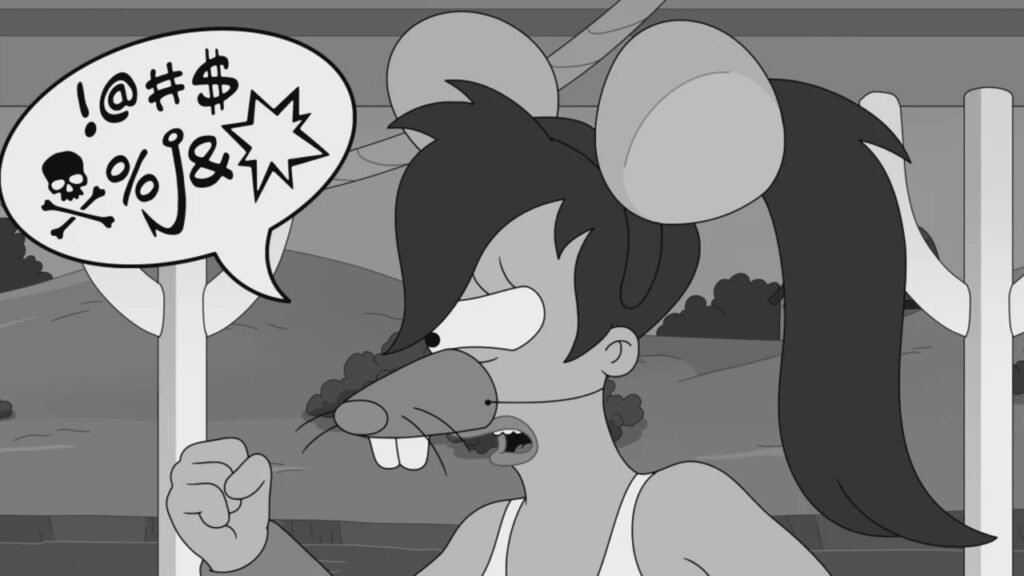
The episode also borrows the physical comedy associated with early cartoons. One particularly silly gag comes when Fry’s fake rat teeth accidentally fly out of his mouth while he is happily whistling at the wheel.
The teeth hit Leela, prompting her to respond with an exaggerated angry fist shake. It is a tiny moment, but it fits the language of classic animation perfectly. Characters in early cartoons often reacted to minor annoyances with enormous gestures, turning ordinary accidents into elaborate pieces of physical comedy.
That is where Futurama finds room to make the parody its own. The sequence recreates the innocence and simplicity of the visual style while filling it with the show’s usual irreverent humor.
Leela’s reaction is particularly important because the characters are not actually living inside a 1920s cartoon. They are still Fry, Leela and Bender, and the show refuses to let the vintage presentation completely change their personalities.
That becomes clearest when the dialogue breaks the illusion. Classic cartoons of the period were made under very different standards, while Futurama has never been particularly interested in keeping its characters polite. Instead of allowing the black-and-white setting to remain completely wholesome, the sequence has Leela respond with colorful language.
The contrast is the joke. The animation looks like a nostalgic recreation of Steamboat Willie, the movements resemble early theatrical cartoons and Fry occupies the familiar position at the wheel, but the characters themselves remain unmistakably Futurama.
What makes the sequence work is that the references are not limited to one famous image. The episode recreates an entire animation language, then adds enough modern comedy and character-specific humor to keep the parody from feeling like a simple imitation.
You May Also Like
Add us as a preferred source on Google.
Conversation