

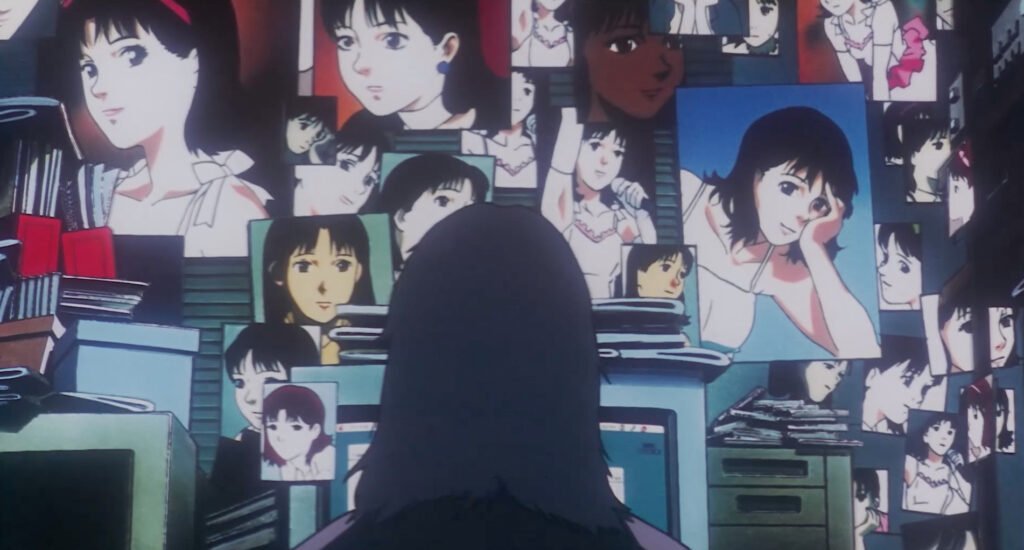
Satoshi Kon built Perfect Blue around one brutal question: how do you know what’s real when the person experiencing reality no longer can? Every time you think you’ve found solid ground in this film, Kon pulls it out from under you.
That’s not an accident. It’s the entire architecture of the movie.
The Layers Satoshi Kon Uses to Confuse You

The first tool Kon deploys is the show-within-a-show. Mima’s new acting role in Double Bind is a crime drama that features a character with dissociative identity disorder. Kon phases in and out of different narrative layers throughout the film, beginning a scene as if continuing the main story before quickly revealing it’s actually part of the inner TV show’s plot. This primes you to distrust everything that follows, and that’s exactly the point.
Mirrors carry just as much weight. In Perfect Blue, mirrors and reflective surfaces are a symbol of the blurring boundary between delusion and reality. After Mima discovers “Mima’s Room,” the website using her identity to document her daily life, she begins “seeing” a version of her former idol self through reflections. That figure only exists in her delusion. But Kon draws her so vividly that you start to believe it too.
Then there’s the layered waking structure. A traumatic scene proves to be a dream as Mima wakes, but that reality collapses in turn as Mima wakes again in a replay of the same scene. You can’t trust any moment of relief she experiences, because the next layer might strip it away.
More On Satoshi Kon: Why ‘Paprika’ Explores the Human Psyche Better Than ‘Inception’
Where the Film Finally Shows Its Hand
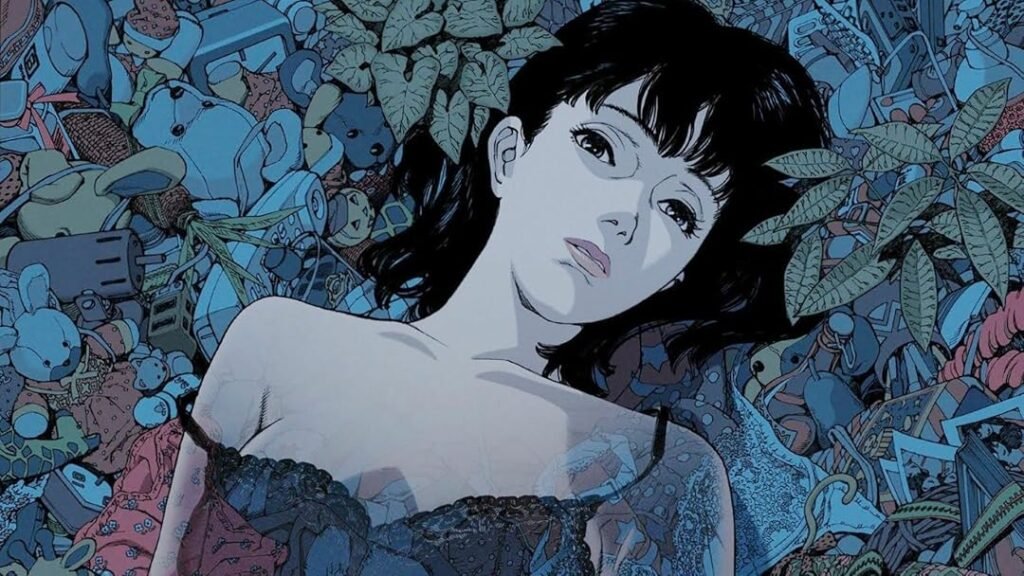
The Double Bind script doesn’t just mirror Mima’s life; it actively misdirects the audience. While performing the final scene where her character is revealed to have dissociative identity disorder, Mima says the line, “Me? I’m Mima Kirigoe. I’m a pop model… no, an actress.”
The script goes on to describe dissociative identity disorder and suggests that all the crimes occurred under a different persona, pointing everything toward Mima as the killer. Kon wants you to believe it. That’s the trap.
The real answer is Rumi, Mima’s manager, whose delusion has been building the entire film in plain sight. Rumi emerges wearing a CHAM! costume, fully believing she is the “real” Mima and furious with Mima for ruining “her” reputation. She reveals herself as the false diarist behind “Mima’s Room” and the one responsible for the murders.
The ending delivers the final reversal: while Kon showed delusion directly to the audience throughout the film, he uses mirrors in the climax to reveal reality, creating a dramatic contrast. Rumi, in her final moments, mistakes the headlights of an oncoming truck for stage lights. She never came back.
What makes Perfect Blue so enduring is that Kon never cheats. Every blurred line has been earned, and every misdirection has a purpose. Rewatch it once you know the answer, and the film looks completely different.
You May Also Like:
Add us as a preferred source on Google.
Conversation