

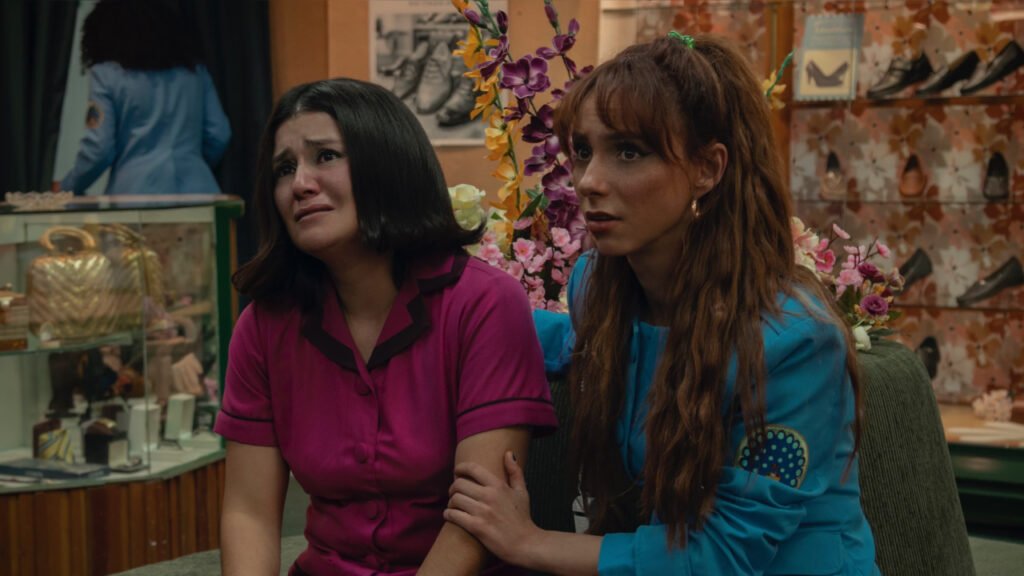
Season 2 of Women in Blue (Las Azules) moves the story beyond the serial-killer investigation that defined the first season and into one of the darkest chapters in modern Mexican history.
The new season follows María, Valentina, Gabina and Ángeles after the murder of a student activist draws them into an investigation connected to the 1968 student massacre. Apple TV’s official synopsis confirms that the case reaches back to the massacre and brings another body connected to that period into the investigation.
The historical event at the center of the season is the Tlatelolco Massacre, which took place on October 2, 1968, at the Plaza de las Tres Culturas in Mexico City.
It followed months of student demonstrations demanding greater political freedom and civil liberties, and it happened only 10 days before Mexico City hosted the 1968 Summer Olympics. The events depicted in Women in Blue are fictional, but the history behind the investigation is real.
What Happened During The 1968 Tlatelolco Massacre?
Mexico’s student movement had grown significantly during 1968, with university and high school students protesting against political repression, restrictions on civil liberties, and the government’s treatment of political opponents. Their demonstrations became a major challenge to the Institutional Revolutionary Party, which had governed Mexico for decades.
On October 2, thousands of protesters and other civilians gathered at the Plaza de las Tres Culturas in Tlatelolco. The demonstration came just days before the opening of the Olympic Games, increasing pressure on the government to prevent political unrest from becoming an international spectacle.
Gunfire broke out that evening as military and security forces moved against the gathering. Soldiers and police surrounded the plaza while shooting erupted from the area. The National Security Archive describes the event as a demonstration that ended in a “storm of bullets,” with Army and police forces taking surviving protesters into custody after the violence.
The exact number of people killed remains disputed. Mexican authorities initially reported a much lower death toll, while later investigations and archival research documented substantially more victims.
Declassified U.S. and Mexican records have provided additional evidence about the scale of the crackdown and the government’s efforts to control the public account of what happened.
In the immediate aftermath, authorities attempted to portray the violence as a confrontation started by armed student protesters. Later investigations challenged that version and documented the involvement of Mexican security forces in the attack.
Tlatelolco became one of the defining events of Mexico’s 1968 student movement and remains closely associated with the country’s period of political repression known as the Dirty War.
How The 1968 Massacre Connects To Women In Blue Season 2
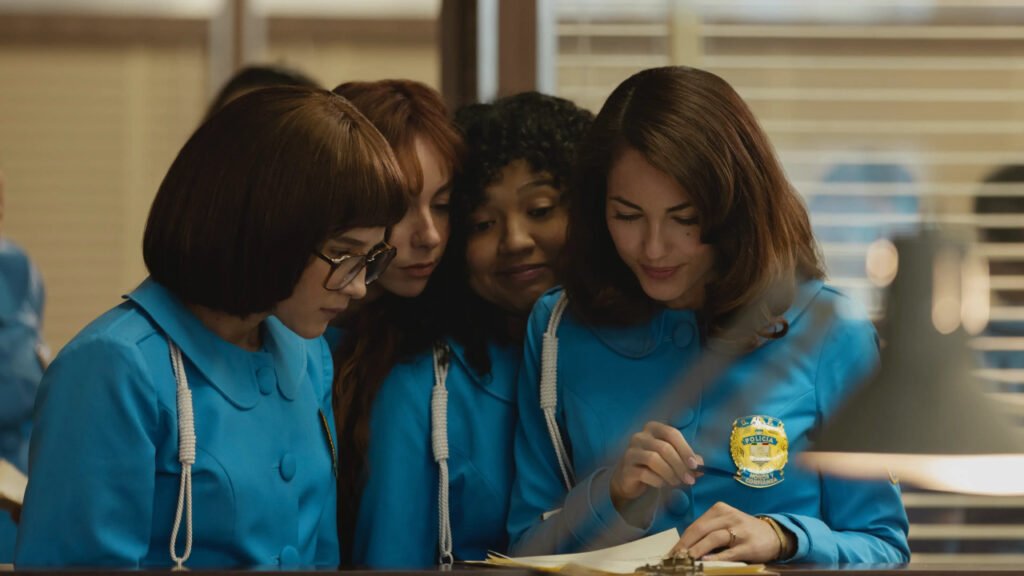
Women in Blue uses the history of Tlatelolco as the foundation for a fictional murder investigation set several years after the massacre. Season 2 takes place in 1971, with María, Valentina, Gabina and Ángeles investigating a case that leads them toward people and institutions connected to the violence of the previous decade.
The season begins after the murder of a young student activist. As the women investigate the killing, they discover evidence connected to the 1968 massacre, including a photograph that becomes an important part of the mystery. Rather than using Tlatelolco simply as historical background, the series makes the massacre part of the larger conspiracy surrounding the characters.
Another real event from Mexico’s history adds to the season’s setting. On June 10, 1971, a student demonstration in Mexico City was attacked by Los Halcones, a government-linked paramilitary group. The incident became known as the Halconazo, or Corpus Christi Massacre, and resulted in the deaths of dozens of people. The attack demonstrated that the repression of student movements had continued several years after Tlatelolco.
That historical context becomes important to the four women as their investigation progresses. They joined the police believing they could contribute to a better institution, but the case forces them to question the organization they serve. Their search for answers increasingly puts them in conflict with officials who have reasons to keep the past hidden.
By connecting the events of 1968 and 1971, Women in Blue places its fictional characters inside a period when government institutions, military forces and paramilitary groups were repeatedly accused of suppressing political opposition. Their investigation consequently becomes much larger than a murder case.
The danger also comes from what the women discover about the people involved. Evidence surrounding the student activist’s murder points toward a network determined to protect secrets connected to the massacre. That puts María, Valentina, Gabina and Ángeles in a difficult position. They have to decide whether their responsibility lies with the police institution or with the people whose cases the institution is supposed to investigate.
That conflict gives the season its central tension. The women are not simply trying to identify a killer. They are confronting a system that may have helped hide the truth for years.
Tlatelolco provides the historical foundation for that story. While Women in Blue changes names, characters, and circumstances to create its fictional investigation, the political repression surrounding the mystery comes from a genuine and deeply consequential period in Mexican history.
You May Also Like
Add us as a preferred source on Google.