


Timshel is a Hebrew word that John Steinbeck‘s East of Eden translates as “thou mayest,” the premise that every human being has the agency to choose between good and evil. In Netflix’s limited series adaptation written by Zoe Kazan, that single word is the driving force connecting the earliest days of Adam Trask’s ruined marriage to his final breath.
While the 1955 Elia Kazan feature film omitted the generation-spanning origins of the Trask family, Netflix’s series dramatizes the full weight of the trauma that preceded the deathbed scene. Between Florence Pugh‘s chilling transformation as Cathy Ames and Hoon Lee‘s grounding turn as Lee, the adaptation uses timshel not just as an abstract theological debate, but as the only escape hatch from a family curse.
Warning: Spoilers ahead for the plot and ending of Netflix’s East of Eden
Why Cathy Shot Adam and Fled Salinas

To understand why timshel matters at the end of the series, one has to revisit the violence that fractured the Trask household decades earlier.
After arriving at Charles (Mike Faist) and Adam’s (Christopher Abbott) farm beaten half to death by her former pimp, Cathy manipulates Adam into marriage. Adam projects an angelic innocence onto her, refusing to see her for who she truly is. Cathy responds with cold calculation as she drugs Adam, sleeps with Charles, and follows Adam to the Salinas Valley only under silent protest.
When Cathy gives birth to twin boys, Aron and Cal, she refuses to mother them. When Adam physically attempts to bar her from walking out, she shoots him without hesitation.
The series deepens this betrayal by framing Cathy not merely as a born monster, but as a survivor of horrific childhood sexual abuse whose hatred of men and Adam’s sanctimonious idealization in particular fuels her every move.
She reclaims her agency through absolute detachment, eventually poisoning Faye (Martha Plimpton) to seize control of a Salinas brothel. Cathy believes human beings are intrinsically corrupt and that innocence is a lie. For decades, her sudden departure leaves Adam emotionally hollowed out, creating an environment ripe for repeating the past.
Read More: Florence Pugh Takes On Her Hardest Character in New Netflix Series
The Trask Brothers and the Cain and Abel Curse
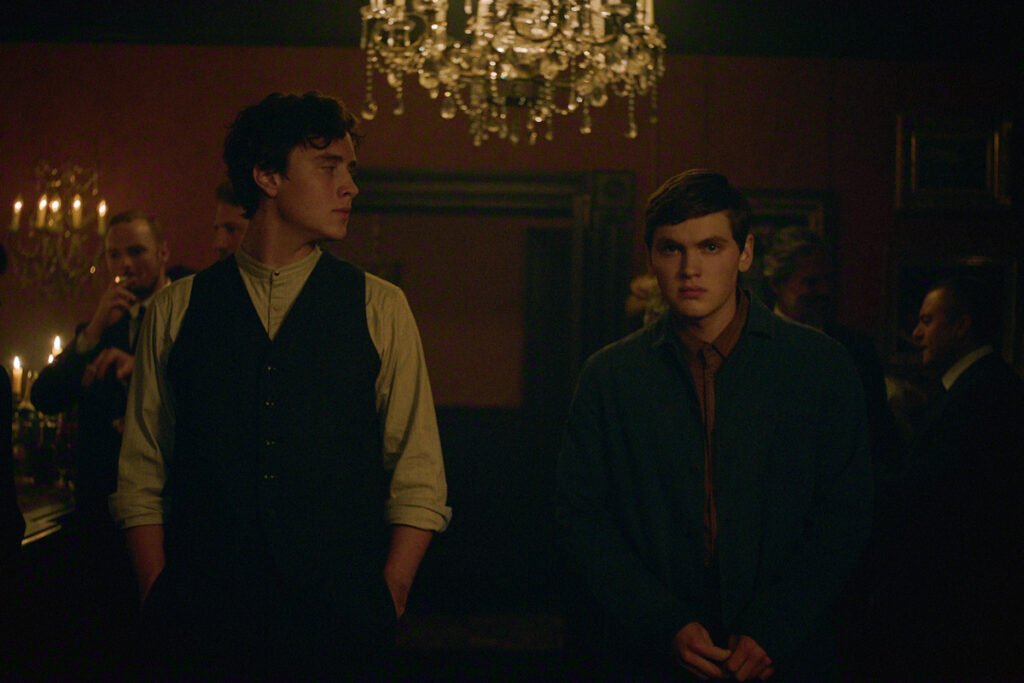
History repeats itself with the next generation. Just as Adam’s father favored him over Charles, Adam repeats the original sin by favoring the charismatic, clean-cut Aron (Joe Anders) over the moody, desperate-to-please Cal (Joseph Zada).
Cal spends his youth haunted by the fear that he has inherited his mother’s poisoned nature. Seeking to win his father’s approval, Cal makes a fortune trading beans during World War I and offers it to Adam to offset his financial losses. Adam rejects the war profits with disgust, comparing Cal unfavorably to Aron.
The sting of that rejection triggers catastrophe. Enraged, Cal takes Aron to Salinas to confront Cathy in her brothel. The shock of discovering his mother is a madam destroys Aron’s fragile worldview as he strikes Cal, flees, and enlists in the army by lying about his age.
Cathy, driven to extreme paranoia by guilt over Aron and fear of her enforcer Joe, takes a fatal overdose of morphine. Soon after, news arrives that Aron has been killed in action in Europe, causing Adam to suffer a debilitating stroke that leaves him paralyzed.
Read More: Who Is Aron and Cal’s Real Father? The Charles Trask Secret in East of Eden Explained
What Does Timshel Mean at Adam’s Deathbed?
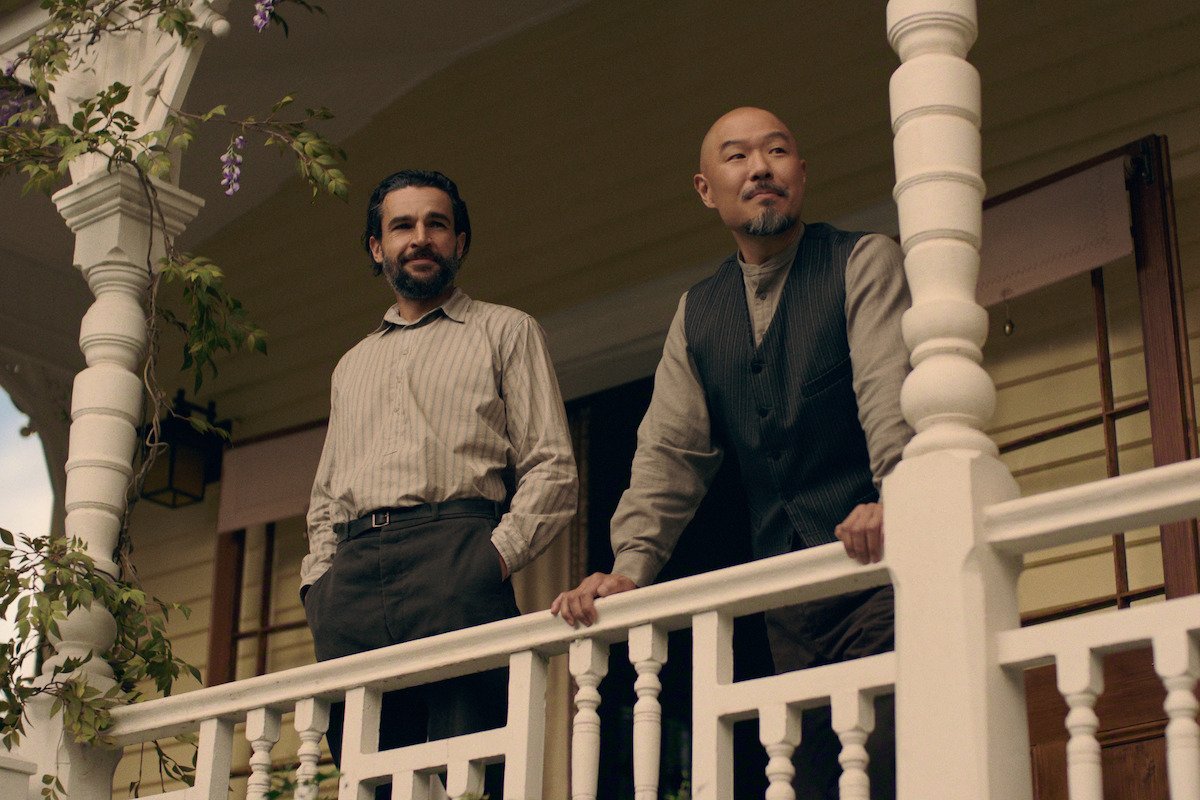
With Adam near death, Cal is crushed beneath the guilt of having essentially caused his brother’s death and his father’s collapse. Standing over Adam’s bedside, Cal confesses his role in taking Aron to the brothel before running away in despair.
Lee steps in. As the surrogate father who raised both boys while enduring the era’s prejudice against Chinese-Americans, Lee refuses to let Cal be destroyed by guilt. He brings Cal back to the room and demands that Adam forgive him: “Give him his chance. Make him free. Once you have made him free, he will choose.”
Adam responds with a single, whispered word: “Timshel.”
The word originates in Genesis 4:7, where God speaks to Cain before the murder of Abel. While common English translations render the passage as a promise (“thou shalt”) or a command (“do thou”), Lee’s study of the Hebrew text concludes it translates to “thou mayest.”
The stakes could not be higher: “thou mayest” means a person is neither predestined for holiness nor condemned to evil. Though linguistic scholars have pointed out that the actual Hebrew word in the Torah is timshol (meaning “you will”), Steinbeck’s specific reading remains the emotional linchpin of the story.
By granting Cal timshel, Adam frees him from the shadow of Cathy’s sins and his own fatherly neglect. Cal embraces his dying father, understanding that he does not have to be Cathy, he does not have to be Cain, and his choices are entirely his own.
You May Also Like:
Add us as a preferred source on Google.
[…] East of Eden, and he becomes the novel’s moral center. He is also the character who explains timshel, the word at the heart of the book. Hoon Lee plays him in Netflix’s seven-episode adaptation, […]
[…] What Does Timshel Mean in East of Eden? Explaining the Ending, and Cathy’s Betrayal […]
[…] What Does Timshel Mean in East of Eden? Explaining the Ending, and Cathy’s Betrayal […]