


Adapting a sprawling 600-page classic is never simple, but Zoe Kazan’s limited series on Netflix takes John Steinbeck‘s East of Eden far deeper than Elia Kazan’s 1955 film did. By tracing both generations of the Trask family, starting with Adam and Charles on the farm all the way to Cal and Aron in Salinas, the series honors the novel’s core themes while making several pivotal narrative shifts.
While the emotional climax and the moral weight of timshel remain intact, several character arcs and motivations were significantly overhauled for modern television.
(Warning: Spoilers ahead for both the Netflix series and John Steinbeck’s East of Eden.)
1. Cathy Ames’s Trauma and Origin Are Recontextualized
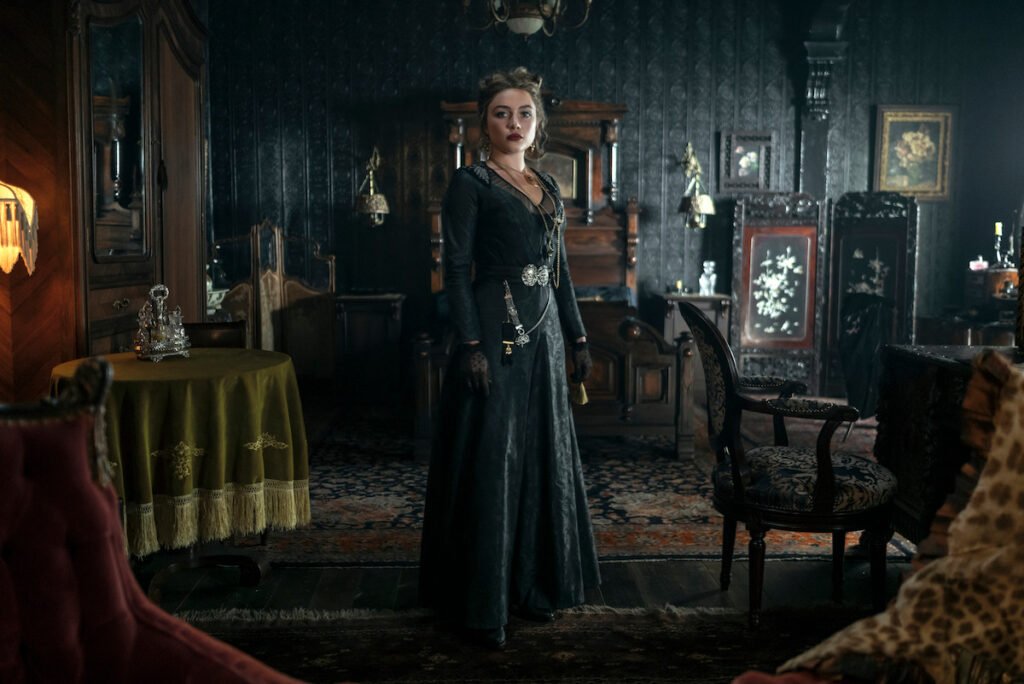
In Steinbeck’s novel, Cathy Ames is introduced almost as a biological anomaly. An innate monster born without a moral conscience. The narrator famously compares her to a deformed child, describing her wickedness as an innate defect rather than the product of her environment.
The Netflix series drastically reframes Cathy (Florence Pugh) by grounding her cold ruthlessness in severe childhood sexual abuse. Instead of portraying her as an inexplicable demonic force, the show treats her malice as a defense mechanism forged through horrific survival.
As a result, her deep cynicism toward men and her absolute disgust at Adam’s naive idealism make her actions, from burning her parents’ house to shooting Adam, feel like brutal acts of reclamation rather than arbitrary sociopathy.
2. Charles Trask Haunts Cathy and the Narrative Far Longer

In the book, Charles Trask passes away off-page on the family farm, leaving half of his considerable estate to Adam and half to Cathy. While Cathy certainly remembers their single night together and wonders about the twins’ parentage, Charles effectively exits the narrative once the story moves fully into the Salinas Valley.
Zoe Kazan’s series keeps Charles (Mike Faist) present long after his death. Cathy is repeatedly haunted by visions of Charles during her time running the brothel.
The Netflix adaptation frames Charles as the only man who ever truly recognized Cathy’s true nature without placing her on a pedestal, turning his lingering memory into a psychological ghost that accelerates Cathy’s paranoia and opium addiction.
Read More: Who Is Aron and Cal’s Real Father? The Charles Trask Secret in East of Eden Explained
3. Lee’s Independence and San Francisco Dreams Take Center Stage
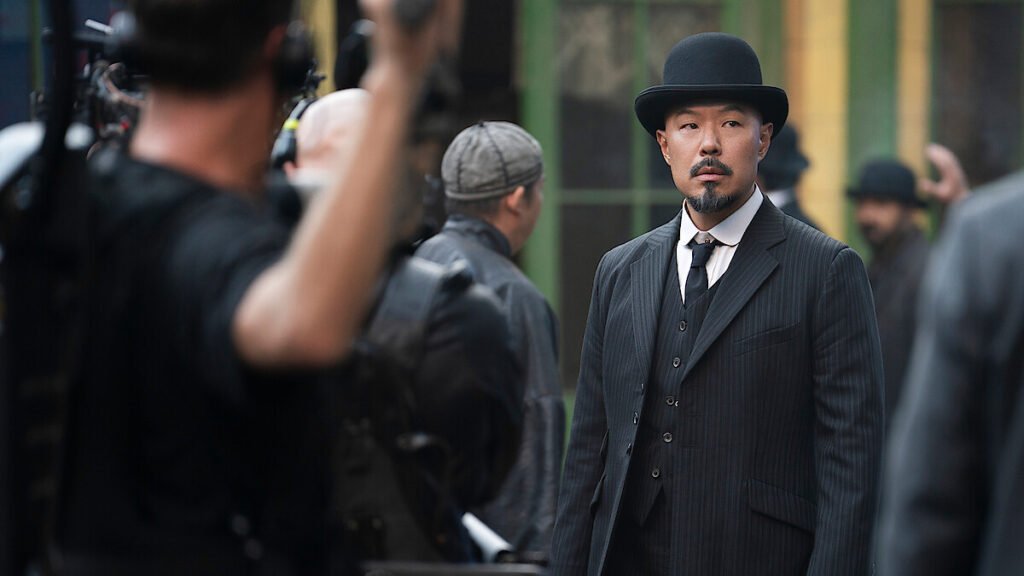
Lee is an extraordinary philosophical presence in Steinbeck’s text, but his character occasionally bumps against the era’s literary constraints. While he does talk about leaving the Trasks to open a bookstore in San Francisco, the book resolves his departure and quick return rather swiftly as a quiet domestic realization.
Netflix expands Lee’s (Hoon Lee) interior life significantly. We actively follow Lee to San Francisco, witnessing his direct attempts to carve out an identity outside of serving the Trask family.
His experiences navigating the intense anti-Chinese prejudice of early 20th-century California are placed directly on screen, making his eventual decision to return to Salinas an active, emotionally mature choice to protect the boys he loves rather than a passive resignation.
Read More: Who Is Lee in East of Eden and Why Does Hoon Lee’s Role Matter
4. Aron’s Religious Obsession Is Traded for Direct War Melodrama

as Aron Trask in East of Eden (Image: Netflix)
In the novel, Aron’s breakdown is a long, agonizing unraveling tied heavily to religious fanaticism. Under the influence of the local pastor, he becomes puritanical, developing an obsession with purity and asceticism that alienates his fiancée, Abra, who realizes he loves an unattainable ideal rather than a flesh-and-blood woman.
However, the series streamlines Aron’s (Joe Anders) arc, downplaying the prolonged religious subplot to focus heavily on the immediate familial shock.
When Cal exposes Aron to Cathy’s brothel, Aron’s identity fractures instantly. Rather than retreating into prolonged theological denial, he reacts with physical violence toward Cal and enlists immediately in World War I by forging his age, moving the plot rapidly toward his battlefield death and Adam’s fatal stroke.
You May Also Like:
Add us as a preferred source on Google.
[…] Read More: 4 Major Differences Between Netflix’s East of Eden and John Steinbeck’s Novel […]