
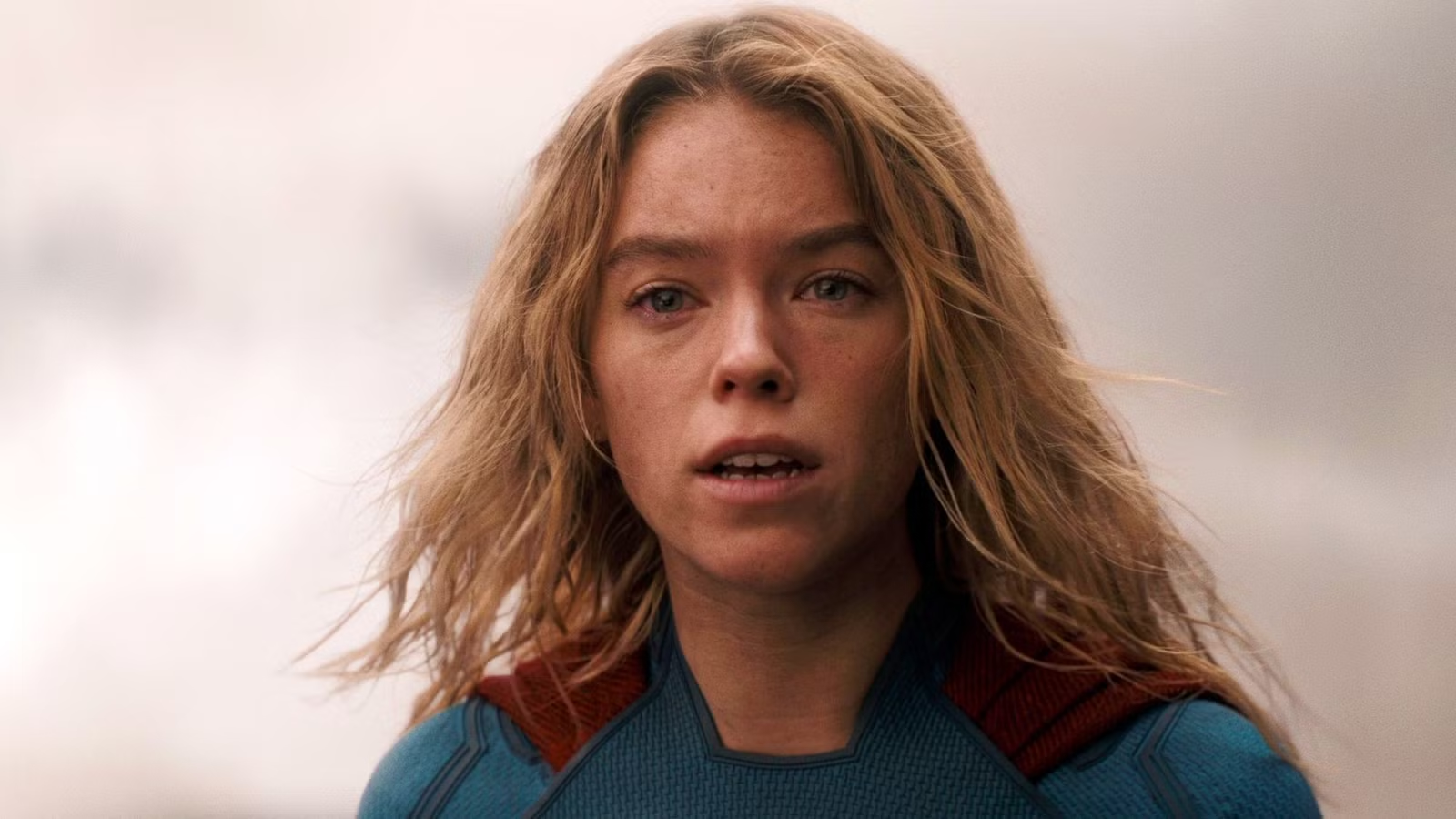
The conversation around Supergirl has gotten loud fast, and most of it is missing the actual point.
This is not a disaster film. It is not a triumph either. What it is is a film that arrived with an unusual amount of baggage for something only two entries into a brand new universe, and that baggage is doing most of the heavy lifting in how people are receiving it.
What’s The Real Problem With ‘Supergirl’?
Superman set a specific tone last year. It was warm, funny, and felt like it came from a singular creative voice. Audiences and fans responded to that warmth because it felt intentional, not manufactured. When Supergirl arrives darker, grittier, and more scattered in its energy, the instinct is to read it as a step backward.
But that framing is unfair to what Supergirl was always supposed to be. The source comic is a brutal, sun-scorched road story. It is not a warm film. Holding it to Superman‘s emotional register is like faulting Logan for not feeling like Spider-Man: Homecoming.
The problem is not the tone. The problem is that the execution does not fully commit to it. The film wants to be grimy and emotionally raw, but keeps pulling its punches at the moments that matter most. Milly Alcock gives you everything the role demands, and the film consistently underserves her by hobbling Kara right when she should be unleashed.
What Comic Fans Are Actually Reacting To
The fans who have read Woman of Tomorrow are not overreacting to a bad film. They are reacting to a missed opportunity, and those sting differently.
Krem of the Yellow Hills is a deliberately small villain in the comic. He is petty, cowardly, and almost pathetically human in his cruelty. That is the entire point. The horror of the book is that Kara has to drag herself across the galaxy for someone who barely deserves the effort.
Translating that onto the screen requires a filmmaker to trust the discomfort. Instead, the film reaches for a more conventional antagonist presence, and in doing so, loses the specific emotional logic that makes the source material so compelling.
That is a creative decision, not a production failure. And it is the kind of decision that will frustrate readers far more than casual audiences, because casual audiences never knew what they were missing.
It is not surprising, then, that the film has debuted with a 58% on Rotten Tomatoes and a 50 on Metacritic.
You May Also Like: