

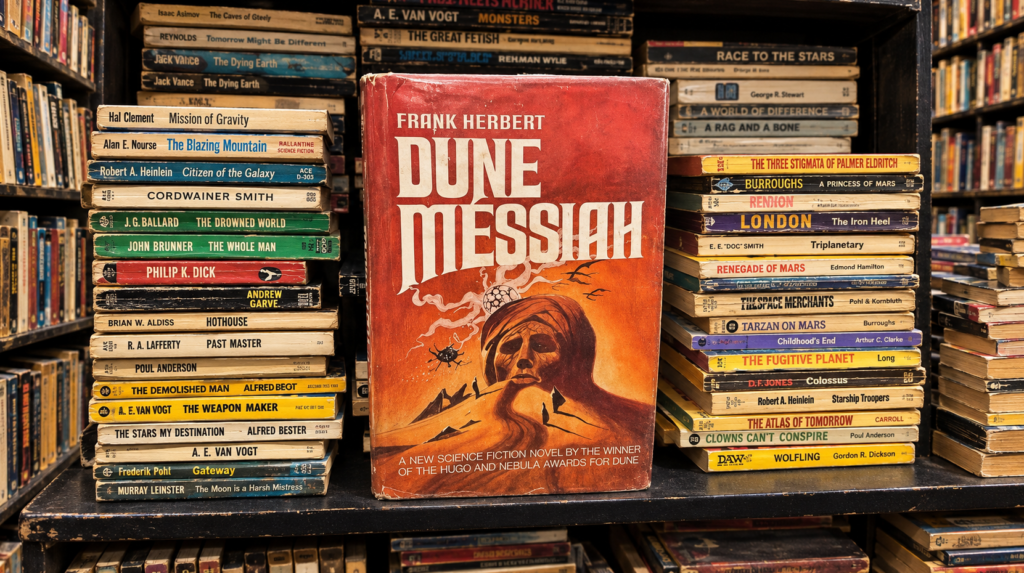
Frank Herbert’s warnings have aged with the irritating accuracy of the friend who said that haircut would be a mistake. More than 60 years after “Dune” arrived in book form, its universe still supplies uncomfortable reading for anyone enthusiastic about charismatic saviors, limitless resource extraction, or letting somebody else do all the thinking.
The man invented sandworms large enough to swallow heavy equipment. Somehow, his observations about human behavior remain the more unsettling achievement. Imagine Sigmund Freud and Nostradamus cloning into one.
That’s how the author of the first six books of “Dune” is looking right now.
In his Vanity Fair cover interview, Timothée Chalamet invoked Herbert’s warning about thinking machines when asked about AI. In “Dune,” Reverend Mother Gaius Helen Mohiam gives Paul Atreides the full warning:
“Once men turned their thinking over to machines in the hope that this would set them free. But that only permitted other men with machines to enslave them.”
The second sentence raises the question that runs through the rest of the saga. When people hand over their judgment, who gains the power to make decisions for them? Herbert asked that question about charismatic leaders and manufactured prophecy as readily as he did about machines.
Nostradamus comparisons are tempting.
Herbert’s actual method deserves more credit than a crystal ball. He watched politics, studied ecological relationships, and followed human appetites into systems that magnified their consequences. The resulting fiction makes tomorrow recognizable because yesterday keeps leaving fingerprints.
Frank Herbert’s warnings began with reporting
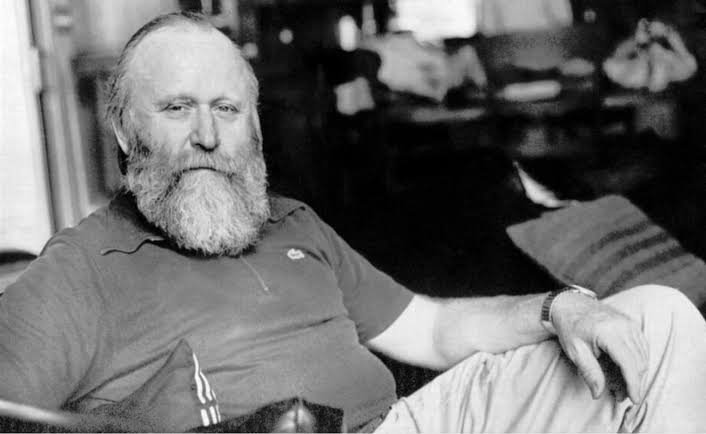
First, adjust the calendar. Herbert did not begin writing “Dune” in 1965. That was the novel’s publication year. Its development reached back into the 1950s, and portions appeared in Analog beginning in 1963. The Oregon Historical Society’s account traces a crucial inspiration to his 1957 visit to Oregon’s coastal dunes.
He went to investigate efforts to stabilize moving sand with vegetation. A landscape that could overwhelm human infrastructure gave him material for a world where ecology governed survival. Arrakis grew from observation as well as imagination.
This is the secret of every skilled writer of fantasy: Understanding how reality can inspire it.
His background matters when discussing Frank Herbert’s warnings. A journalist investigates who benefits, who pays, and which reassuring explanation collapses under another question. Herbert carried that habit into fiction and gave it an imperial budget.
The saga’s ideas also developed across decades. “Children of Dune” appeared in 1976; “Chapterhouse: Dune” followed in 1985. Gathering their sharpest lines under a single 1965 timestamp would make him sound even more supernatural, but also make the article less accurate.
Climate changes while people argue about the weather
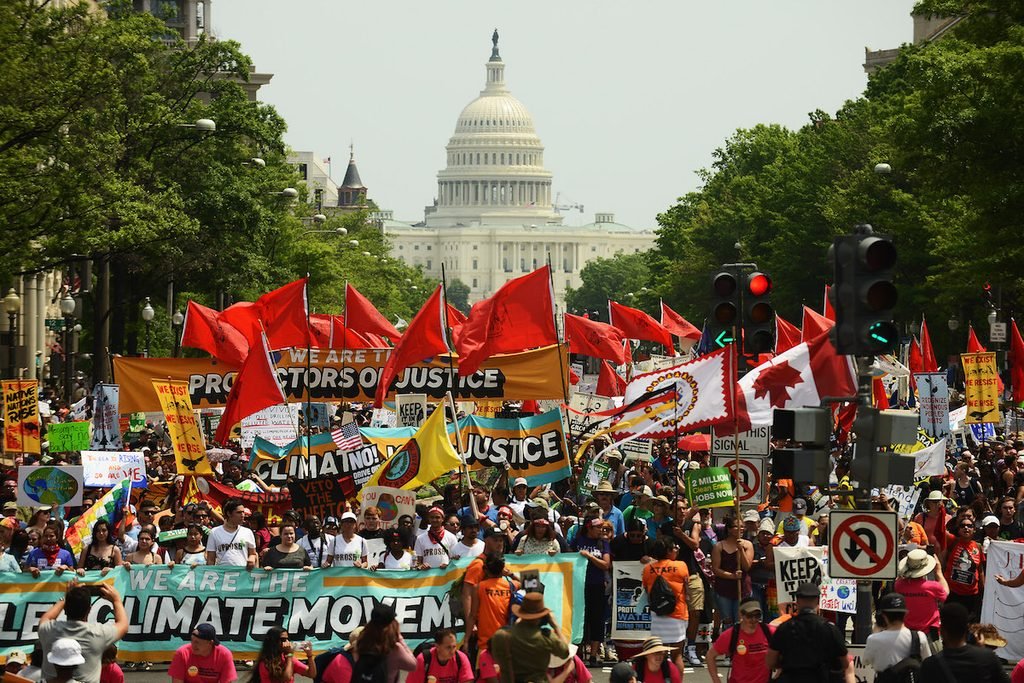
One of Frank Herbert’s warnings addresses the mismatch between a human lifetime and environmental change. An epigraph in Children of Dune observes:
“Limits of survival are set by climate, those long drifts of change which a generation may fail to notice.”
The passage distinguishes immediate experience from the shifting conditions beneath it. People notice an unusually cold year. Recognizing a changing average requires a longer view. An anecdote can feel decisive while revealing very little about the system surrounding it.
That insight fits modern climate arguments, although Herbert did not invent climate science. As NASA’s historical explanation notes, Svante Arrhenius described the warming implications of changing atmospheric carbon dioxide in 1896. Herbert gave environmental relationships a dramatic place in popular fiction; scientists had already been doing the scientific work.
Arrakis makes that distinction tangible.
Water governs daily behavior, economic arrangements, and dreams of a different future. Changing the landscape also means changing the conditions that sustain its existing life. Ecological transformation cannot arrive as a free upgrade with the old benefits permanently grandfathered in.
Frank Herbert’s warnings challenge the habit of solving one visible problem while ignoring connected consequences. The planet does not care whether the presentation had an encouraging final slide.
Power knows exactly where to send its application

“Chapterhouse: Dune” contains a diagnosis that could haunt recruitment committees across the Imperium:
“All governments suffer a recurring problem: Power attracts pathological personalities. It is not that power corrupts but that it is magnetic to the corruptible.”
The novel’s attributed epigraph changes the question. Instead of considering only what authority does to a decent person, consider which people seek authority and what an institution rewards on their way up.
That is among the most durable of Frank Herbert’s warnings. A system cannot rely entirely on the next leader having better intentions. It needs ways to restrain ambition, expose mistakes,s and challenge decisions without treating scrutiny as treason.
Herbert addressed the subject directly in a 1981 published interview: “There is definitely an implicit warning, in a lot of my work, against big government and especially against charismatic leaders.”
His concern included followers who granted a leader too much latitude. An admirable intention could still produce enormous damage when an entire population lived under its consequences. The danger multiplied when devotion made admitting error politically impossible.
The chosen one comes with a marketing department
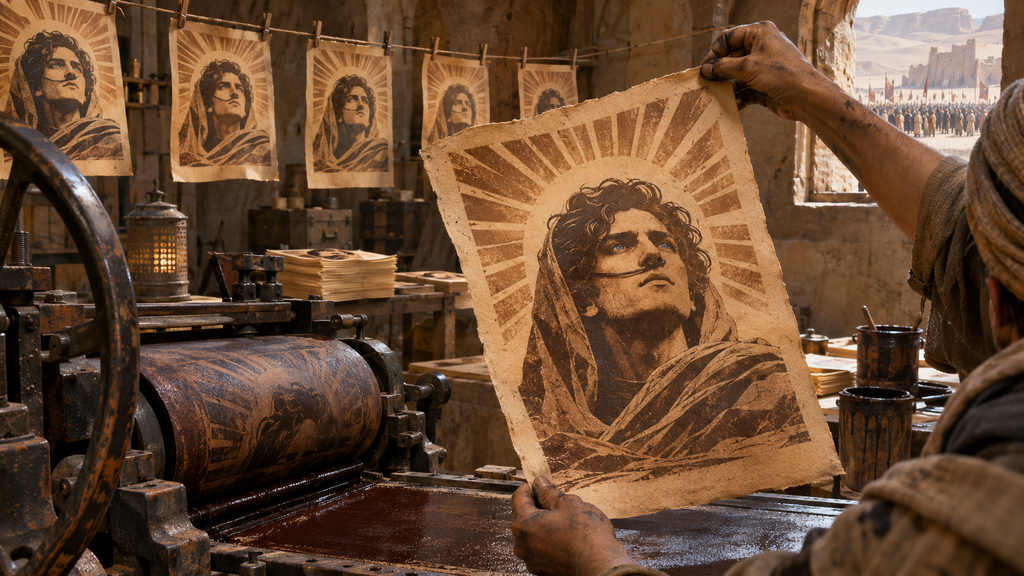
The original novel gives another of Frank Herbert’s warnings its religious and political dimensions:
“When religion and politics travel in the same cart, the riders believe nothing can stand in their way.”
In “Dune,” the Bene Gesserit cultivate beliefs that their members can later exploit. The Missionaria Protectiva makes prophecy a form of political preparation. Jessica and Paul enter a world where expectations already exist, then discover how much power those expectations can confer.
The story interrogates the people who manufacture certainty and the institutions that deploy it. A meaningful discussion should distinguish sincere religious conviction from claims that give a political actor unquestionable sacred authority. Herbert’s fictional machinery offers ample room for examining that distinction without reducing every believer to a dupe.
Paul also makes the warning harder to shrug off. Readers encounter his vulnerability, loss, and abilities before confronting the consequences of his rise. Recognizing the appeal is part of recognizing the danger. A manipulator with a name tag reading “Obviously Evil” would save everyone considerable trouble.
Frank Herbert’s warnings therefore reach the audience, too. Admiration becomes dangerous when it grants permanent exemption from judgment. A crowd can cheer its way into a catastrophe while believing it has finally found the person who will prevent one.
The machines can leave while domination stays
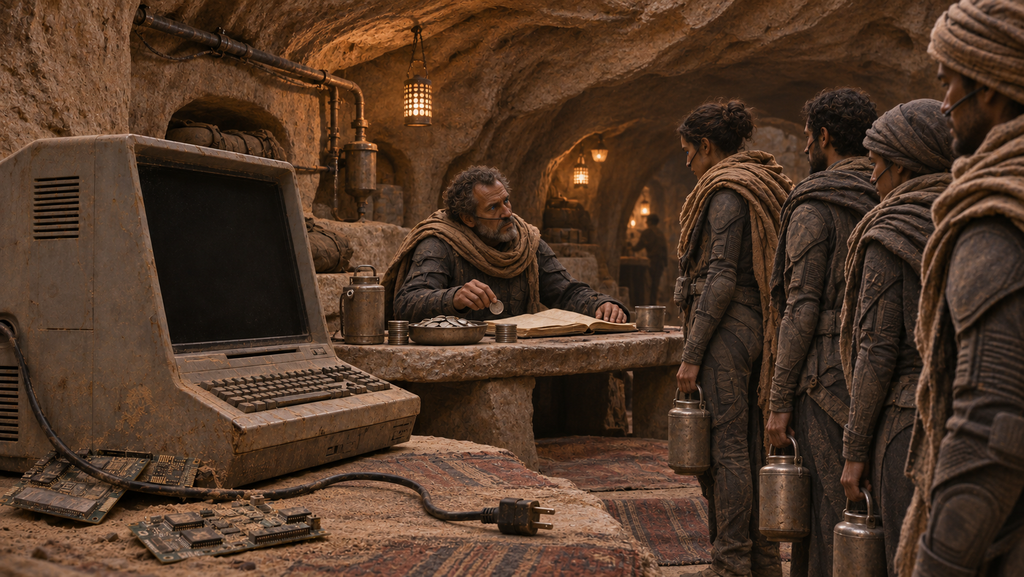
The technology argument belongs inside that larger pattern.
In the publisher’s Dune excerpt, Reverend Mother Mohiam explains that outsourcing thought allowed people controlling machines to dominate others. The concern extends beyond an autonomous machine deciding that humanity has become inconvenient.
This makes Frank Herbert’s warnings especially uncomfortable for a culture accustomed to measuring freedom by the number of tasks a product removes. Convenience can help people. Dependency can also narrow their ability to refuse the terms on which that convenience arrives.
The novel supplies a sting: a civilization without thinking machines still has emperors, monopolies and institutions manipulating human lives. Removing one instrument of control does not abolish the desire to control. The important examination concerns the arrangement of power and the habits that allow it to endure.
Herbert offers readers no easy escape through a single ban, a better ruler, or a spectacularly intelligent protagonist. Each apparent solution belongs to a larger system that can produce another problem.
Frank Herbert’s warnings remain useful because they ask readers to examine choices rather than congratulate a dead author for winning an argument with the future. Climate requires attention beyond yesterday’s weather. Political authority requires accountability beyond personal charm. Technology requires judgment beyond whether a demonstration looks impressive.
Even his fictional prescience comes with complications. As in, “Why can’t this dude see who is trying to kill him?”
Knowing a possible future does not automatically create the wisdom or freedom to improve it. Readers drawn to Paul’s extraordinary vision must also confront how that vision interacts with the paths he chooses.
That gives the Nostradamus joke its proper place: an affectionate introduction to a writer whose serious subject was human responsibility. Frank Herbert’s warnings raise questions that remain difficult to answer after the spice wears off and the screen goes dark.
He did not need to see tomorrow’s headlines. He understood how enthusiastically people repeat the decisions that produce them. The sandworms, at least, have the decency to announce their arrival through the floor.
Add us as a preferred source on Google.