

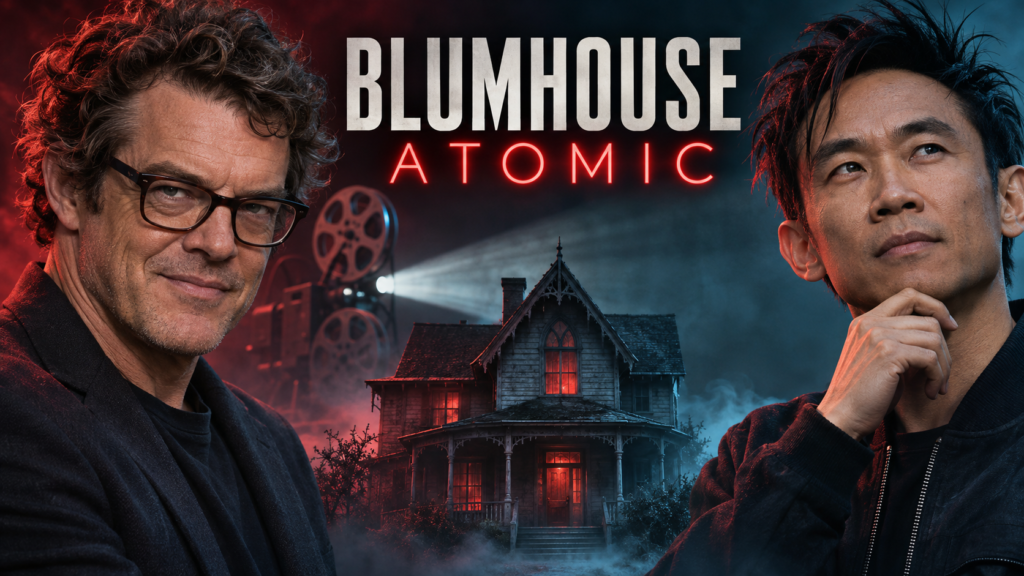
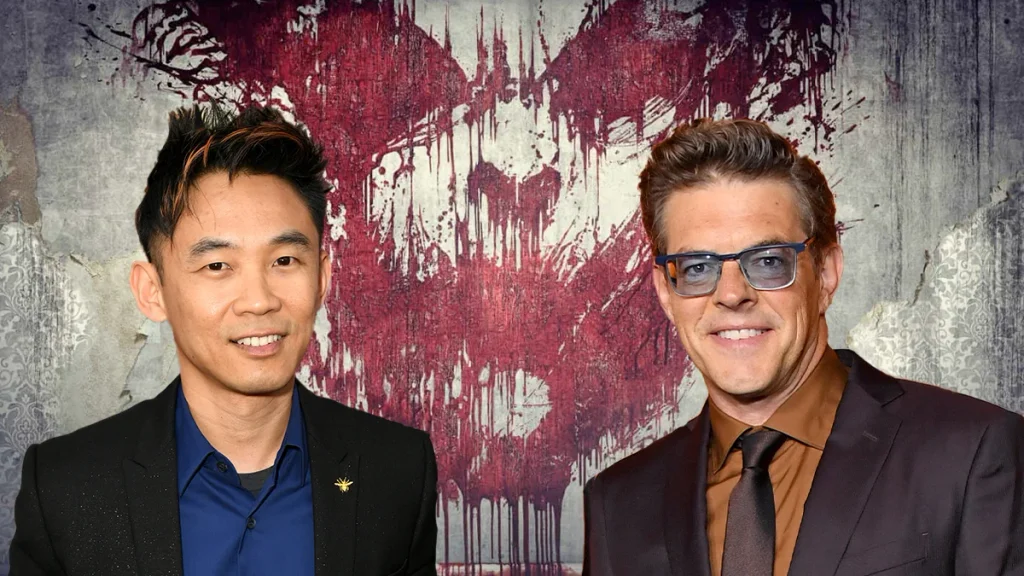
Blumhouse Atomic has given Hollywood’s most appropriately unsettling partnership a new name. Producer Jason Blum (“Get Out,” “Paranormal Activity”) and director-producer James Wan (“Saw,” “The Conjuring“) unveiled the corporate identity on Nov. 3, nearly three years after their companies merged in January 2024.
By Nov. 6, the newly named operation had announced a first-look deal with horror-comics heavyweight James Tynion IV’s Tiny Onion, covering film, television, and animation. Apparently, the housewarming gift was a serial killer battle royale.
That would be “Exquisite Corpses,” which Blumhouse Atomic is developing with Tiny Onion and Lyrical Media for film and animation. The partnership expands an existing relationship on “Something is Killing the Children.” These gentlemen clearly have a gift for naming things you shouldn’t say during a parent-teacher conference.
The announcement also raises a better question than which comic gets adapted next.
Blum and Wan helped make horror a dependable theatrical proposition without requiring every movie to cost as much as rebuilding the haunted neighborhood. Now they’re building something much bigger.
Can that operation continue to make room for the peculiar people who made it possible?
Blumhouse Atomic has more than a new sign over the door
Blumhouse and Atomic Monster will retain their separate production labels and creative teams. According to figures released with the rebranding, the combined company’s horror slate has earned more than $2.5 billion worldwide since the merger, against production budgets totaling less than $330 million.
That comparison excludes marketing costs and the theaters’ share of ticket sales. Nobody gets to call the difference profit. It does, however, explain why Hollywood keeps checking beneath Blum’s bed for another business plan.
Horror offers a useful bargain: a premise audiences can understand quickly, an experience they want to share and, sometimes, a production that can achieve both without a fleet of digital aircraft carriers.
Blumhouse Atomic can spread its bets across different kinds of fear. One film can disappoint without turning the entire company into an estate sale. (Yes, M3GAN, we’re looking at you.)
For fans, that matters when financial breathing room leads to more adventurous movies. It becomes considerably less exciting when it produces another familiar title with a number attached. Both outcomes can emerge from the same spreadsheet.
Horror didn’t need permission to leave October

Blum and Wan deserve substantial credit for horror’s contemporary reach. Giving them the entire resurrection would require burying a genre that kept climbing out of its coffin.
“Jaws” arrived in June 1975. Wan’s own “The Conjuring” opened in July 2013. Summer audiences have been paying to have their blood pressure rearranged for decades. Halloween provides useful marketing; fear has never checked the calendar before entering the room.
The genre’s history also refuses to stay in tidy decade-sized boxes. Gothic monsters gave way to new anxieties without disappearing. Psychological terror survived the slasher boom. Found footage joined an already crowded basement. Horror keeps absorbing whatever a generation fears, then finding a face—or a mask—to put on it.
What makes Blumhouse Atomic interesting is the opportunity to support that constant reinvention at scale.
A filmmaker with an unsettling idea needs financing, distribution and somebody willing to explain the idea to an audience. Repeating that process reliably can change a genre’s opportunities more than declaring its latest renaissance.
Blum made creative risk easier to survive
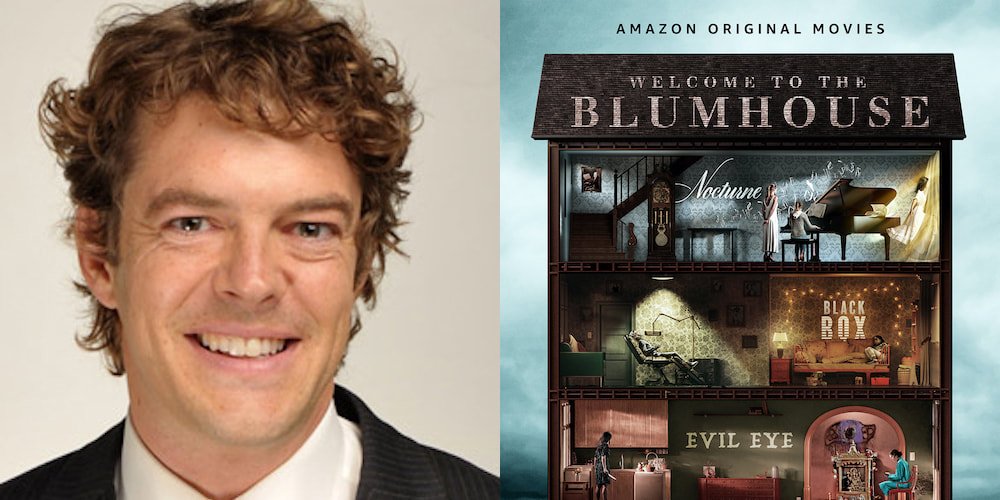
Blum explained the connection between money and artistic freedom in a 2025 Variety interview:
“I was able to take all the benefits of low-budget filmmaking, which is just creative control.”
The important word there is control. Smaller budgets allow a filmmaker to make choices that would terrify a committee protecting a much larger investment. That doesn’t make every inexpensive movie good. It makes a strange movie easier to defend before anyone knows whether audiences will buy tickets.
Consider the range associated with Blumhouse: “Get Out” turns racial unease into a nightmare of bodily ownership. “Happy Death Day” sends a slasher through a time loop. “M3GAN” finds comedy and menace in outsourcing parental responsibility to technology. Those movies offer different invitations into horror. A viewer can arrive for the satire, the puzzle or the homicidal appliance and discover an appetite for the rest.
Their individual filmmakers deserve credit for those identities. Blum’s value as a producer includes creating circumstances in which a distinctive voice can reach a mainstream audience. Blumhouse Atomic will earn its size if more filmmakers get that opportunity.
The failures belong in this conversation, too. “M3GAN 2.0” earned about $39.1 million worldwide, and Blum faced its disappointing reception in that Variety interview. Recognition, a returning character, and an established company didn’t guarantee another hit. A franchise can have excellent brand awareness and still find that everyone knows they’d rather stay home.
Wan understands who makes the monster frightening

Wan’s contribution becomes clearest before anything jumps out. In “The Conjuring,” the house matters because a family has to live in it. In “Insidious,” the supernatural machinery surrounds parents terrified for their child. The elaborate nightmares have an ordinary emotional address.
“If you have characters that you care about, that is hands down the most important thing,” Wan told Daily Dead in 2016.
That helps explain how a devoted horror audience and a casual moviegoer can enjoy the same screening. One appreciates the staging, the misdirection and the way Wan weaponizes an empty corner. The other is worried about the family.
By the time the scare arrives, both are leaning forward. NSN’s DREAD Index discussion of “The Conjuring” gets at that patience: anticipation makes the room dangerous before anything moves.
Blumhouse Atomic brings financial discipline and that understanding of audience investment into the same organization. There is promise in the combination, provided its projects retain individual personalities. Nobody buys a ticket to admire the efficiency of a corporate structure while a demon crawls across the ceiling. Just think about that.
Tiny Onion gives the ambition a bloody test case
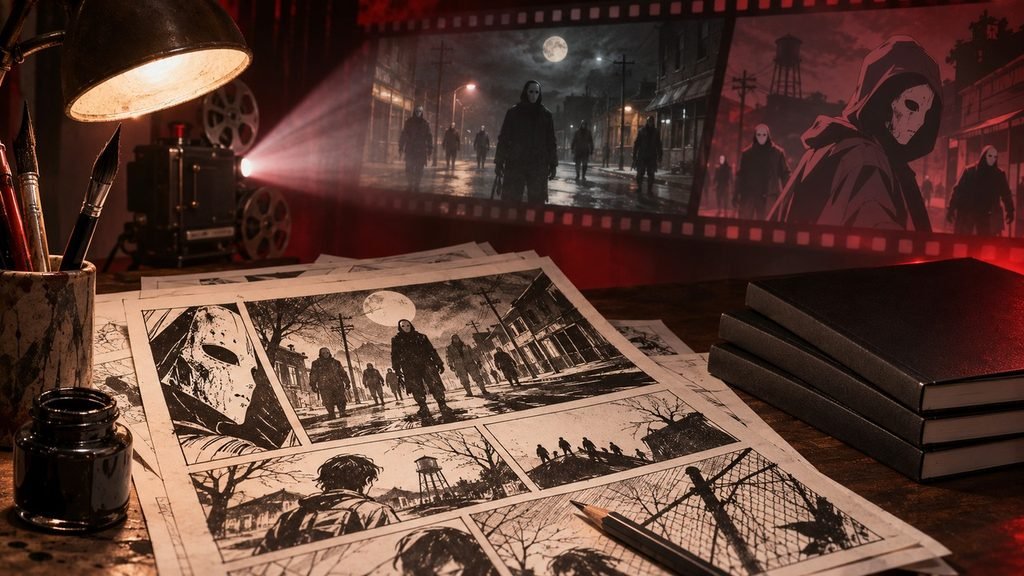
Writer Tynion (“The Department of Truth,” “The Nice House on the Lake”) and artist Michael Walsh co-created “Exquisite Corpses,” published by Image Comics. Its premise opens with 12 killers sent to Oak Valley, Maine, for a Halloween contest organized by wealthy families. The killers compete to survive each other. Residents would prefer to survive any of them.
The appeal to Blumhouse Atomic is easy to see.
A town under siege supplies immediate stakes, multiple antagonists provide different flavors of terror, and the people financing the slaughter give the violence a social target. It has room for spectacle and a thoroughly nasty point of view.
The adaptation’s challenge will be making the town’s residents matter amid all those potential breakout villains. Otherwise, an effective ensemble nightmare could become a succession of elaborate character introductions. Wan’s argument about caring for people applies particularly well when the competition is designed around who kills them.
The Tiny Onion announcement also confirms that “Something Is Killing the Children,” co-created with artist Werther Dell’Edera, is being developed as a live-action film and an adult animated series. Director Craig Zobel (“The Hunt,” “Mare of Easttown”) is attached to the film, with production planned for 2027; Tynion is spearheading the animated series.
For Blumhouse Atomic, that involvement gives fans something concrete to watch, rather than a familiar title changing hands.
Blumhouse Atomic is extending its relationship with a creator across formats. Whether those formats produce distinct, worthwhile experiences will matter more than how many adaptations fit in the announcement.
The next monster could be the company itself
Horror thrives on filmmakers willing to make choices that seem unwise until an audience starts screaming. Growth brings Blumhouse Atomic resources, but it also brings the temptation to standardize those choices. Familiar franchises help fund experiments; eventually, somebody may decide experiments are the troublesome part.
Blumhouse Atomic has an unusually compelling chance to resist that temptation. Its founders understand both the commercial usefulness of a recognizable nightmare and the creative value of an unfamiliar one. Their partnership with Tiny Onion suggests they’re still looking outside their own trophy cabinet.
The housewarming is over for Blumhouse Atomic. Now comes the difficult business of deciding what gets to live inside. If Blum and Wan keep opening the door to strange imaginations, their next monster could give horror fans years of pleasure.
If they build a company that only wants more of what already worked, they’ll have created something Hollywood knows how to make perfectly well without them.
Add us as a preferred source on Google.