


The Fox-Roku merger closed Nov. 6, completing Fox Corp.’s approximately approximately $22 billion (enterprise value) acquisition of the streaming platform and bringing its sports, news and entertainment businesses together with a gateway serving more than 100 million households worldwide.
Fox’s announcement says Roku will remain open to competing services, while the combined company targets roughly $400 million in annualized cost savings within two years.
The Fox-Roku merger arrived early, financed with cash and stock. A September securities filing had anticipated closing in the first half of 2027. Roku joins Tubi, Fox One and other businesses in the new Fox Digital Platforms division. Roku founder Anthony Wood becomes its co-chair and joins Fox’s board; Paul Cheesbrough becomes co-chair and CEO of the division.
“The closing of this acquisition advances the long-term strategy of FOX,” Executive Chair and CEO Lachlan Murdoch said in the announcement. “Beginning today, our top priority for the combined company is to continue to relentlessly serve audiences and partners, while reinforcing the openness and choice that is the essence of the Roku platform. Our shared entrepreneurial passion and clear conviction toward building the future together with our new Roku colleagues gives us great confidence in the opportunities ahead of us.”
Wood offered his own reassurance: “What does change is our reach and resources.”
And that is why we are all here today—to extend their reach and create new resources for an eventual media takeover. They paid cash, with the rest in stock. This wasn’t a whimsical purchase, nor was it an opportunity to beef up a portfolio. This Fox-Roku merger was an effort to become a super streamer. With Skydance, the newly merged Paramount and Warner Bros. Discovery, owning DC, Disney owning Marvel, Amazon owning The Boys, why not?
The closing filing specifies $95.30 in cash and 0.9799 Fox Class A shares for each eligible Roku share. Fox’s announcement puts the resulting ownership split at approximately 74% for existing Fox shareholders and 26% for former Roku shareholders. Meanwhile, the Justice Department closed its review after examining competition concerns and describing Fox’s commitments on rival content, search and data.
There’s the transaction. Here’s the part that follows us home: a company selling programs now owns a major platform through which people find everybody else’s programs. Through the Fox-Roku merger, Fox has acquired a remarkably good seat between you and your television.
And as that featured image shows: This is chess. It ain’t checkers.
The Fox-Roku merger buys the front door
Roku’s hardware is the visible part. The little box, the television operating system, and the remote make a sprawling entertainment market manageable enough to navigate from the couch.
Behind that convenience sits a business involving advertising, subscriptions and distribution. Roku can help determine which services viewers encounter, how they discover programs and where they complete a purchase. Its own free streaming service, The Roku Channel, competes for their attention, too.
Calling Roku merely a hardware company is like describing an airport as a building with comfortable chairs. The value lies in the traffic passing through it.
Fox already had content and streaming outlets. Tubi offers free, advertising-supported entertainment. Fox One sells access to Fox’s news, sports and other programming. The Fox-Roku merger gives those businesses a much larger distribution relationship to work with.
The Fox-Roku merger also creates an obvious tension. How does a platform serve its owner’s commercial interests while remaining a welcoming home for that owner’s rivals?
That question existed before the closing ceremony. It becomes more consequential when the platform belongs to a competitor.
The super streamers are choosing their corners

Netflix remains the Godzilla in this discussion: a streaming business its rivals keep trying to outmaneuver, imitate or assemble enough corporate machinery to challenge.
Even its setbacks have not stopped its expansion. The Tyson-Paul boxing broadcast suffered technical problems; weeks later, Netflix was carrying Christmas NFL games. Its subsequent audience report described a reach of 65 million U.S. viewers. That does not prove every problem disappeared. It demonstrates the resources and appetite to keep going.
The Fox-Roku merger is a different way of seeking leverage. The principal positions now look like this. Introducing the Super Streamers:
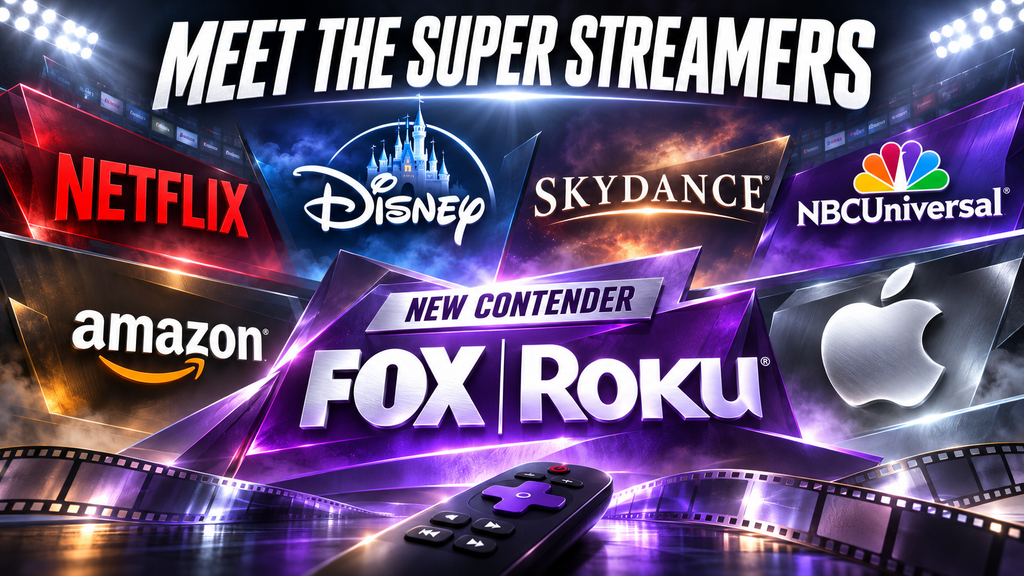
These are not identical companies competing with identical tools. Skydance’s October combination brought Paramount and Warner Bros. Discovery together. Comcast’s proposed NBCUniversal separation remains a future transaction, rather than a completed change.
There is another important family-tree correction: Fox Corp. does not own the former 20th Century Fox movie studio. That business was acquired by Disney in the 2019 acquisition.
Apple may sometimes look like the guest standing outside this particular party, but it has its own originals, sports and device ecosystem. Amazon already connects Prime Video viewing with devices including Fire TV.
Owning both the attraction and a route to it is an established ambition. Fox has purchased a formidable version of that route.
What changes on the bill?
For viewers, the first useful distinction is between owning a Roku and subscribing to something available through it.
The Fox-Roku merger does not turn the device into a single subscription that includes every service on its home screen. Nor does ownership of Roku automatically include Fox One. Fox was already offering Fox One through The Roku Channel for $19.99 a month before the companies combined.
The closing announcement does not set out a new universal Roku subscription fee or promise to reduce viewers’ existing bills.
There are plausible benefits. A company coordinating free entertainment, subscriptions and live programming could make discovery and billing less cumbersome. A useful package might cost less than buying its components separately. Better software could save viewers another evening searching six apps for a movie they were certain they already paid to watch.
Those remain possibilities. The Fox-Roku merger itself is not a discount code.
The savings target attached to the Fox-Roku merger is a corporate objective, with no accompanying promise to pass a particular amount to customers. Efficiencies could support better products. They could also help service the transaction’s financial obligations or improve the company’s returns.
Likewise, a $22 billion purchase does not establish that a price increase is coming. It creates pressure to earn a return, and there are several ways to pursue one.
Viewers may pay through subscriptions, tolerate more advertising or trade more information about their preferences for convenience. The important number is the household’s combined cost of watching what it actually wants, rather than the appealing introductory price on the newest tile.
Openness has to survive commercial pressure
The Justice Department’s statement gives the promises surrounding the Fox-Roku merger some useful specificity.
Fox committed to carrying non-Fox content consistent with Roku’s historical practice for at least three years. It also committed to nondiscrimination against non-Fox content in search, continued user control over app arrangement, commercially reasonable access to data products, and the maintenance of existing contractual protections for competitors’ sensitive data. The statement specifies at least three years for those data firewalls as well.
The department concluded that harm to competition was unlikely, reasoning in part that damaging Roku’s broad offering could drive customers elsewhere. It said it could act if circumstances changed.
That is more substantial than an executive asking everyone to relax. It also deserves careful reading: the three-year language is attached to particular commitments, not a blanket expiration date for every protection.
The practical test will be the experience on the screen. Can viewers readily find rival content? Does rearranging an app preserve meaningful control? Can an independent service still reach an audience without being buried beneath the owner’s priorities?
Those questions help measure whether the Fox-Roku merger preserves what an open platform has to keep delivering.
Content can become a pawn even when the library grows

In a Streaming Media interview published when the deal was announced, Future Today co-founder Vikrant Mathur neatly identified the problem: “Home screen real estate is inherently finite and zero-sum.”
Mathur operates in this market, so his concerns come from an interested participant. They are worth hearing precisely because independent services depend on the distribution decisions being discussed.
A platform can contain thousands of choices while directing most of our attention toward a small number of them. More content does not automatically mean more discoverable content.
For fandoms, the Fox-Roku merger makes that distinction personal. A beloved series might be available but difficult to locate. A smaller horror service might retain its app while losing the visibility that brings in new subscribers. A franchise could gain prominent promotion through a corporate relationship while another competes for whatever attention remains.
Those are potential pressures, not announced changes to Roku.
The Fox-Roku merger also cannot transfer sports rights Fox does not hold or cancel another studio’s licensing agreements by corporate magic. Ownership makes coordination easier within the group; the contracts outside it still matter.
Content has become a collection of pieces in the same expensive chess game. Every company is protecting its queen. Viewers would appreciate knowing why they keep getting charged for the board.
Fox has bought scale, but viewers still need value
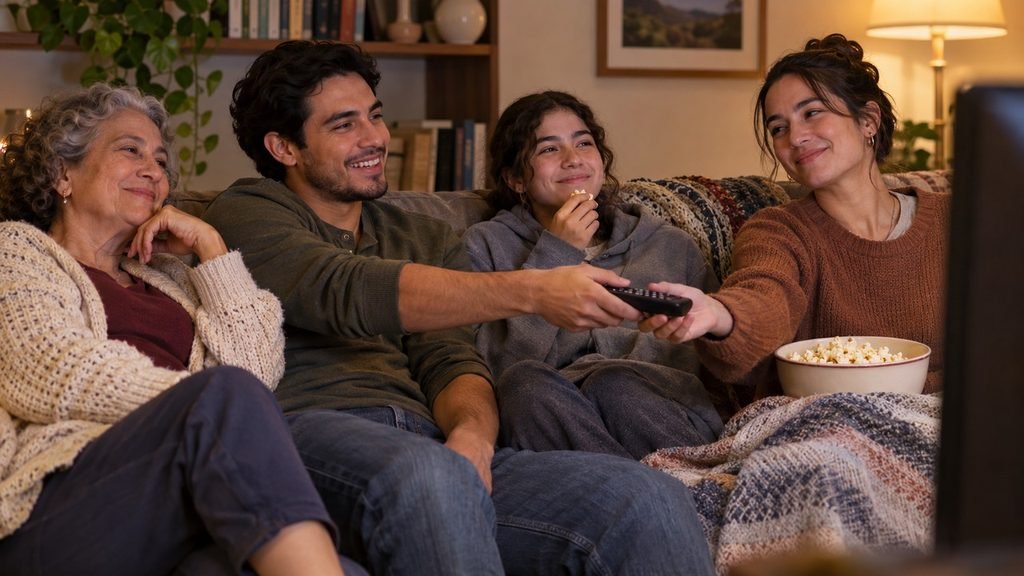
There is a credible case that the Fox-Roku merger could improve competition: better distribution for its programming, investment in Roku’s technology and more support for free entertainment.
There is an equally credible concern about the growing distance between choosing an app and choosing who controls the experience around it.
Neither case is settled by the Fox-Roku merger closing ahead of schedule.
For the public, the test is straightforward. Does the combination make desired programming easier to find, offer useful prices, preserve genuine alternatives and keep the television pleasant to use? Or does it make it harder for one company’s priorities to be escaped?
Fox’s strategic appetite makes sense. It has found a substantial piece of the streaming business to devour.
Whether anyone on the couch gets a better meal remains the question.
Add us as a preferred source on Google.