

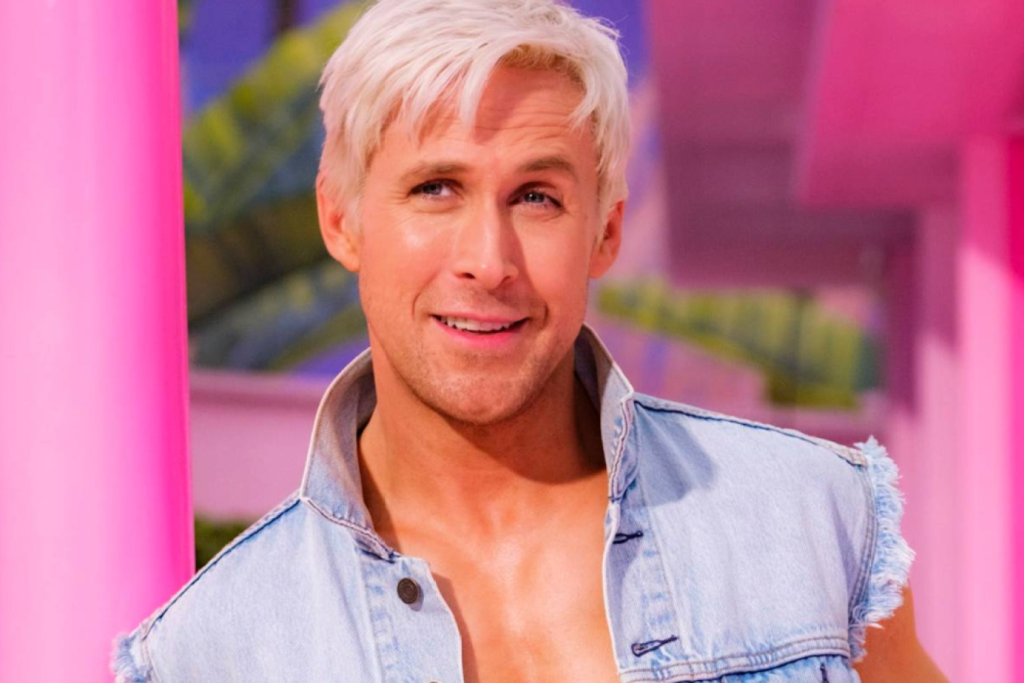
Ryan Gosling has spent more than two decades building one of Hollywood’s most diverse filmographies. While The Notebook (2004), Drive (2011), La La Land (2016), and Barbie (2023) established him as one of the industry’s biggest stars, some of his strongest performances arrived in films that never achieved the same commercial success.
Looking beyond Gosling’s biggest hits reveals an actor willing to take creative risks. He has repeatedly chosen emotionally demanding roles over conventional leading-man parts, working with filmmakers who prioritize character and storytelling over spectacle. The five films below highlight that side of his career, proving that several of his finest performances exist outside the titles most audiences immediately associate with his name.
5. First Man (2018)
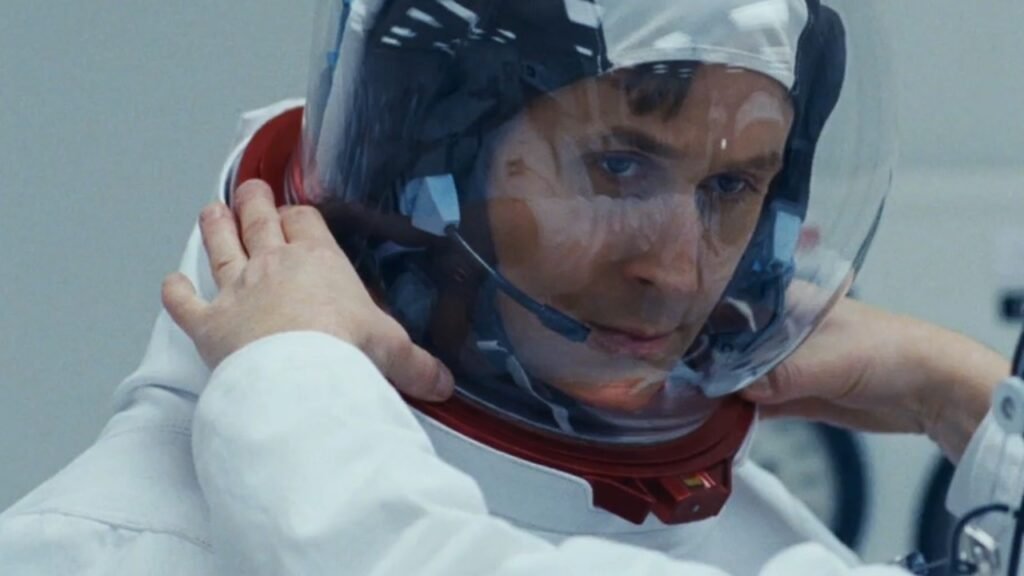
Damien Chazelle approached Neil Armstrong’s story differently from most space dramas. Rather than celebrating the Apollo 11 mission as a patriotic spectacle, First Man examines the emotional weight Armstrong carried after losing his daughter, Karen. That decision shapes every major sequence, turning the Moon landing into the culmination of a deeply personal journey instead of a straightforward historical victory.
Ryan Gosling mirrors Armstrong’s reserved personality through an intentionally restrained performance. He avoids dramatic speeches and emotional outbursts, portraying a man who buries his grief beneath work and routine. Claire Foy matches that restraint as Janet Armstrong, giving the family story equal importance to NASA’s achievements. Their relationship carries the emotional core of the film.
Chazelle also rejects the polished look common in modern space films. Tight close-ups inside spacecraft create a constant sense of confinement, while violent sound design fills every launch with rattling metal, vibrating panels, and mechanical stress. The Gemini 8 docking sequence captures that approach at its best, transforming a known historical event into one of the most tense scenes in Gosling’s career. When the film finally shifts into IMAX for the Moon landing, the sudden openness gives the moment emotional weight rather than simply visual scale.
Despite earning four Academy Award nominations and winning Best Visual Effects, First Man underperformed at the box office. Its reputation has steadily grown because of its technical precision, Justin Hurwitz’s score, and its refusal to romanticize space exploration. It remains one of the most distinctive space dramas released in the last decade.
4. The Nice Guys (2016)
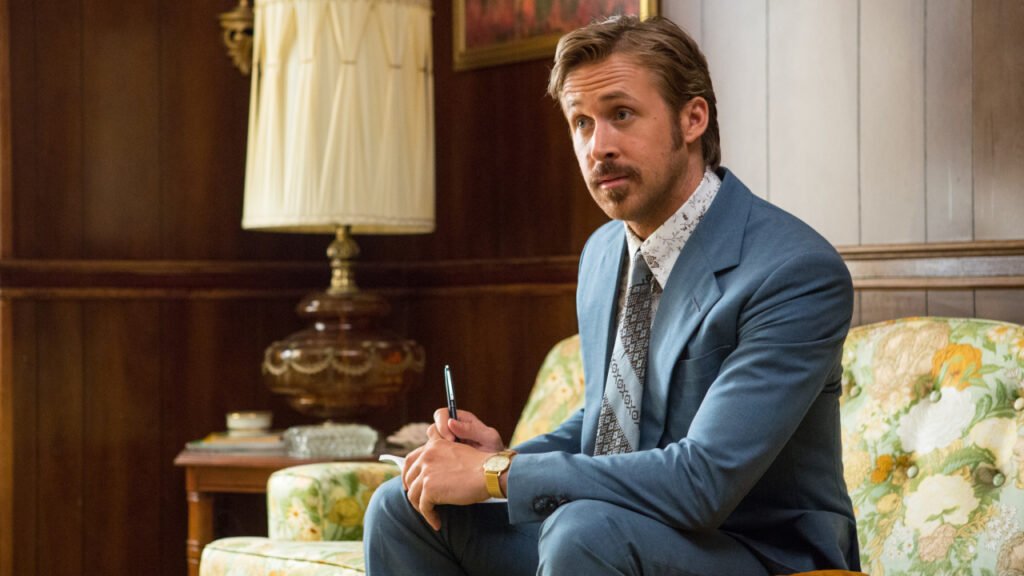
Few comedies make better use of Ryan Gosling’s physical timing than The Nice Guys. Playing private investigator Holland March, Gosling embraces clumsiness, panic, and bad decision-making without ever losing the character’s charm. His performance balances slapstick comedy with detective noir, creating one of the funniest roles of his career.
Much of the film’s success comes from Gosling’s chemistry with Russell Crowe. Their partnership drives every scene, with Shane Black’s fast-paced screenplay giving both actors room to bounce off one another naturally. The jokes rarely interrupt the mystery, allowing the investigation and comedy to strengthen each other instead of competing for attention.
Shane Black also recreates 1970s Los Angeles with remarkable attention to detail. The costumes, production design, soundtrack, and locations establish a period setting that feels lived-in rather than nostalgic. The action follows the same philosophy, relying on practical choreography and clear editing instead of rapid cuts or excessive visual effects.
Although critics responded positively, The Nice Guys failed to become a commercial success. Its reputation has only improved since release, with its screenplay, performances, and blend of comedy, mystery, and action earning recognition as one of the strongest buddy detective films of the 2010s.
3. Lars and the Real Girl (2007)
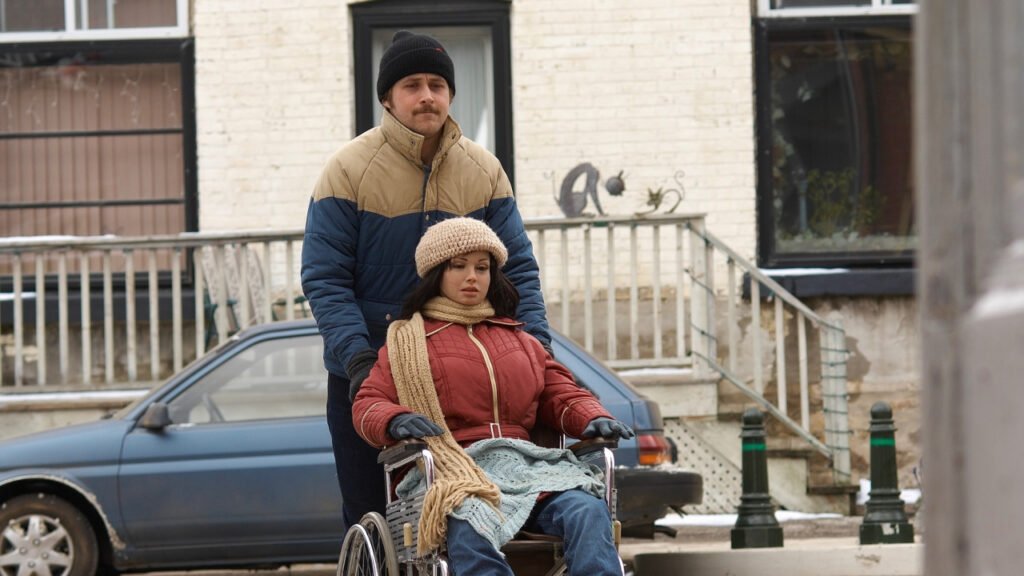
Ryan Gosling took one of the biggest creative risks of his career with Lars and the Real Girl. Directed by Craig Gillespie, the film follows Lars, a socially isolated man who believes a life-sized doll named Bianca is his girlfriend. Instead of turning the premise into broad comedy, the story treats Lars’ emotional state with sincerity. It explores loneliness, unresolved trauma, anxiety, and the difficulty of forming human connections, creating a character study that feels surprisingly grounded.
Gosling commits fully to the role without exaggerating Lars’ behavior. His quiet mannerisms, hesitant speech, and discomfort in everyday interactions make the character believable rather than eccentric. The performance earned him a Golden Globe nomination for Best Actor because it asks the audience to empathize with Lars instead of laughing at him. The film also benefits from Emily Mortimer, Paul Schneider, and Patricia Clarkson, whose characters choose patience and understanding over judgment, making the town’s response an essential part of Lars’ recovery.
Director Craig Gillespie balances comedy and drama without allowing either to overwhelm the other. The humor comes naturally from awkward situations instead of mocking Lars’ condition, while the emotional moments grow stronger as Bianca becomes less important than the relationships Lars begins rebuilding with real people. The film argues that healing often requires compassion from an entire community, making the supporting characters as important to the story as its lead.
Despite strong reviews, Lars and the Real Girl remained a niche release and never reached a large audience. Its unusual premise likely discouraged viewers who expected an offbeat comedy rather than an emotionally sincere drama. Over time, it has earned recognition as one of Gosling’s finest performances and as one of the most thoughtful films exploring mental health, family support, and human connection without relying on sentimentality or easy answers.
2. Half Nelson (2006)
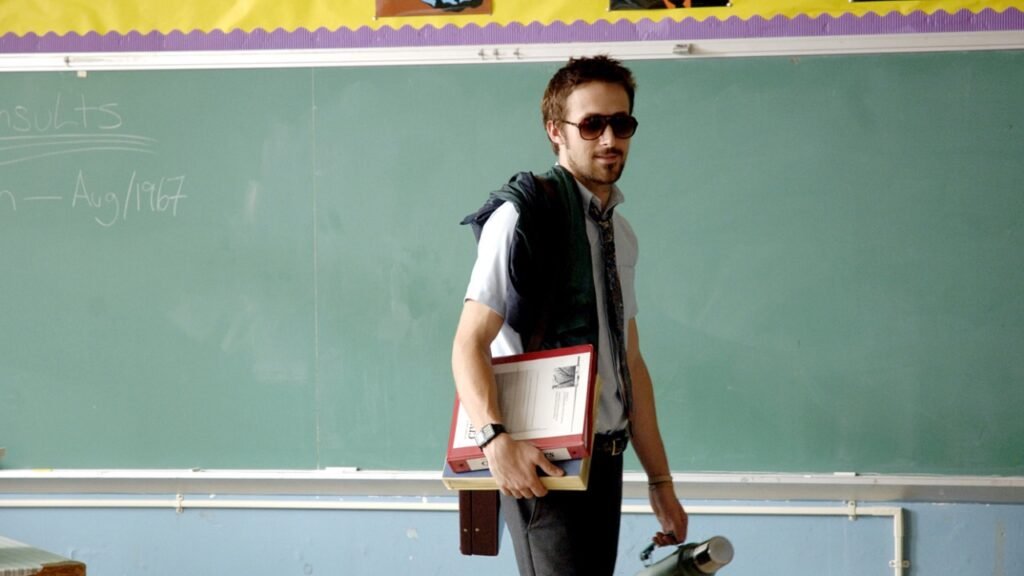
Released two years before Lars and the Real Girl, Half Nelson established Ryan Gosling as one of Hollywood’s most promising young actors. Directed by Ryan Fleck, the independent drama follows Dan Dunne, a middle school history teacher whose dedication to his students exists alongside a destructive crack cocaine addiction. Rather than presenting him as either a hero or a villain, the film explores the contradictions that define his everyday life.
Gosling delivers one of the most layered performances of his career by refusing to simplify Dan’s struggles. His classroom discussions about dialectics mirror the film’s central idea that people often embody opposing truths at the same time. Dan genuinely cares about his students while repeatedly sabotaging his own life, making him a character driven by flaws rather than familiar redemption arcs. Shareeka Epps provides an equally impressive performance as Drey, whose unlikely friendship with Dan becomes the emotional center of the story.
The film also examines addiction, race, loneliness, and the public education system without reducing those subjects to simple moral lessons. Ryan Fleck’s naturalistic direction, handheld camerawork, and Broken Social Scene’s understated score create an intimate atmosphere that keeps the focus on character instead of dramatic plot twists. Every creative decision supports the film’s realistic approach to addiction and personal failure.
Although Half Nelson received only a limited theatrical release, critics recognized its achievements immediately. Gosling earned his first Academy Award nomination for Best Actor at just 26 years old, making him one of the youngest nominees in the category. The film remains one of the defining performances of his career and an early example of his willingness to pursue challenging independent dramas over safer commercial roles.
1. Blue Valentine (2010)
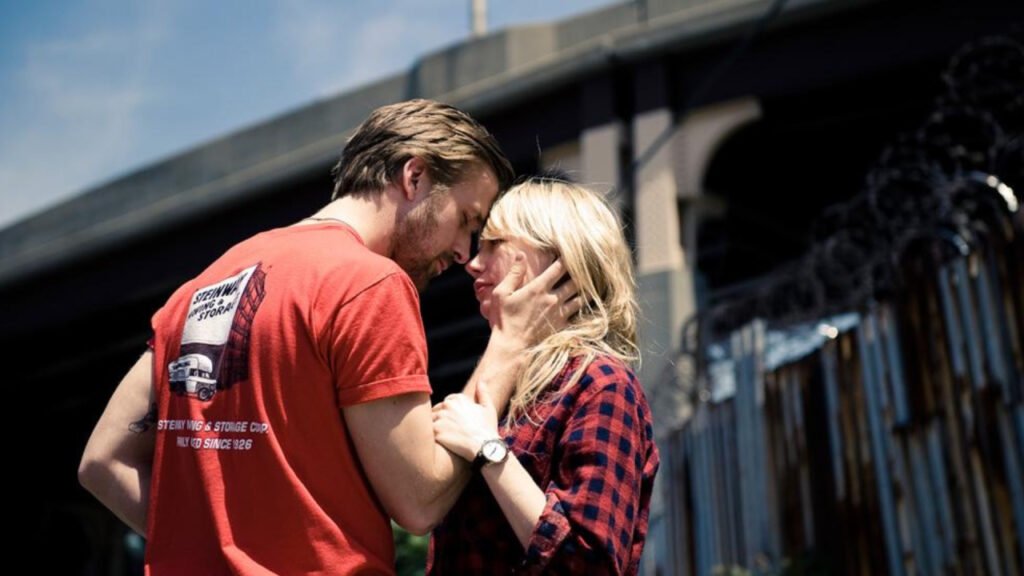
Derek Cianfrance’s Blue Valentine pairs Ryan Gosling and Michelle Williams in an unflinching portrait of a marriage falling apart. Instead of telling the story in chronological order, the film moves between the couple’s joyful early romance and the painful reality of their relationship years later. That structure allows every happy memory to exist alongside the heartbreak that follows, showing how love can change over time without reducing either character to a villain.
To strengthen their chemistry, Gosling and Williams spent time living together before filming the later stages of the relationship, a decision that contributes to the film’s emotional authenticity.
Gosling delivers one of the most vulnerable performances of his career as Dean, a man desperately trying to hold together a marriage that is slipping beyond repair. Michelle Williams matches him with equal emotional intensity as Cindy, making the relationship feel balanced rather than one-sided.
The film never frames either character as entirely right or wrong, instead allowing both perspectives to exist simultaneously. Their performances give every argument, silence, and moment of affection the weight of a real relationship rather than a scripted romance.
Cianfrance reinforces those performances through his visual approach. Handheld camerawork and intimate close-ups place the audience inside the couple’s emotional space, while the contrast between 16mm film for the romance and digital photography for the marriage subtly separates memory from reality. Color also becomes part of the storytelling, particularly during the motel sequence, where the cold blue lighting reflects the emotional distance growing between Dean and Cindy. Every technical decision supports the film’s central themes instead of drawing attention to itself.
Despite widespread critical acclaim, Blue Valentine remained an independent success rather than a mainstream hit. Its honest portrayal of love, disappointment, and emotional exhaustion made it one of the most affecting relationship dramas of its era, while Gosling’s performance stands alongside Michelle Williams’ as one of the strongest of his career.
You May Also Like
Add us as a preferred source on Google.
[…] Related: 5 Ryan Gosling Movies That Never Got the Recognition They Deserved […]