

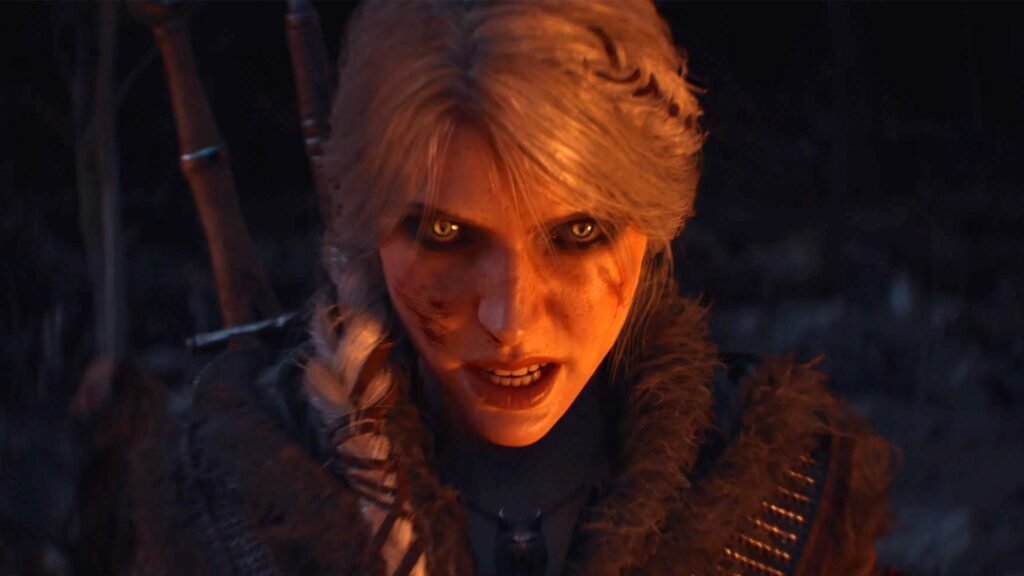
CD Projekt Red has been quietly building something massive with The Witcher 4, and new comments from the studio’s leadership have made it clear just how much the game’s development has accelerated. The boost has everything to do with the studio’s deepening relationship with Epic Games and what that partnership is unlocking for Ciri’s long-awaited debut as the series’ new protagonist.
The news comes from CDPR co-CEO Michal Nowakowski, who revealed at a panel at Edge In Person that Epic has allowed the studio to go into the “black box” of Unreal Engine, a level of access that Nowakowski says will make The Witcher 4 and its future follow-ups something special. That is a significant statement from a studio that spent years building its own proprietary engine before making the switch.
What the Unreal Engine Partnership Actually Means for The Witcher 4
CDPR’s transition away from its in-house REDengine was not a simple decision. The studio moved to Unreal Engine 5 because REDengine had to be modified for each new title and could not support future multiplayer development without extensive updates. The switch was about building a foundation that could support an entire trilogy, not just one game.
“Epic [allowed] us to go into the black box of Unreal Engine,” Nowakowski said. “I think we’re the only company right now that actually does that outside of Epic themselves – and fiddle with [it], so [we] would actually be co-building one of the biggest techs out there.
“The rationale was we wanted to be able to tell more stories without worrying about the foundation of the engine itself. Epic [gave] us that backbone, and we can still build around that and differentiate ourselves.”
That investment is already paying off. CD Projekt Red’s senior technical animator Julius Girbig described the transition as an unambiguous success, noting that the studio brought its open-world experience from REDengine directly into Unreal and paired it with the expertise of developers who have been building engines for years.
The results were visible during a tech demo at the 2025 State of Unreal presentation. The demo ran on PlayStation 5 at 60 frames per second with ray tracing and showcased tools like the Fast Geometry Streaming Plugin, which allows open worlds to load without visual hiccups, and Nanite Foliage, which efficiently fills scenes with dense, high-fidelity environments. A scene showing Ciri exploring a bustling market town gave fans their clearest look yet at what the game’s world could feel like.
Now, with Unreal Engine 6 teased on the horizon, the possibilities stretch even further. Unreal Engine 6 is expected to roll out around 2027, and while The Witcher 4 may arrive before full UE6 integration, the two follow-up games in Ciri’s planned trilogy could be built entirely on the newer engine, as could the original Witcher remake currently in development.
Nowakowski also addressed the studio’s complicated history with fans following the troubled launch of Cyberpunk 2077. “I’m not 100 per cent convinced we went through the full redemption arc,” he said. “I’m convinced that we lost the faith of some people indefinitely, and that’s a fair thing. But I do hope we will be able to make it back, if not with The Witcher 4, then with whatever comes next.”
As of May 2026, 513 employees were working on The Witcher 4, and the game is confirmed not to release before 2027. With deep engine access, a massive team, and a trilogy mapped out, CDPR is betting everything on getting this one right.
You May Also Like:
Add us as a preferred source on Google.
Conversation