

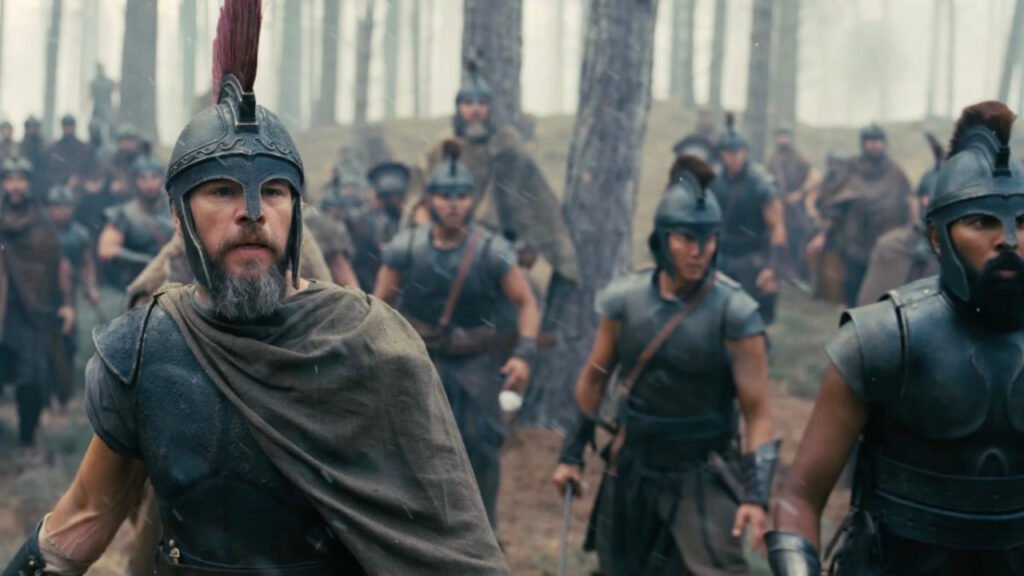
Christopher Nolan’s The Odyssey brings one of Greek mythology’s most recognizable monsters to the screen through practical filmmaking. The film, which releases on July 17, 2026, adapts Homer’s epic using real locations, large-scale practical effects, and in-camera filmmaking instead of relying primarily on computer-generated imagery.
Bill Irwin plays Polyphemus, the one-eyed Cyclops and son of Poseidon. In The Odyssey, Polyphemus serves as one of Odysseus‘ first major supernatural opponents and the catalyst for the hero’s long journey home. The giant shepherd traps Odysseus (played by Matt Damon) and his crew inside his cave after they enter searching for food and shelter, forcing Odysseus to rely on deception rather than strength to escape.
After Odysseus blinds the Cyclops and later reveals his real name, Polyphemus calls upon Poseidon for revenge. The sea god’s curse destroys Odysseus’ fleet, claims the lives of his companions, and prevents him from returning to Ithaca for ten years.
Bill Irwin Reunites With Christopher Nolan
Irwin portrays Polyphemus in The Odyssey. The casting reunites him with Nolan after their collaboration on Interstellar (2014).
Irwin’s previous contribution to Nolan’s film extended beyond voice acting. He voiced TARS and physically operated the robot on set, giving the character its movement and physical presence through puppetry.
That experience made Irwin a natural choice for Polyphemus. His background in physical theater, movement performance, clowning, and puppetry aligned with Nolan’s decision to build the Cyclops through practical performance rather than a fully digital creation.
How Practical Effects Brought the Cyclops to Life
Instead of creating Polyphemus entirely through CGI, the production built a large practical puppet to portray the Cyclops. The approach reflected Nolan’s commitment to practical effects throughout the production.
Irwin performed inside the puppet, guiding the creature’s movements, weight, and physical performance during filming. His work allowed the Cyclops to interact directly with the actors and the surrounding environment on set.
Nolan also revealed that Polyphemus’ appearance drew inspiration from Francisco Goya’s Saturn Devouring His Son, one of the artist’s Black Paintings. The sequence was filmed inside a real cave in Greece, where Matt Damon and the stunt team performed alongside the practical creature instead of acting against a green screen.
Why Polyphemus Sets Odysseus’ Journey in Motion
The encounter with Polyphemus marks one of the defining events of Homer’s epic. Odysseus escapes the cave by blinding the Cyclops, but the conflict does not end after the escape.
When Odysseus reveals his identity, Polyphemus asks his father, Poseidon, to punish the Greek king for what happened inside the cave. That request becomes the direct cause of Odysseus’ long and dangerous voyage across the sea.
Nolan has said he wanted Polyphemus to be more than a creature defined only by physical strength. Casting Irwin allowed the production to present the Cyclops as an intelligent, territorial, and emotionally grounded antagonist while preserving the character’s importance to Odysseus’ journey throughout The Odyssey.
You May Also Like
Add us as a preferred source on Google.
[…] Related Stories Why Does One Cyclops Curse Odysseus for 10 Years? ‘The Odyssey’s Poseidon Feud Explained Who Plays Polyphemus In ‘The Odyssey’? Bill Irwin’s Cyclops Role Explained […]