

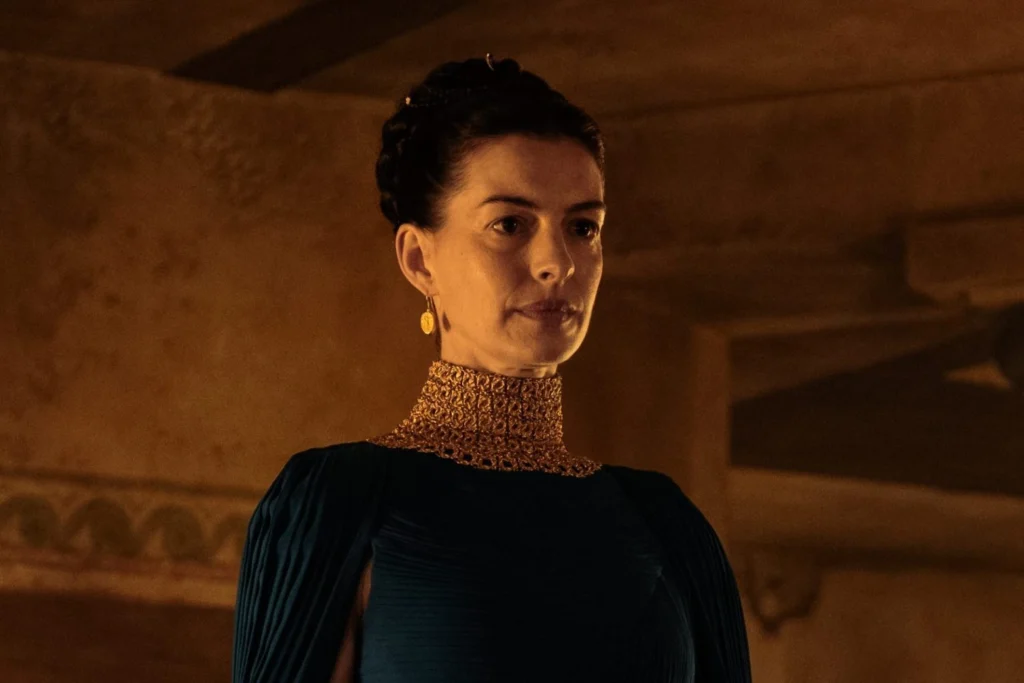
Christopher Nolan‘s The Odyssey opened in theaters this weekend, and it dropped fans straight into a detail the trailers only hinted at: Penelope isn’t fending off one or two guys, she’s got 108 suitors camped in her house.
It’s one of the wildest numbers in ancient literature, and it turns out there’s a very deliberate reason Homer picked it. Here’s what’s actually driving all 108 of Penelope’s suitors in The Odyssey, and why it matters for how the ending plays out.
Why 108 Suitors Actually Showed Up in The Odyssey

The 108 suitors crowding Odysseus‘s palace weren’t a random mob of lovesick admirers. They came from Ithaca and the surrounding islands, Same, Zacynthus, and Dulichium, and Homer names dozens of them individually. That level of detail tells you Homer wanted his audience to see this as an organized political occupation, not a spontaneous courtship.
Odysseus (played by Matt Damon) has been gone for twenty years, ten at Troy and ten more getting lost on the way home, and in that time, Ithaca has had no king. That’s the real prize the suitors are after. Marrying Penelope doesn’t just mean marrying a beautiful woman; it means marrying into the throne, since ancient Greek succession ran through exactly this kind of arrangement. Whoever she chooses gets the kingdom that comes with her.
That’s why Penelope’s suitors are content to wait her out instead of forcing a decision. Every day they stay in the palace, eating Odysseus’s livestock and drinking his wine, is a day they’re bleeding the estate dry while asserting a claim on it.
Penelope famously stalls them by weaving a burial shroud for Odysseus’s father Laertes and unraveling it every night, and the suitors let her get away with the trick for three years before a servant finally rats her out. That’s not the behavior of desperate suitors. That’s the behavior of men playing a long game for a crown.
READ MORE: Why Does One Cyclops Curse Odysseus for 10 Years? ‘The Odyssey’s Poseidon Feud Explained
What the Suitors Meant for Telemachus and The Odyssey’s Ending

The political stakes are exactly why Telemachus (played by Tom Holland), Odysseus, and Penelope’s son are in real danger throughout The Odyssey. He’s not just an annoyed kid watching strangers eat his inheritance, he’s the other legitimate claimant to the throne, and the suitors openly discuss ambushing and killing him before he can grow into the role. Removing Penelope’s son would clear the last obstacle between a suitor and the kingship.
That context is what makes The Odyssey’s ending land so hard, both on the page and in Christopher Nolan’s new adaptation. When Odysseus finally reveals himself and strings his old bow, a test none of the 108 suitors can even manage, he’s not just winning back a wife. He’s reclaiming a throne that men have spent years trying to steal out from under his family, and the slaughter that follows in the great hall reads less like jealous rage and more like a king executing a coup.
That’s the real engine behind one of the most famous standoffs in Western literature: not romance, but a twenty-year power vacuum that 108 suitors tried to fill, and one man who came home just in time to stop them.
The Odyssey is now playing in theaters, including IMAX 70mm presentations.
You May Also Like:
Add us as a preferred source on Google.
[…] Stories The Suitors in ‘The Odyssey’ Explained: Why 108 Men Are Trying to Marry Penelope The Odyssey (2026): Complete Guide To Cast, Plot, and […]