

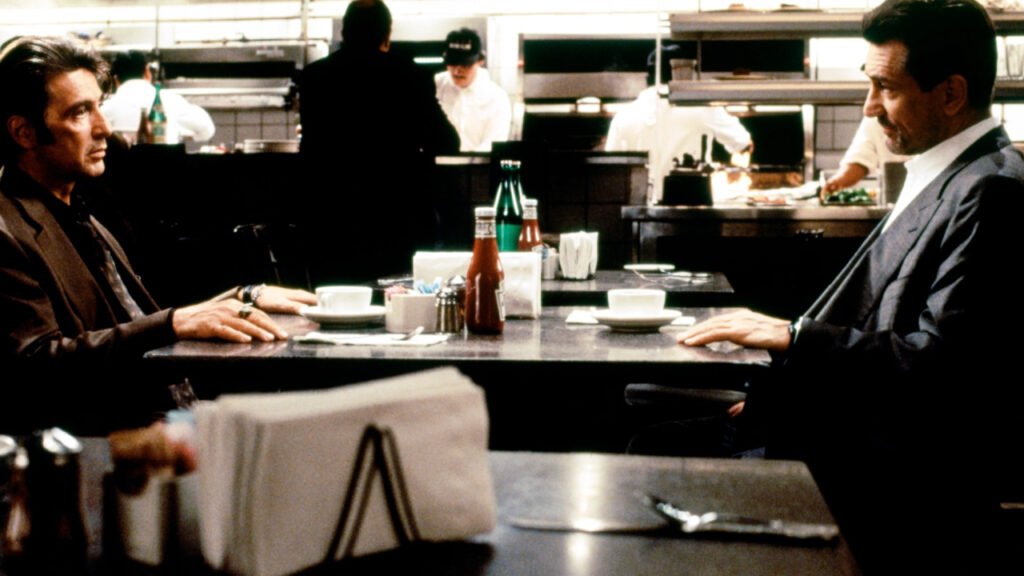
Michael Mann’s ‘Heat‘ is often remembered for its spectacular downtown Los Angeles shootout, a sequence so influential that it continues to be referenced by filmmakers nearly three decades later. Yet the film’s most celebrated scene contains none of the elements typically associated with great crime cinema. There are no bullets flying through city streets, no elaborate heists unfolding, and no dramatic twists waiting around the corner.
Instead, two men are sitting in a diner drinking coffee.
When LAPD detective Vincent Hanna (Al Pacino) finally comes face-to-face with career criminal Neil McCauley (Robert De Niro), ‘Heat’ delivers a deceptively simple scene. On one level, it is a meeting between a cop and the thief he has spent months pursuing. On the other hand, it is the moment when the film lays bare the lives, philosophies, and obsessions that drive both men. That’s what has kept audiences returning to this conversation for years. Every rewatch seems to reveal something new.
“I Do What I Do Best”
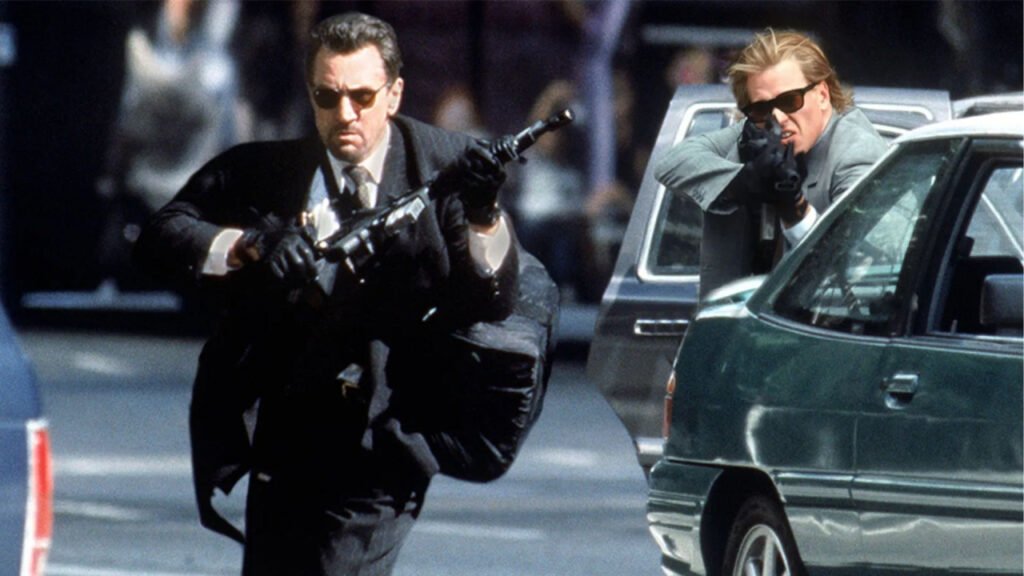
Part of the scene’s reputation comes from the history surrounding it. Before ‘Heat’, Pacino and De Niro were already considered two of the defining actors of their generation. Although both appeared in ‘The Godfather Part II’, they never actually shared the screen. ‘Heat’ finally gave audiences the meeting they had been waiting more than twenty years to see.
Michael Mann understood exactly what he had. Rather than placing their first interaction in the middle of a shootout or a chase, he stripped everything away. The audience gets nothing except two men talking. That simplicity forces every line, every pause, and every glance to carry weight.
The scene also benefits from the way it was filmed. De Niro reportedly suggested that he and Pacino avoid rehearsing it extensively because their characters had never spoken before. Mann agreed and filmed both actors simultaneously, allowing reactions to feel spontaneous and natural. The result is a conversation that feels remarkably authentic despite the enormous dramatic stakes behind it.
What emerges almost immediately is a sense of recognition. Hanna and McCauley understand each other in a way few other characters in the film can. Both have sacrificed relationships for their work. Both have become consumed by their professions. Both know exactly what it means to dedicate a life to a single pursuit.
That mutual understanding is why the scene never feels like a traditional hero-versus-villain confrontation. There is genuine respect in the room, even as both men acknowledge that one day they may have to kill each other.
Hanna eventually tells McCauley, “If it’s between you and some poor bastard whose wife you’re gonna turn into a widow, brother, you are going down.”
McCauley’s response is equally direct. “What if you do got me boxed in and I gotta put you down?”
Neither line is delivered as a threat. They sound more like two professionals acknowledging the inevitable.
Two Sides of the Same Coin
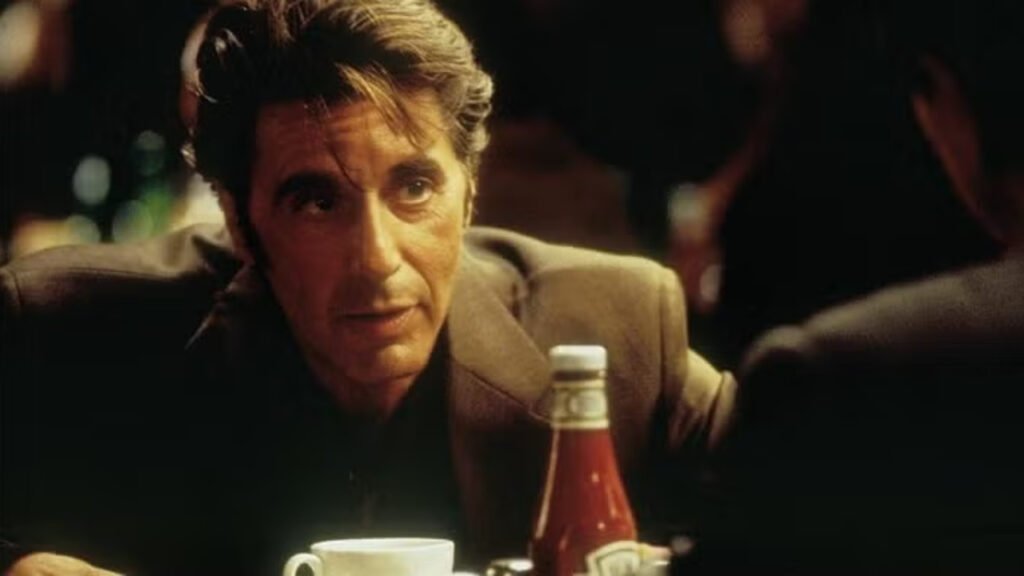
The most common interpretation of the diner scene is that Hanna and McCauley are essentially mirror images of one another.
‘Heat’ spends much of its runtime building that idea. Hanna’s obsession with police work has wrecked his personal life. McCauley’s commitment to his criminal code has left him equally isolated. Both men are constantly chasing something. Both seem more comfortable at work than at home. Both understand that their chosen path leaves little room for anything else.
Even the structure of the film reinforces the parallel. Mann repeatedly cuts between their lives, showing how similar their routines and sacrifices have become despite existing on opposite sides of the law.
The diner scene is where those parallels finally become explicit. Hanna tells McCauley, “All I am is what I’m going after.” The line could easily have come from McCauley himself.
That’s what makes the sequence so compelling. For a brief moment, the film suggests that the badge and the criminal record might be the least interesting differences between them. Two men from opposite worlds find common ground because they recognize the same obsession in each other.
But the conversation also contains a detail that quietly challenges the idea that they are simply the same person wearing different uniforms.
The Dreams Matter
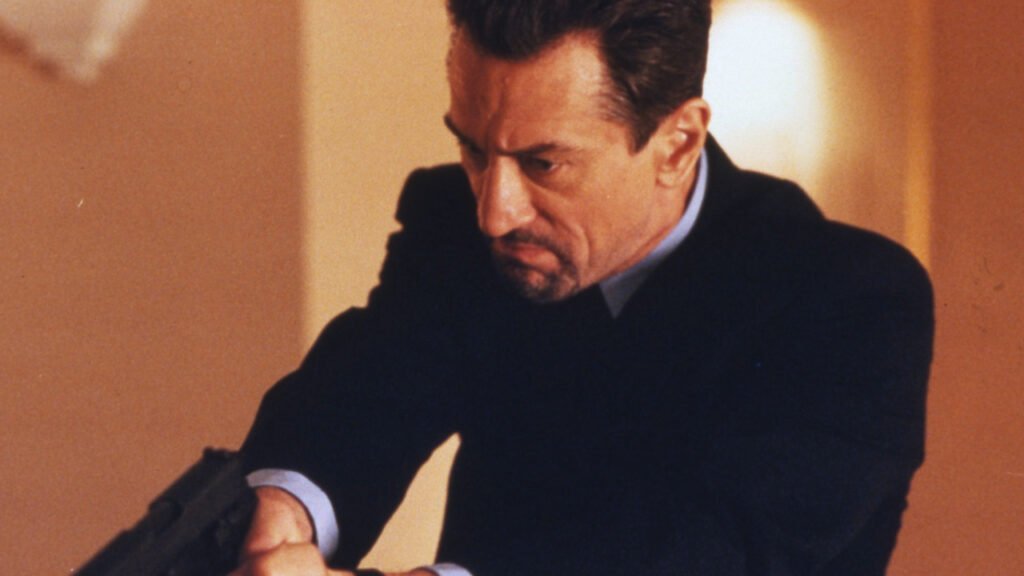
The deeper meaning of the scene emerges when Hanna and McCauley begin talking about their dreams. It’s a short exchange that often gets overshadowed by the more famous dialogue, yet it may be the most revealing moment in the entire conversation.
Hanna describes recurring dreams connected to victims he could not save. Even in his subconscious, he remains haunted by other people and the consequences of violence.
McCauley describes a dream where he is alone, surrounded by nothing.
At first glance, the distinction seems minor. Both men are lonely. Both have sacrificed relationships in pursuit of a calling they cannot abandon.
Yet the focus of their dreams reveals the boundary between them. Hanna’s subconscious remains occupied by other people and the consequences of violence. McCauley’s remains fixed on himself and his own fate.
For much of ‘Heat’, Michael Mann encourages the audience to see them as mirror images. The diner conversation suggests the similarities only go so far, exposing a difference that runs far deeper than their occupations.
The distinction becomes even more interesting when viewed alongside McCauley’s famous rule: “Don’t let yourself get attached to anything you are not willing to walk out on in thirty seconds flat if you feel the heat around the corner.”
The line is usually treated as the ultimate criminal code, a philosophy built on discipline and survival. But it also reveals how McCauley sees the world. Every relationship, every commitment, and every emotional attachment exists beneath the need for self-preservation.
Hanna’s life is hardly balanced or healthy. His work has consumed him and damaged nearly every meaningful relationship he has. Yet even at his most obsessive, he remains haunted by other people. McCauley remains haunted by himself.
That is the fault line running beneath the entire scene.
In Case You Missed It: The Haunting Secret Behind the World’s Most Famous Short Film ‘La Jetée’
God and the Devil at a Diner
Viewed through that lens, the diner conversation starts to resemble something larger than a meeting between a detective and a thief. Not literally God and the Devil. ‘Heat’ is not making a religious argument. But the comparison becomes difficult to ignore once the dream sequence enters the discussion.
By this point, the film has already established how much Hanna and McCauley have in common. Both are consumed by their work, isolated by their choices, and capable of understanding each other in ways nobody else can. Yet they are ultimately separated by virtue.
One spends his existence in service to others, however imperfectly. The other has built an entire philosophy around serving himself. That idea transforms the diner scene from a conversation about professional respect into a conversation about moral purpose.
As mentioned earlier, much of ‘Heat’ encourages the audience to view Hanna and McCauley as reflections of one another. Then, almost quietly, Mann reveals the one difference that matters most.
The first time through the film, the scene feels like a meeting between equals. The second or third time, it begins to feel like a meeting between opposing forces.
That’s why the coffee scene remains so powerful after all these years. It isn’t simply about a cop and a robber recognizing their similarities. It’s about two men who share many of the same strengths, the same loneliness, and even the same understanding of the world, yet arrive at entirely different moral destinations.
‘Heat’ spends most of its runtime showing us how similar Hanna and McCauley are. The diner scene shows us why they can never truly be the same.
You May Also Like
Add us as a preferred source on Google.
Conversation