

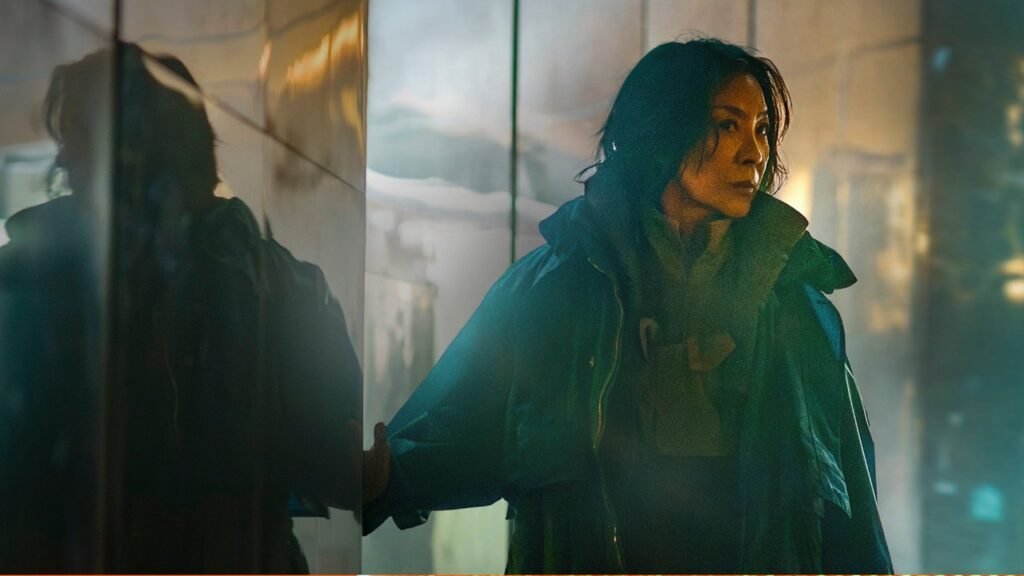
“Blade Runner 2099” has inherited the cinematic equivalent of being asked to follow Freddie Mercury at karaoke.
Ridley Scott (“Alien,” “Gladiator”) gave science fiction one of its defining futures. Then, this newcomer, Denis Villeneuve (“Arrival,” “Dune”), returned to that world and somehow made a sequel worthy of the invitation. Prime Video has now brought an eight-episode series to a comparison nobody involved could reasonably hope to avoid.
All eight episodes arrived on Prime Video Nov. 25. Created by Silka Luisa (“Shining Girls,” “Strange Angel”), the limited series moves 50 years beyond “Blade Runner 2049” and reverses the relationship between humans and Replicants. The beings once manufactured to serve now occupy the positions of power. Humanity gets the unpleasant end of the employment agreement.
Does the change earn another trip to Los Angeles?
Early reviews suggest a substantial argument rather than a coronation. This “SPOILER-light” comparison reveals a series with a legitimate new question to ask—and two predecessors that set an almost unreasonable standard for how to ask it.
Blade Runner 2099 changes who gets to do the hunting
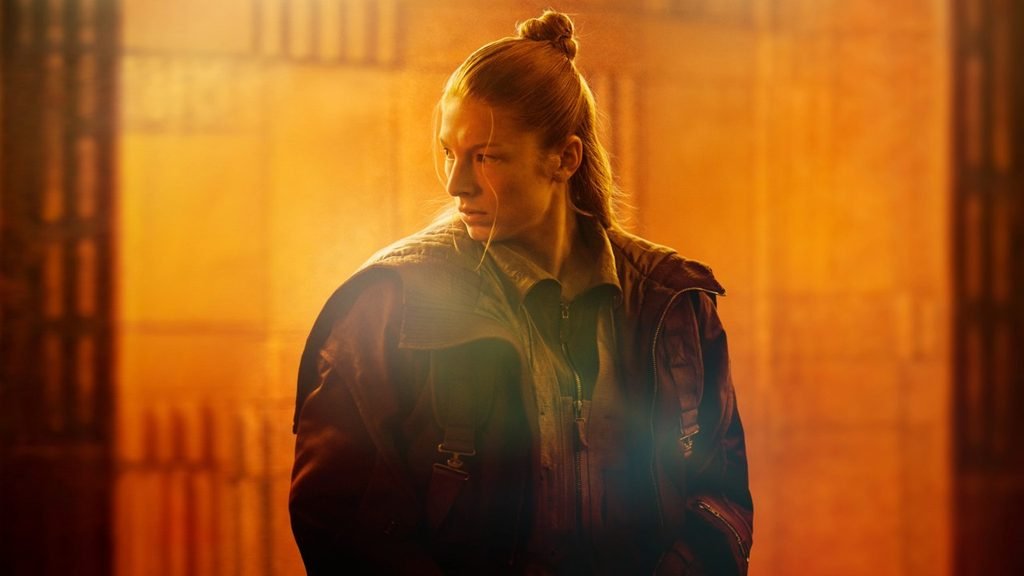
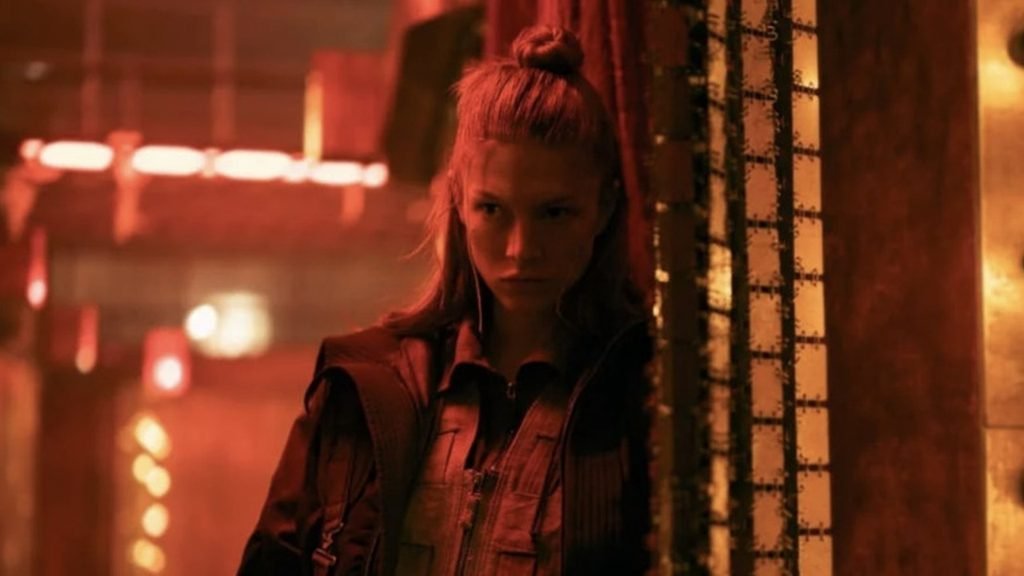
The superb Michelle Yeoh (“Everything Everywhere All at Once,” “Crouching Tiger, Hidden Dragon”) plays Olwen, a veteran Replicant Blade Runner approaching her programmed expiration. Hunter Schafer (“Euphoria,” “Cuckoo”) plays Cora, a human fugitive who assumes a Replicant identity and enters the machinery that polices people like her.
Their uneasy partnership supplies the investigation, but their conflicting needs supply the reason to care. Cora wants a way out. Olwen faces a deadline that cannot be solved by asking management for an extension. Both occupy identities that complicate the badge’s authority.
The official series premise establishes a hunt for a runaway carrying a dangerous truth. Viewers can discover the contents, consequences, and betrayals without a recap stealing their thunder. The useful preparation concerns the reversal: the hunted have inherited the institution that once hunted them.
That gives “Blade Runner 2099” a question its predecessors left room to explore. Does liberation change a society’s definition of personhood, or merely change who gets excluded? A new ruling class can acquire the old class’s habits surprisingly quickly. Apparently, oppression comes with transferable skills.
The predecessors set different tests for the sequel
Scott’s “Blade Runner” (1982), especially its 2007 Final Cut, makes the viewer question the moral distance between a hunter and his targets. Its rain, advertising, and overcrowded streets create a civilization comfortable treating living beings as disposable products. As the BFI’s retrospective explores, the detective story becomes inseparable from its anxieties about identity, empathy and death.
“Blade Runner 2049” (2017) takes that inheritance into a more solitary investigation. Its central figure knows he was manufactured, yet still wants his life to have meaning beyond the purpose assigned to it. Villeneuve makes space, silence and scale carry that longing. The sequel’s questions about memory and identity matter as much as the mystery advancing through them.
“Blade Runner 2099” has a different opportunity. Two protagonists can challenge each other’s understanding of humanity over a sustained relationship. The longer format can examine how the new hierarchy operates beyond one investigator’s personal revelation.
It also creates a different burden. A feature can leave a devastating idea hanging in a single image; television must keep returning viewers to characters and situations that justify the extra hours. Eight episodes provide room for discovery and ample parking for repetition. For “Blade Runner 2099,” length alone cannot make an existential question deeper.
The relevant comparison, therefore, concerns what the new format contributes. Reproducing the décor would establish family resemblance. A consequential relationship between Cora and Olwen could establish a reason for the family reunion.
Philip K. Dick supplies more than an Easter egg hunt
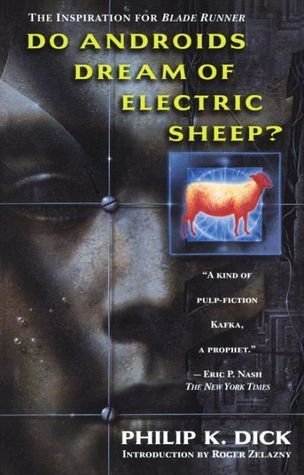
The most promising expansion of “Blade Runner 2099” draws on both the movies and Philip K. Dick’s 1968 novel, “Do Androids Dream of Electric Sheep?”
That means giving Luisa her due alongside Jonathan van Tulleken (“Shōgun,” “The Changeling”), who directs the first two episodes and serves as executive producer on the series. This is a showrunner’s reinvention as well as a director’s visual assignment.
Luisa told Den of Geek, “We excavated a lot from the novel, even more so than the films.”
Among those ideas is Mercerism, the book’s technologically mediated religion built around shared empathy. The series also includes smaller references, such as electric sheep and a toy from another Dick story.
The distinction matters. A background reference rewards recognition; Mercerism offers a way to examine what the characters believe connects them. Technology that promises a communal emotional experience raises questions about whether feeling connected entails understanding another person’s suffering.
For “Blade Runner 2099,” that is fertile ground. A society can claim superiority while failing the ethical test it uses to judge everybody else. Readers who enjoyed Frank Herbert’s warnings about power will recognize the unsettling neighborhood, although Dick’s preoccupations and fictional mechanisms remain his own.
The reward for the deep-cut nerd is more than spotting the literary sheep in the room. The novel gives the adaptation additional ways to make its central question uncomfortable.
Sunshine Noir has to earn its place beside the neon
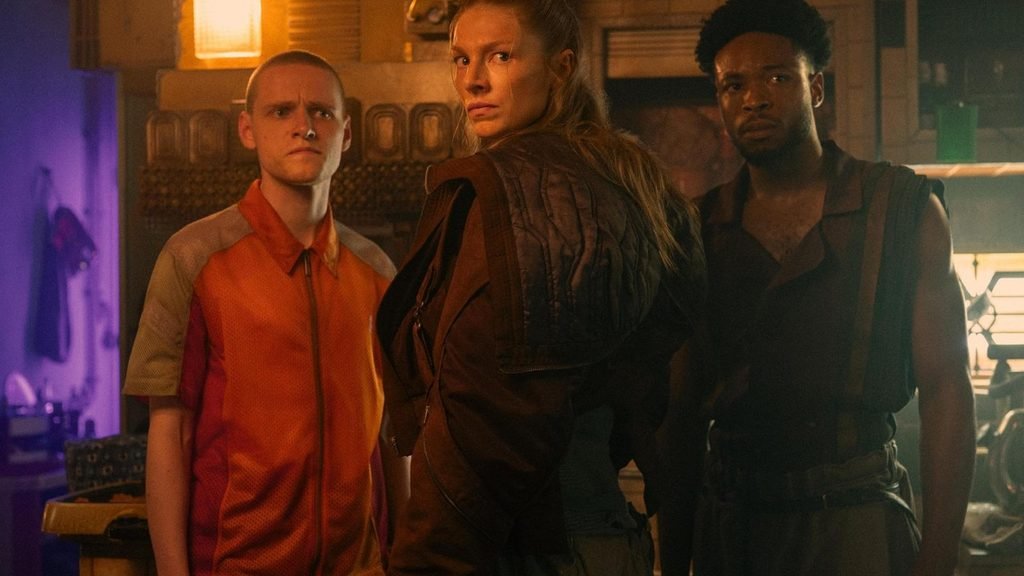
The change in lighting deserves attention beyond the novelty of finding sunscreen in this franchise. Luisa describes the approach as “sunshine noir.”
In her discussion with The Playlist, she connects the visual direction to a city taking a new form after devastation. The production retains retro technology and tactile surroundings while allowing a hotter, harsher atmosphere. That choice helps distinguish “Blade Runner 2099” from a simple recreation of Scott’s rainy streets. Noir does not require darkness on the weather report. Exposure, mistrust and surveillance can make broad daylight deeply inhospitable.
The skeptical question remains whether the familiar visual vocabulary becomes a meaningful environment or expensive wallpaper. NME critic Paul Bradshaw finds the series visually derivative, even while acknowledging its polished design. His criticism targets the gap between looking recognizably like the franchise and adding something worth recognizing.
The AI comparison belongs here, with some care. Replicants are engineered biological beings; treating them as present-day chatbots would flatten the fiction. The stronger contemporary parallel concerns ownership, manufactured identity and the power to decide whose experience counts. A series can explore those issues without pretending a flying police car is parked outside the nearest data center.
For “Blade Runner 2099,” a brighter sky is an aesthetic distinction. Whether its inhabitants reveal something new beneath it is the more demanding test.
So how well does Blade Runner 2099 hold up?
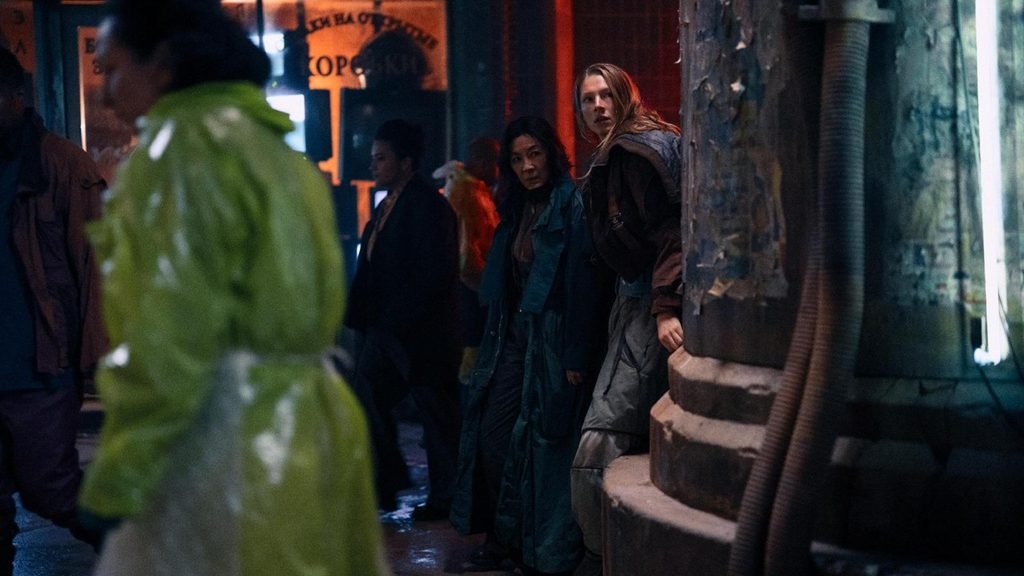
The early critical disagreement makes a blanket verdict hard to defend. /Film’s Bill Bria awards the series nine out of 10 and calls it “the best sci-fi show in years.” He praises its ideas and performances while acknowledging that some scenes feel stretched. Bradshaw reaches a substantially colder conclusion, calling it “a hollow retread” and finding more value in its crime story than in its claim to the family name.
Those responses identify the dividing line for prospective viewers. Anyone seeking a new investigation, a changed social order, and a return to Dick’s philosophical territory has concrete reasons to try “Blade Runner 2099.” Anyone expecting eight hours to replicate the concentrated visual and emotional impact of the movies should temper their expectations.
The films also offer useful preparation, although Amazon’s standalone premise provides newcomers with an entry point. Watching the Final Cut and “2049” first clarifies what has changed and why the new arrangement carries such bitter irony. The series can introduce new characters without replacing those earlier experiences.
Based on its premise, creators’ explanations and the contrasting reviews, “Blade Runner 2099” has earned consideration as a continuation. Declaring it the equal of either film would outrun that evidence. Its strongest claim rests in asking what the former victims do with power once they have it.
Scott made humanity’s moral certainty slippery. Villeneuve questioned how a manufactured life finds meaning. This series asks whether surviving oppression teaches anyone to stop practicing it. That’s a worthy reason to return to Los Angeles. Even if the forecast finally offers a break from the rain, the outlook for decency remains unsettled.
Add us as a preferred source on Google.