

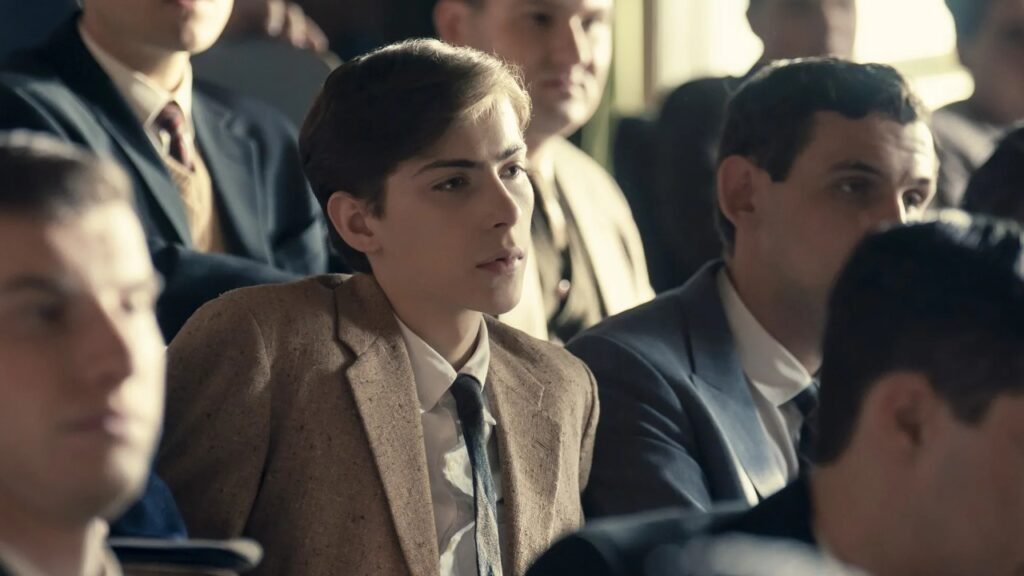
Director Janus Metz’s psychological crime drama Unabomber bypasses traditional thriller closure in its final stretch, concluding on an unsettling note of silence and grief rather than triumph.
The film operates across two interconnected timelines: a sixteen-year-old math prodigy Ted Kaczynski (Jacob Tremblay) enduring an abusive psychological study under Dr. Henry Murray (Russell Crowe) at Harvard, set against FBI agent Joanne Miller (Shailene Woodley) closing in decades later.
When the federal dragnet surrounds Kaczynski’s isolated timber shack in 1996, the climax intercuts the raid with flashes of the young man he once was, treating his radicalization as an institutional tragedy.
Why Agent Joanne Miller Breaks Down in the Finale

Woodley’s Joanne Miller is a fictional composite designed to embody the behavioral analysts and forensic linguists who pivoted away from physical ballistics to track Kaczynski through his syntax.
The actual breakthrough in the UNABOM case came only after The Washington Post and The New York Times published his 35,000-word manifesto35,000-word manifesto, Industrial Society and Its Future.
Recognizing distinctive phrasing, Ted’s brother David Kaczynski alerted the FBI, bringing a fatal blow to the 17-year manhunt from within his own family.
On screen, the arrest is swift, skipping the real-world legal circus where Kaczynski fought bitterly against his own attorneys to stop them from mounting an insanity defense.
The emotional climax rests entirely on Miller crying alone in the aftermath, a moment framed by Metz and Woodley as the crushing weight of an obsession ending, mourning both the victims and the loss of human potential.
What Really Happened to Ted Kaczynski After His Capture
Between 1978 and 1995, Kaczynski sent 16 homemade bombs targeting universities, airlines, and corporate figures, killing three people and injuring 23.
Following his capture on April 3, 1996, Kaczynski attempted suicide in his holding cell after being denied the right to represent himself in court.
To avoid the death penalty and prevent his attorneys from painting his anti-technology philosophy as mere psychotic delusions, he pleaded guilty in January 1998, receiving four consecutive life sentences plus 30 years without parole.
He served over two decades in near-total isolation at ADX Florence in Colorado, locked in an immovable concrete cell for 23 hours a day.
In December 2021, suffering from late-stage rectal cancer, he was transferred to the Federal Medical Center in Butner, North Carolina, where he died by suicide on June 10, 2023, at the age of 81.
Fact-Checking the Harvard Experiments and Henry Murray
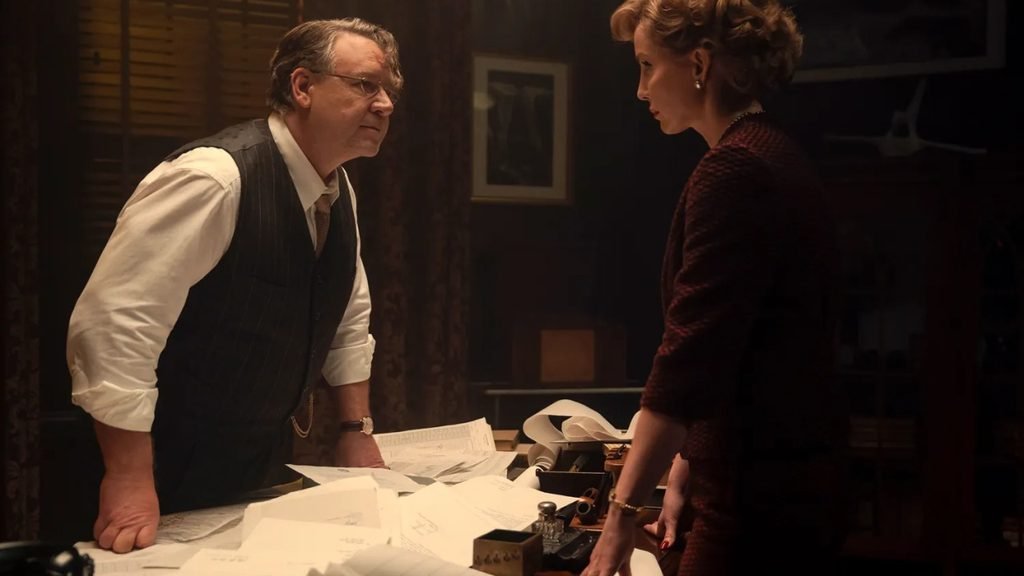
The film’s most controversial creative license lies in its depiction of the Harvard psychological trials.depiction of the Harvard psychological trials.
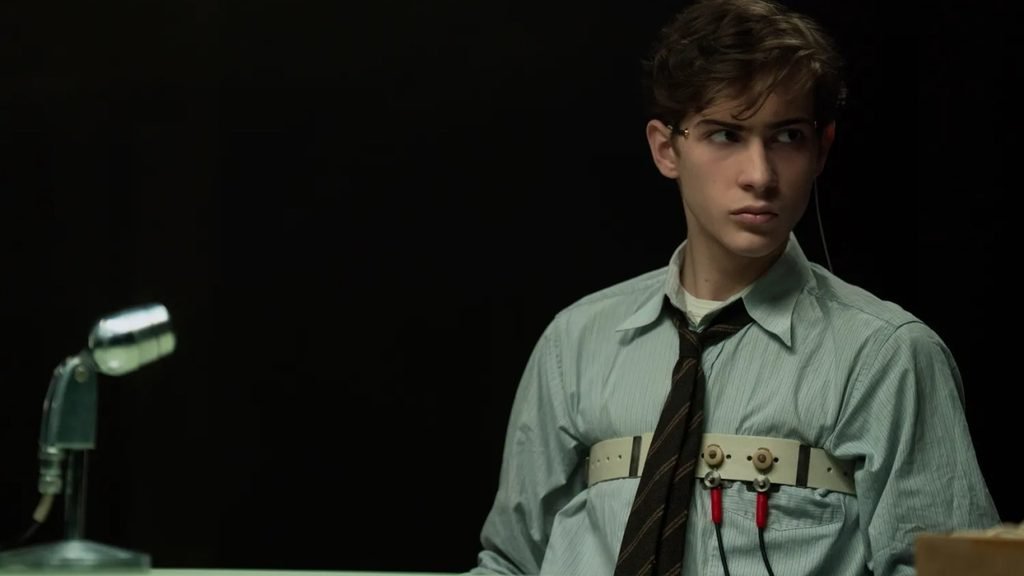
Kaczynski was indeed an undergraduate participant in Dr. Henry Murray’s Multiform Assessments study at Harvard between 1959 and 1962, logging roughly 200 hours in the program.
Murray, who had past ties to the OSS during World War II and received funding linked to the CIA’s MKUltra era, subjected students to extreme verbal attacks, humiliation, and biometric surveillance while dismantling their personal philosophies.
However, the sustained, and personal psychological duel dramatized between Murray and Kaczynski on screen is an invention of the screenwriters rather than documented history.
The film relies on this friction to build an origin story that leaves viewers to question whether the psychological abuse broke a vulnerable genius or merely accelerated an inevitable descent into violence.
Add us as a preferred source on Google.
Conversation