
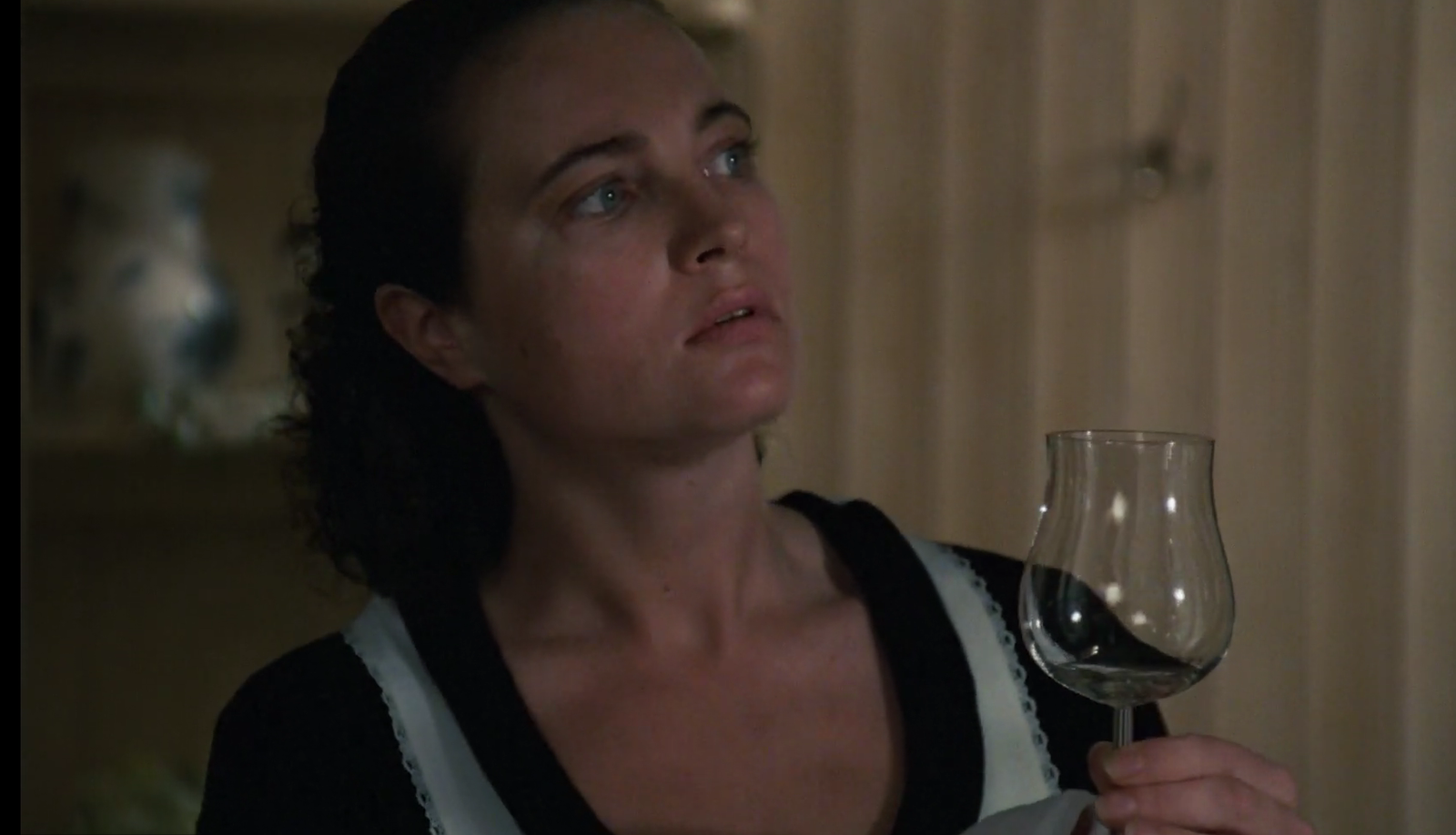
The Sacrifice is the final film by Andrei Tarkovsky, released in 1986. It centers on a middle-aged intellectual who attempts to bargain with God to stop an impending nuclear holocaust. That premise sounds almost absurdly simple. What it contains is anything but.
Tarkovsky called it a parable himself, and the parable is this: through faith and sacrifice, man can right his wrongs and redeem the world. But the film earns its weight precisely because it refuses to make that argument easy.
Alexander and the God He Doesn’t Believe In
As a wealthy Swedish family celebrates the birthday of their patriarch, Alexander, played by Erland Josephson, news of the outbreak of World War III reaches their remote Baltic island, and the happy mood turns to horror. The family collapses inward. Arguments surface. People pace, cry, and talk too much. Only Alexander goes quiet.
At the beginning of the film, Alexander mentions to his friend Otto that his relationship with God is “non-existent,” which adds weight to the events that follow. That admission is the film’s central tension. A man who does not believe in God is about to pray to him with everything he has.
Out of despair, or perhaps faith, Alexander makes a pact with God, pleading: “Lord, deliver us in this terrible hour. Do not let my children die, my friend, my wife… I will give you all I possess. I will leave the family I love. I shall destroy my home, give up my son.” It is one of cinema’s most raw monologues. And Tarkovsky frames it in near silence, letting the weight of the words sit.
What “The Sacrifice” Is Actually Asking
The question Tarkovsky poses is not whether God exists. It is whether the act of sacrifice has meaning independent of certainty. Whether Alexander believes in God or not isn’t quite the question at stake. The dilemma lies in what the response will be.
Tarkovsky sought to expose the fragmentation and sterility of desacralized modernity, to stir in the viewer a longing for spiritual truth and healing, and to communicate a hunger for transcendence and meaning. Alexander is a philosopher, a former actor, a man surrounded by words he no longer trusts. He knows all the philosophers, but it hasn’t solved his woes. “Words, words, words,” he says. And he fears death.
The film’s title refers not just to Alexander’s vow but to Tarkovsky’s broader argument: that modern Western man has sacrificed his capacity for genuine spiritual feeling on the altar of rationalism and technology.
The film opens and closes with a significant symbol. Alexander tells his son the legend of Ioann Kolov, a pupil of an Orthodox monk who was ordered to climb a mountain every day to water a dead tree he had planted, until the tree came back to life. The lesson is about faith applied without guarantee of return.
The film opens and closes with the aria “Erbarme dich, mein Gott” (“Have mercy, my God”) from Johann Sebastian Bach’s St. Matthew Passion. The choice is precise. The aria is Peter’s lament after he has denied Christ three times. It is guilt transmuted into music. It is fear becoming something approaching grace.
The film ends with nothing left to be said. Little Man lies under the tree, speaking for the first time, quoting the Gospel of John: “In the beginning was the Word. Why is that, Papa?”
Tarkovsky’s Final Statement
Tarkovsky was diagnosed with cancer after filming concluded, and by 1986 was unable to attend the Cannes Film Festival due to his illness. The film went without him and won the Grand Prix anyway, along with the Prize of the Ecumenical Jury.
There is an overwhelming feeling of sadness that pervades upon realizing that The Sacrifice was Tarkovsky’s last film, as if the filmmaker was giving his all, knowing this would be the last time he would be able to put his ideas onscreen.
The final dedication of the film reads: “With hope and confidence, Andrei Tarkovsky.” For a film this consumed by the proximity of annihilation, that closing note is not ironic. It is the whole point. Fear is what paralysis looks like. Faith, even fragile and uncertain, is what action looks like. Alexander does not know if God heard him. He burns the house down anyway.
The Sacrifice is available on Blu-ray via Kino Lorber, with a feature-length commentary by Tarkovsky’s translator Lyla Alexander-Garrett.
You May Also Like: