
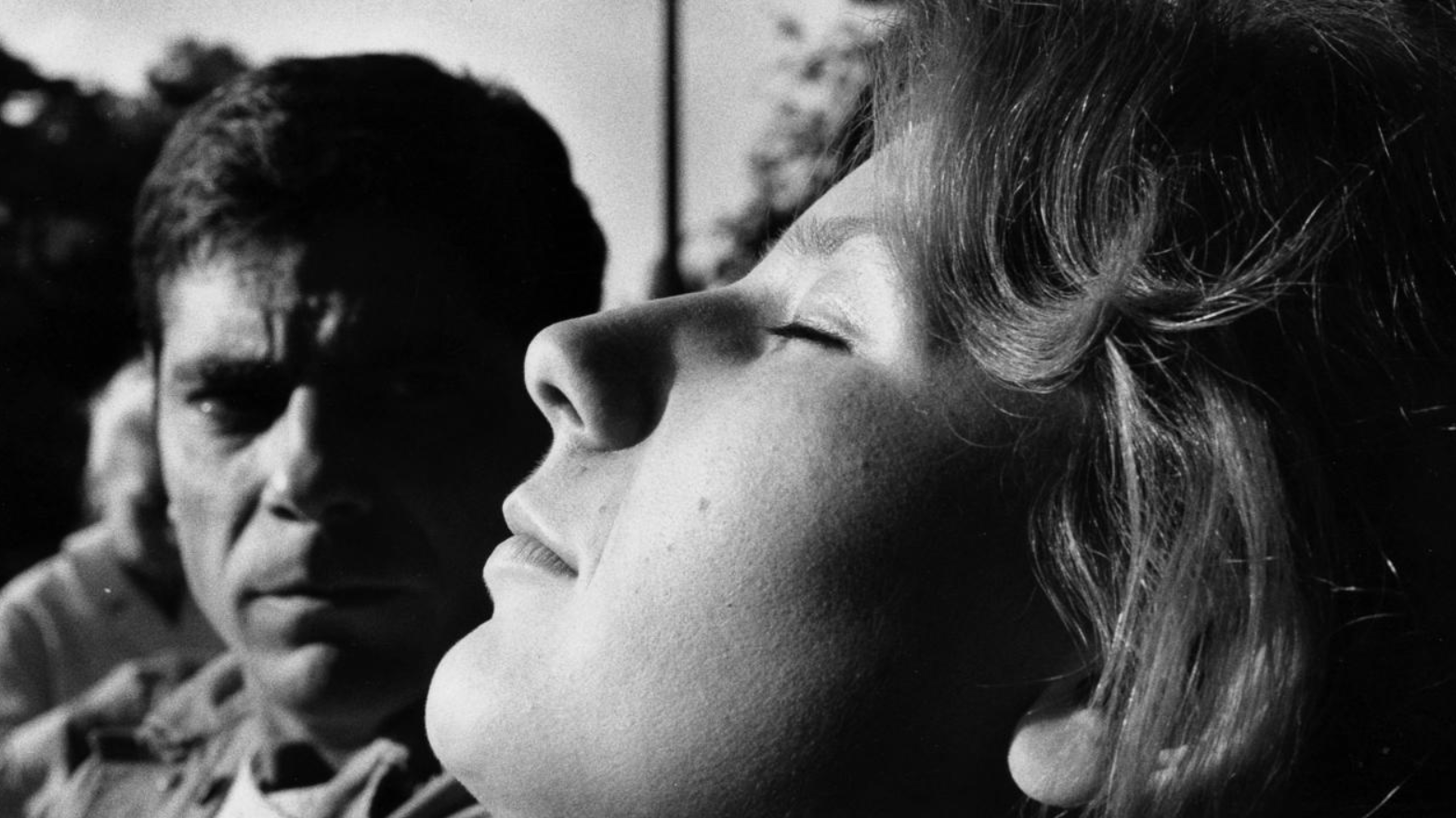
La Jetée is 28 minutes long, shot almost entirely in black-and-white photographs, and was made in 1962 on what amounted to pocket change. It is also one of the most influential films ever made.
Chris Marker’s short film about time travel, memory, and a man destroyed by a single image from his childhood has been referenced, borrowed from, and studied for over six decades. 12 Monkeys lifted its entire premise. Filmmakers from Alain Resnais to Rian Johnson have cited it. And yet nothing has fully replicated what it does, because what it does is stranger and more specific than any summary can capture.
Why Still Photographs Create More Dread Than Moving Images
The central gamble of La Jetée is that Marker shoots almost the entire film as a series of still photographs narrated by a voiceover. There is one brief exception, and we will get to that. Everything else is frozen.
This should not work. Cinema is motion. Stillness is the opposite of what the medium does. But Marker understood something precise: still images look like memory. When you try to recall something from your past, you do not get a video. You get fragments, flashes, images that hold still long enough for you to look at them and then dissolve.
The film’s narrator is being sent back through time from a post-apocalyptic future to recover the past. He travels through memory. Shooting the film in photographs is not a stylistic quirk. It is the literal grammar of the story being told.
The One Moving Image and Why It Destroys You
There is one moment in La Jetée where the photographs give way to actual moving footage. A woman, the narrator loves, opens her eyes, blinks, looks directly into the camera, and looks away. It lasts a few seconds.
After 20 minutes of stillness, those few seconds feel like being jolted awake. The woman suddenly becomes real in a way the photographs never allowed. Then Marker cuts back to still images, and the contrast hits you somewhere physical.
It is one of the most effective uses of a single technique in the history of cinema. Marker withheld motion for 20 minutes specifically to weaponize it in that one moment.
The Secret the Film Hides in Plain Sight
The haunting secret of La Jetée is not a twist in the traditional sense. The narrator is drawn obsessively to a memory from his childhood on the observation deck of Orly Airport. A woman’s face. A man falling. A feeling of loss he cannot explain.
By the end, you understand that the man he watched die as a child was himself. He was sent back through time to the exact moment of his own death, and the image that haunted him his whole life was his own end, witnessed through a child’s eyes.
Marker does not hide this or sensationalize it. He states it plainly in the final moments and lets it land. The film’s power comes from the realization that every image you watched was a man circling his own death without knowing it. Memory and doom were the same thing all along.
That is the secret. The film is not about time travel. It is about how certain images in our lives already contain our ending, and we keep returning to them without knowing why.
You May Also Like: