
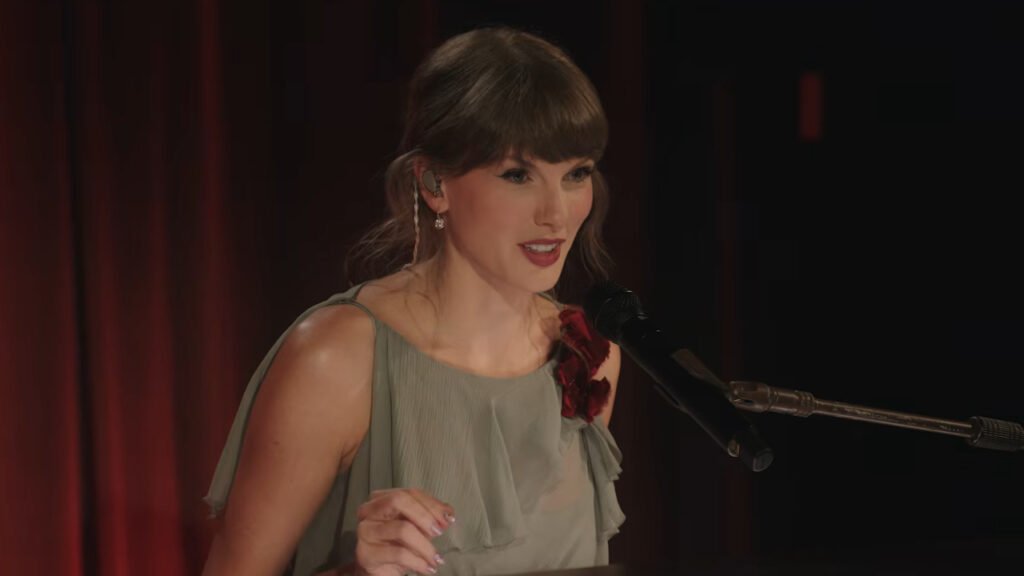
Taylor Swift has found a particularly playful way to deal with people who mock her: give them a comeback they may need a dictionary to understand.
During The Icon Sessions with Taylor Swift: A 20-Year Retrospective at the GRAMMY Museum in Los Angeles on August 18, 2026, Swift spoke about how she handles criticism and admitted that she sometimes enjoys turning her detractors’ own jokes back on them.
“Sometimes when people are mocking me it’s really fun to mock them back,” Swift said during the conversation with Recording Academy CEO Harvey Mason Jr.
She then explained the strategy behind some of those responses, saying, “Sometimes I have to use words that they have to look up in order to talk shit about.”
The comment captured the mischievous side of Swift’s personality, but the conversation also went deeper into how years of criticism have influenced her songwriting and the way she approaches her career.
Related: Taylor Swift Takes Legal Action Over Leaked Travis Kelce Wedding Invite
Taylor Swift Turns Criticism Into Creative Fuel
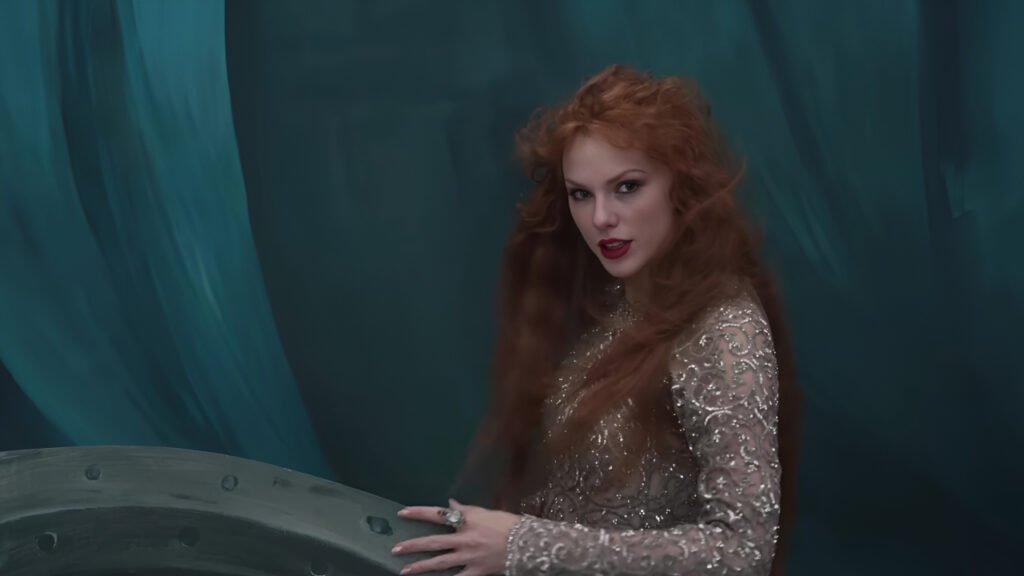
Swift’s comments came during a nearly 49-minute career-spanning conversation at the GRAMMY Museum’s Clive Davis Theater. The invite-only event brought together around 100 members of the Recording Academy’s Songwriters & Composers Wing, giving Swift an opportunity to reflect on the creative decisions that have shaped her career.
Her approach to criticism has changed over the years, particularly during periods when public reaction became overwhelming. Swift discussed the intense backlash surrounding the period leading into Reputation and how difficult it could be to respond when large groups of people had already decided what they thought about her.
“When people decide we’re all going to stand around someone and point, and mock them, you can’t respond with outward sincerity,” she said.
Swift explained that trying to defend herself sincerely during that kind of public backlash could make things worse. Songwriting offered her a different outlet, allowing her to turn those experiences into something she could control.
“It felt very stifling as a person, as a human being, but ultimately as a writer, it gave me this… sort of gnarled-like bite when I would write my lyrics,” Swift said.
That attitude has become part of how she approaches criticism more broadly. Instead of allowing every negative reaction to dictate how she behaves, Swift has learned to take the emotions surrounding it and put them into her work.
In Case You Missed It: Blake Lively Threatened to Expose Taylor Swift’s Private Texts: Report
“When you’ve gone through something that was sort of an attempt to drive you insane… and you use art and music as a way to barrel-roll out of that, those are the moments I’m the most proud of,” she said.
The discussion wasn’t limited to criticism. Swift also talked about her development as a songwriter, recalling her early fascination with music and discussing influences such as Faith Hill and the Nashville songwriting scene surrounding the Bluebird Cafe.
She reflected on the transition from country music into pop, her collaborations with Max Martin and Shellback, and the different creative instincts behind albums such as Folklore and Reputation. She also encouraged aspiring songwriters to keep working even when inspiration doesn’t immediately appear, arguing that the creative process itself can lead to new ideas.
The event ended with a piano medley featuring snippets of “I Knew It, I Knew You,” “August,” and “All Too Well.”