

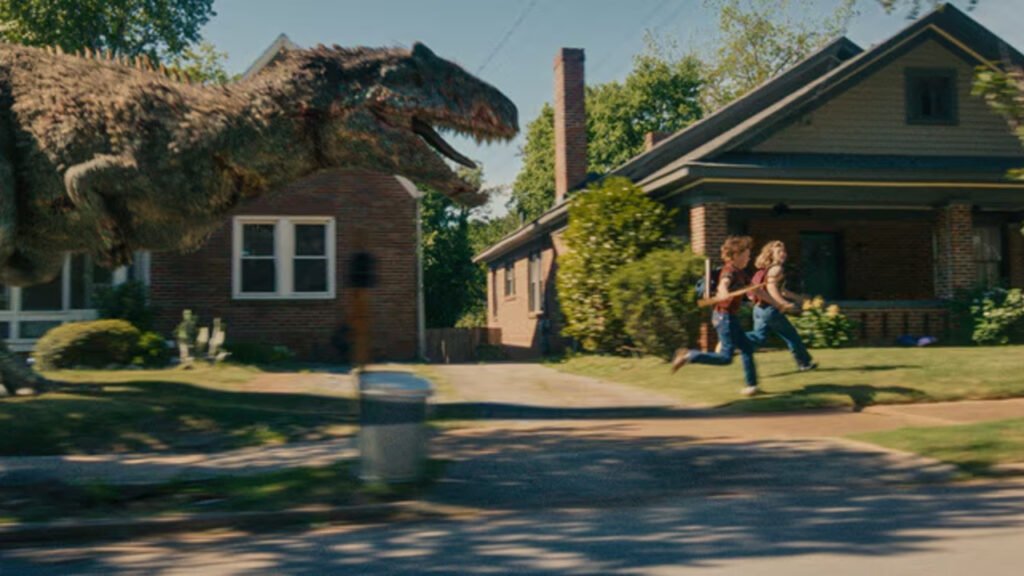
David Robert Mitchell’s The End of Oak Street turns an ordinary 1980s suburb into the center of a bizarre survival story. Set in the summer of 1982, the sci-fi thriller follows the Platt family as strange phenomena start appearing around their Flowervale, Michigan neighborhood.
What begins as glowing objects, strange plants and reports of unexplained disturbances soon becomes something much bigger. A mysterious flash rips through Oak Street and changes everything.
The biggest mystery is also the simplest question: where did Oak Street go? The neighborhood isn’t destroyed. Instead, an entire section of the suburb is displaced through time, leaving its residents stranded among prehistoric creatures, and the ending sends some survivors back to try to change what happened.
Where Did Oak Street Actually Go?
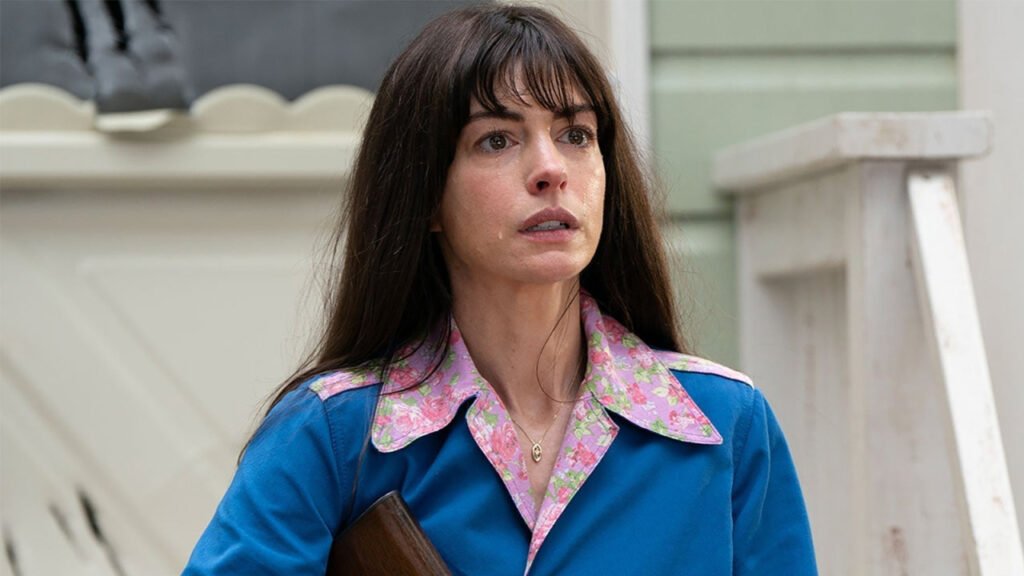
Before Oak Street disappears, the neighborhood experiences a series of increasingly strange events. Radio reports mention unexplained space ripples, glowing orbs appear around the area and prehistoric vegetation suddenly begins growing in places where it should not exist. These incidents gradually reveal that something is happening to the fabric of space and time.
When the anomaly finally reaches its full strength, Oak Street is not simply wiped out. The phenomenon effectively swaps the neighborhood with a section of Earth’s prehistoric past. The Platt family and their neighbors are transported millions of years backward, landing in the Mesozoic era.
That leaves the residents surrounded by a world that bears little resemblance to the quiet Michigan suburb they knew. Instead of streets, houses and familiar neighbors, they have to survive in a prehistoric environment populated by dinosaurs, including a terrifying Allosaurus.
The strange events from earlier in the film suddenly make more sense. The plants and other anomalies were not random supernatural occurrences. They were signs that the boundary between different points in Earth’s history was breaking down.
Oak Street therefore does not travel to another planet or disappear into some alternate dimension. It is physically displaced into the prehistoric past, along with the people and structures caught inside the affected area.
Related: The End of Oak Street’s White Light Explained: What Triggers the Teleportation?
How The Ending Changes Oak Street’s Fate
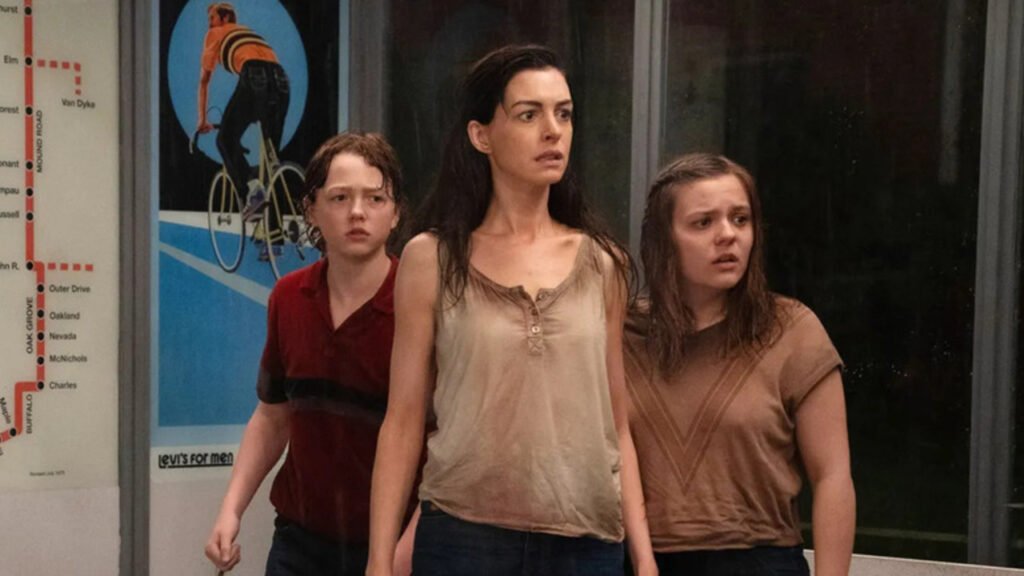
The time-travel mechanics become even more important during the finale. After surviving the prehistoric world, Denise, Audrey, Brian and Jeannette find another anomaly that gives them a way out. Their escape does not return them to the exact moment when Oak Street originally disappeared.
Instead, the wormhole sends them back shortly before the original displacement takes place. That small difference completely changes what Denise can do. During the first timeline, Greg is killed by a dinosaur, leaving Denise and the children to deal with the consequences of losing him. Once they return to the period before the anomaly, she has a chance to prevent that death.
Her solution is surprisingly ordinary. Denise orders a pizza because Greg has secretly taken a job as a delivery driver. The order sends him away from Oak Street just before the anomaly strikes. She also uses a payphone to warn several neighbors about the danger and urges them to leave the area.
When the flash occurs again, Oak Street is still transported into the prehistoric past. This time, however, the neighborhood is empty.
The ending creates an important distinction between the two timelines. The Greg who survives is not the same version who experienced the dinosaur attack alongside Denise and the children. The original Greg remains dead in the first timeline, while the version Denise saves continues living in the altered one.
Jeannette’s story adds another layer to the time-travel paradox. A version of Jeannette from the prehistoric timeline travels back to save her parents and her younger self. Two versions consequently survive in the new timeline.
That explains the strange family gathering seen two years later, where both Jeannettes are present. One is the version who lived through the prehistoric ordeal, while the other is the younger version who was saved before the original displacement.
The film’s ending also gives Oak Street a meaning beyond its sci-fi mechanics. At the beginning, the neighborhood represents the polished image of 1980s suburban life, but the Platt family is already struggling beneath that surface. Denise is considering leaving, while Greg is hiding his job loss.
The prehistoric disaster forces those problems into the open. Once the family survives, they no longer return to exactly the life they had before. The destruction of Oak Street becomes a metaphor for the collapse of the perfect suburban facade and the chance to build something more honest afterward.
You May Also Like
Add us as a preferred source on Google.