

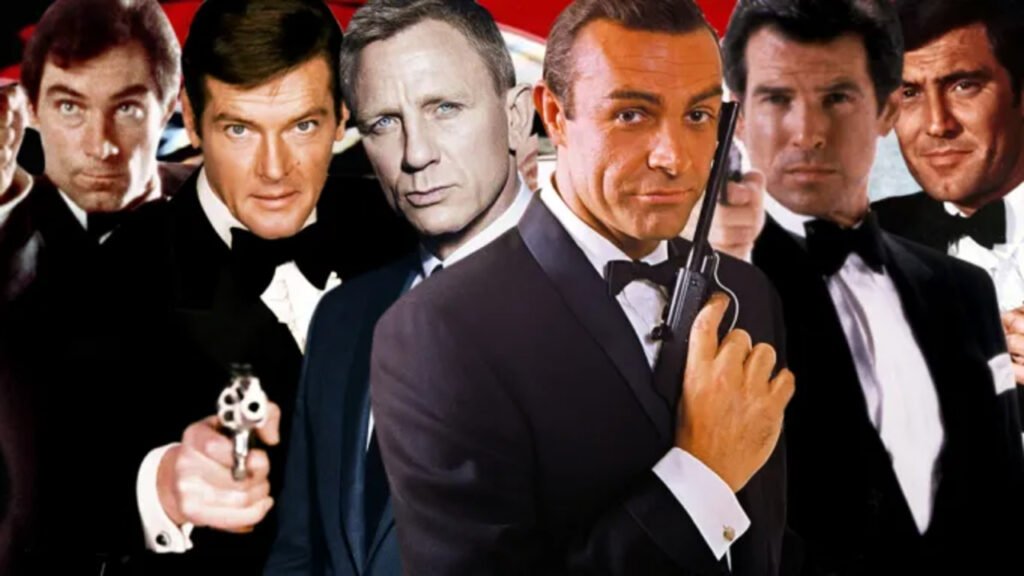
For more than seven decades, one fictional spy has remained the gold standard of espionage. Whether he’s introducing himself with the immortal line, “Bond. James Bond,” ordering a vodka martini “shaken, not stirred,” or racing an Aston Martin through a hail of bullets, 007 has become one of the most recognizable characters ever created.
James Bond has survived changing political climates, shifting movie trends, and six different lead actors without losing his place in popular culture. From Ian Fleming’s novels in the 1950s to billion-dollar blockbusters, Bond has continuously reinvented himself while staying true to the qualities that made him famous: intelligence, style, danger, and an unwavering commitment to completing the mission.
Table of Contents
James Bond At A Glance
| Category | Details |
|---|---|
| Creator | Ian Fleming |
| First Novel | ‘Casino Royale’ (1953) |
| First Film | ‘Dr. No’ (1962) |
| Occupation | MI6 Secret Service Agent |
| Code Number | 007 |
| Meaning of 00 | Licensed to kill in the line of duty |
| Rank | Commander, Royal Naval Reserve |
| Signature Weapon | Walther PPK |
| Signature Car | Aston Martin DB5 |
| Official Films | 25 |
| Official Actors | Sean Connery, George Lazenby, Roger Moore, Timothy Dalton, Pierce Brosnan, Daniel Craig |
Who Is James Bond?
James Bond is a fictional British Secret Service agent working for MI6, Britain’s foreign intelligence service. He operates under the code number 007, signifying that he belongs to the elite “00 Section” and possesses a license to kill when carrying out official assignments.
Unlike many action heroes, Bond isn’t defined by superpowers or futuristic technology alone. He relies on intelligence, combat training, charm, quick thinking, and an ability to adapt under impossible circumstances. While his gadgets, exotic locations, and memorable villains have become franchise staples, Bond has always been portrayed first and foremost as a highly skilled intelligence officer.
Although the character has been portrayed by six official actors across more than six decades, each version represents the same iconic spy rather than a separate incarnation. The films subtly update Bond for each generation while preserving the core identity Ian Fleming originally created.
The Birth Of James Bond
James Bond existed long before the movies made him a household name. Following his service in British Naval Intelligence during World War II, author Ian Fleming purchased a Jamaican estate called Goldeneye. Surrounded by the Caribbean coastline, Fleming finally decided to write the spy novel he had always imagined.
In early 1952, while preparing for his wedding, he began writing ‘Casino Royale’ on a gold-plated typewriter. Fleming later admitted that he wanted his hero to be deliberately plain rather than glamorous. His goal wasn’t to create a larger-than-life superhero but an ordinary professional forced into extraordinary situations.
That philosophy even influenced the character’s name. Searching for something intentionally unremarkable, Fleming borrowed the name “James Bond” from American ornithologist Dr. James Bond, author of Birds of the West Indies, a field guide Fleming regularly used while living in Jamaica.
“I wanted the simplest, dullest, plainest-sounding name I could find,” Fleming later explained.
The first novel introduced readers to MI6 agent James Bond as he investigated the dangerous Soviet-backed operative Le Chiffre inside a high-stakes casino. The book proved successful enough that Fleming continued expanding Bond’s world over the next decade.
Before his death in 1964, Fleming wrote 12 novels and two collections of short stories featuring 007. While the books performed well in Britain, Bond’s popularity exploded internationally after U.S. President John F. Kennedy listed ‘From Russia, with Love’ among his favorite novels in 1961. Suddenly, Hollywood wanted its own James Bond.
How EON Productions Was Created
Several producers expressed interest in adapting Fleming’s novels, but two names ultimately shaped Bond’s cinematic future. Canadian producer Harry Saltzman secured film rights to most of Fleming’s novels before joining forces with fellow producer Albert R. “Cubby” Broccoli. Rather than competing, they formed EON Productions—short for “Everything Or Nothing”—to bring James Bond to the big screen.
The partnership secured financial backing from United Artists, although the studio remained cautious about investing heavily in an untested spy franchise. The budget for the first film, ‘Dr. No’, came in at roughly $1 million, modest even by early 1960s standards.
Finding the right actor quickly became the next challenge. The producers considered several established stars, but none completely matched Fleming’s vision. Instead, they took a gamble on a relatively unknown Scottish actor named Sean Connery. That decision would change both Bond and blockbuster filmmaking forever.
The Sean Connery Era (1962–1967, 1971)
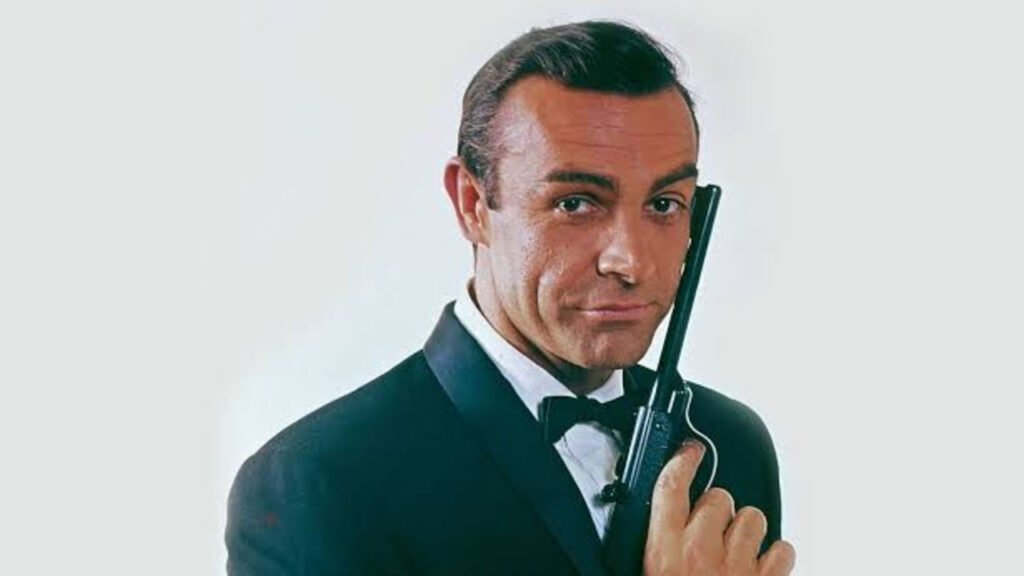
When Albert R. “Cubby” Broccoli and Harry Saltzman began searching for their first James Bond, many people expected the role to go to an established British leading man. Sean Connery wasn’t the obvious choice.
The Scottish actor had served in the Royal Navy, competed in bodybuilding competitions, and worked a variety of jobs before finding steady acting work. He possessed the physical presence the producers wanted, but director Terence Young believed Connery still needed refinement to convincingly play an elite British intelligence officer.
Young personally mentored the actor before filming began. He introduced Connery to Savile Row tailoring, taught him upper-class etiquette, and even coached him on how to carry himself like a sophisticated gentleman. Connery already had Bond’s confidence and toughness. Young helped shape everything else. The gamble paid off immediately.
‘Dr. No’ Changed Spy Movies Forever
Released in 1962, ‘Dr. No’ introduced audiences to virtually every ingredient that would become synonymous with James Bond. The film opens with the now-iconic gun barrel sequence before introducing Connery at a baccarat table, where he calmly delivers the immortal line:
“Bond. James Bond.”
Audiences also met MI6 chief M, secretary Miss Moneypenny, the gadget inventor Q’s predecessor Major Boothroyd, and Ursula Andress’ Honey Ryder, whose entrance emerging from the Caribbean Sea remains one of cinema’s most famous introductions. Although ‘Dr. No’ was made on a relatively modest budget, but it became a surprise worldwide success. More importantly, it established a formula that audiences couldn’t get enough of.
The exotic locations, glamorous women, eccentric villains, thrilling action sequences, memorable musical themes, and dry humor combined into something that felt unlike any other action series of the era.
The Rise Of Bondmania
Success quickly turned into a cultural phenomenon. ‘From Russia with Love’ (1963) expanded Bond’s world with more elaborate espionage plots and higher production values, but it was ‘Goldfinger’ (1964) that transformed the franchise into an international obsession.
The Aston Martin DB5 became the world’s most famous movie car. Q’s gadgets became an essential part of every adventure. Villains grew increasingly theatrical, while Bond’s confidence, wit, and effortless cool established him as cinema’s ultimate action hero. Merchandise flooded stores, newspapers coined the term “Bondmania,” and Sean Connery suddenly found himself among the biggest stars on the planet.
The momentum continued with ‘Thunderball’ (1965), which became the highest-grossing Bond film of its time, followed by ‘You Only Live Twice’ (1967), an ambitious globe-trotting adventure that fully embraced larger-than-life spectacle. Behind the scenes, however, Connery had grown increasingly frustrated.
The relentless media attention exhausted him, and he felt the studio hadn’t rewarded him fairly despite the films generating enormous profits. Feeling trapped by the role that had made him famous, Connery announced he was leaving the franchise after ‘You Only Live Twice’.
George Lazenby’s One And Only Bond Film
Replacing Sean Connery seemed almost impossible. Rather than casting another established actor, EON Productions made a surprising decision by hiring Australian model George Lazenby, who had virtually no professional acting experience.
Lazenby made his debut in ‘On Her Majesty’s Secret Service’ (1969), a film that many longtime fans now consider one of the franchise’s finest entries. Unlike previous adventures, it gave Bond genuine emotional depth. He falls in love with Tracy di Vicenzo, marries her, and suffers devastating personal loss when she is murdered shortly after their wedding.
The ending remains one of the most heartbreaking moments in Bond history. Despite the film’s critical reputation today, Lazenby’s Bond career ended almost as soon as it began.
His agent convinced him that the spy craze of the 1960s had run its course and predicted James Bond would soon become irrelevant. Believing the franchise had no future, Lazenby declined to return for another film. It proved to be one of Hollywood’s most infamous career miscalculations.
Sean Connery’s Surprise Return
Lazenby’s departure left EON scrambling once again. To reassure audiences, the producers persuaded Connery to return for ‘Diamonds Are Forever’ (1971), reportedly paying him a then-record salary of $1.25 million. Connery later donated the money to the Scottish International Education Trust.
The film performed well commercially, but Connery had already decided this would be his final official Bond appearance. Once filming wrapped, EON needed someone willing to commit to the role for the long term. They found exactly that in Roger Moore.
Roger Moore understood that competing directly with Sean Connery would be impossible. Instead of copying his predecessor’s harder edge, Moore leaned into charm, humor, and sophistication. His Bond smiled more often, relied heavily on witty one-liners, and rarely appeared rattled, even in the most dangerous situations.
His first outing, ‘Live and Let Die’ (1973), introduced audiences to a lighter interpretation of the character, and viewers embraced it.
Over the next 12 years, Moore starred in seven Bond films:
- ‘Live and Let Die’ (1973)
- ‘The Man with the Golden Gun’ (1974)
- ‘The Spy Who Loved Me’ (1977)
- ‘Moonraker’ (1979)
- ‘For Your Eyes Only’ (1981)
- ‘Octopussy’ (1983)
- ‘A View to a Kill’ (1985)
The Moore era coincided with the rise of blockbuster filmmaking during the 1970s and early 1980s. As movies like ‘Star Wars’ changed audience expectations, Bond embraced increasingly elaborate gadgets, globe-spanning adventures, and spectacular stunts.
‘Moonraker’ even took 007 into outer space, demonstrating just how comfortable the franchise had become with embracing larger-than-life spectacle. Moore remains the longest-serving official James Bond actor, appearing in seven films across 12 years. By the time he retired after ‘A View to a Kill’, however, many critics felt the series had become too lighthearted and self-aware.
The producers realized Bond needed another dramatic reinvention if he was going to survive the changing landscape of action cinema.
Reinvention, Legal Battles, And The Return Of 007 (1987–2002)
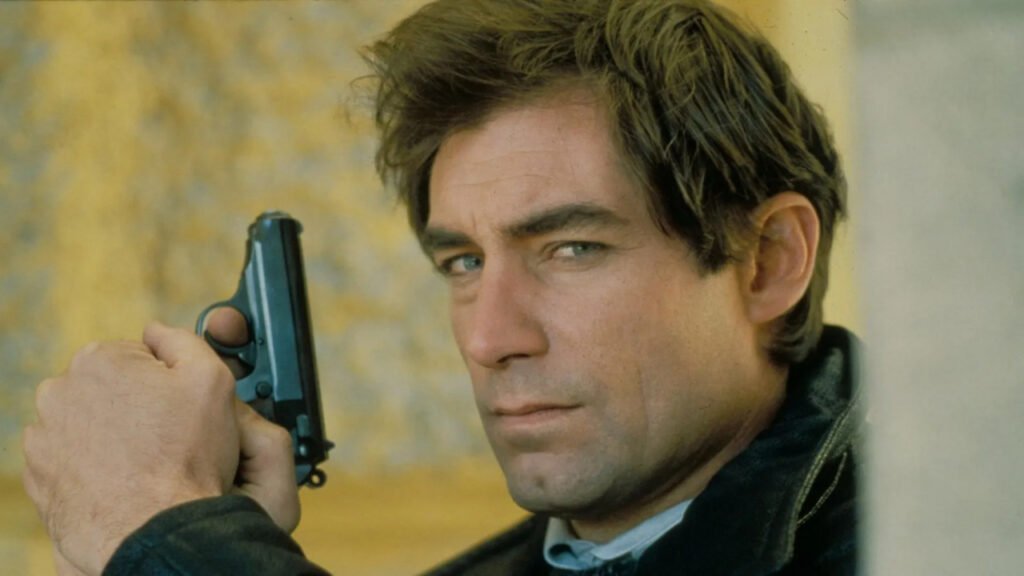
By the mid-1980s, James Bond found himself at a crossroads. Roger Moore had carried the franchise for more than a decade, but audiences had watched the series drift further toward comedy with increasingly extravagant gadgets, over-the-top villains, and even a trip into outer space. While those films remained commercially successful, many critics felt Bond had lost the harder edge that made Ian Fleming’s original character so compelling.
The producers agreed. Rather than trying to outdo the spectacle of the Moore era, EON Productions decided to steer the franchise back toward the novels. They wanted Bond to feel dangerous again, less like a superhero and more like a professional intelligence officer willing to make morally difficult decisions.
Timothy Dalton Brought Fleming’s Bond Back
To accomplish that shift, the producers turned to Timothy Dalton, a classically trained Shakespearean actor who had actually been considered for the role years earlier. Dalton had declined at the time because he believed he was too young to play Bond, but by the late 1980s, he felt ready to take on the character.
Unlike Roger Moore, Dalton wasn’t interested in witty one-liners or exaggerated gadgets. He immersed himself in Ian Fleming’s novels and tried to portray Bond as the author originally imagined him: emotionally guarded, physically intimidating, and psychologically scarred by the demands of espionage.
That interpretation first appeared in ‘The Living Daylights’ (1987), which immediately presented a more grounded version of 007. Bond still traveled across exotic locations and faced international conspiracies, but Dalton’s performance emphasized professionalism over charm. His Bond smiled less often, questioned his missions more deeply, and appeared genuinely burdened by the violence his job required.
The darker tone became even more pronounced in ‘Licence to Kill’ (1989). Instead of saving the world from a globe-spanning threat, Bond resigns from MI6 and pursues a personal vendetta against drug lord Franz Sanchez after his longtime CIA ally Felix Leiter is brutally attacked. The film abandoned many traditional Bond conventions, replacing fantastical gadgets with a revenge-driven story that resembled the gritty action thrillers dominating Hollywood at the time.
Although many modern fans now consider Dalton’s films underrated, audiences in the late 1980s weren’t entirely prepared for such a serious interpretation. His Bond received positive reviews from many critics, but the films earned noticeably less at the box office than the Moore era, leaving the future of the franchise uncertain once again.
A Six-Year Legal Battle Nearly Ended James Bond
The greatest threat to Bond’s survival didn’t come from disappointing ticket sales. It came from the courtroom. Shortly after ‘Licence to Kill’ reached theaters, MGM/United Artists became entangled in a complicated legal dispute involving distribution rights, licensing agreements, and ownership issues surrounding the Bond franchise. The conflict effectively froze development on the next film.
Instead of beginning pre-production as they normally would, EON Productions spent years waiting for the legal issues to be resolved. What initially seemed like a temporary delay stretched into the longest hiatus the series had experienced since ‘Dr. No’ introduced Sean Connery nearly three decades earlier.
The timing couldn’t have been worse. During Bond’s absence, the world changed dramatically. The Berlin Wall fell in 1989, the Soviet Union collapsed two years later, and the Cold War that had defined much of James Bond’s earliest adventures came to an end. Without its traditional geopolitical backdrop, many commentators questioned whether James Bond still had a purpose.
Spy thrillers themselves were changing. Filmmakers increasingly favored morally complex protagonists over invincible secret agents, and critics openly wondered whether Bond had become an outdated relic of another era. As the delay dragged on, Timothy Dalton’s contract eventually expired. Rather than continue waiting indefinitely, he stepped away from the role, ending his tenure after only two films.
For the first time since the early 1960s, there was genuine uncertainty about whether James Bond would ever return to theaters.
Pierce Brosnan Ushered In A New Era
When the legal dispute finally ended, EON Productions faced a difficult challenge. The series couldn’t simply continue where it had left off six years earlier because the world itself had fundamentally changed.
The producers turned to Pierce Brosnan, an actor many fans believed should have played Bond years before. Brosnan had originally been cast in the mid-1980s but had to withdraw after NBC unexpectedly renewed his television series Remington Steele, preventing him from accepting the role. A decade later, the opportunity returned.
His first film, ‘GoldenEye’ (1995), carried enormous expectations. Rather than ignoring Bond’s long absence, the screenplay confronted it directly. Judi Dench made her debut as the new M and immediately challenged Bond’s relevance in the post-Cold War world, famously describing him as “a sexist, misogynist dinosaur” and “a relic of the Cold War.”
The line acknowledged exactly what many critics had been saying for years. Instead of resisting those criticisms, ‘GoldenEye’ incorporated them into Bond’s character, forcing him to prove he still belonged in a rapidly changing world. The approach paid off spectacularly. The film became both a critical and commercial success, reintroducing James Bond to an entirely new generation.
Brosnan’s portrayal successfully combined elements from several previous Bonds. He possessed Sean Connery’s confidence, Roger Moore’s effortless charm, and Timothy Dalton’s flashes of seriousness, creating a balanced interpretation that appealed to longtime fans while welcoming newcomers.
Bond Entered The Blockbuster Era
Following the success of ‘GoldenEye’, Bond once again became one of Hollywood’s biggest franchises.
‘Tomorrow Never Dies’ (1997) explored media manipulation and global misinformation through a villain who controlled international news broadcasts. ‘The World Is Not Enough’ (1999) introduced one of the series’ most emotionally complex antagonists in Elektra King, while also giving Judi Dench’s M a much larger role in the story than previous Bond films had allowed.
The series also benefited enormously from the booming popularity of video games. GoldenEye 007 for the Nintendo 64 became one of the most influential first-person shooters ever made, introducing millions of younger fans to Bond even before they watched the films. As the franchise entered the new millennium, however, familiar patterns began to emerge.
The gadgets grew increasingly elaborate. The action became more exaggerated. The villains became more fantastical. By the time ‘Die Another Day’ arrived in 2002, Bond was driving an invisible Aston Martin, battling genetically altered villains, and surfing an enormous CGI tidal wave. While the film performed well financially, many fans and critics believed the franchise had once again drifted too far from Ian Fleming’s grounded spy stories.
At the same time, another spy series was rapidly changing audience expectations. Matt Damon‘s Jason Bourne introduced a rougher, more realistic style of action filmmaking built around handheld camerawork, brutal close-quarters combat, and emotionally vulnerable protagonists. Combined with the cultural shifts following the events of September 11, 2001, audiences increasingly gravitated toward realism over spectacle.
The producers recognized that James Bond needed more than just another new actor. For the first time in the franchise’s history, they decided the character himself needed a complete reboot.
The Daniel Craig Era And The Reinvention Of James Bond (2006–2021)
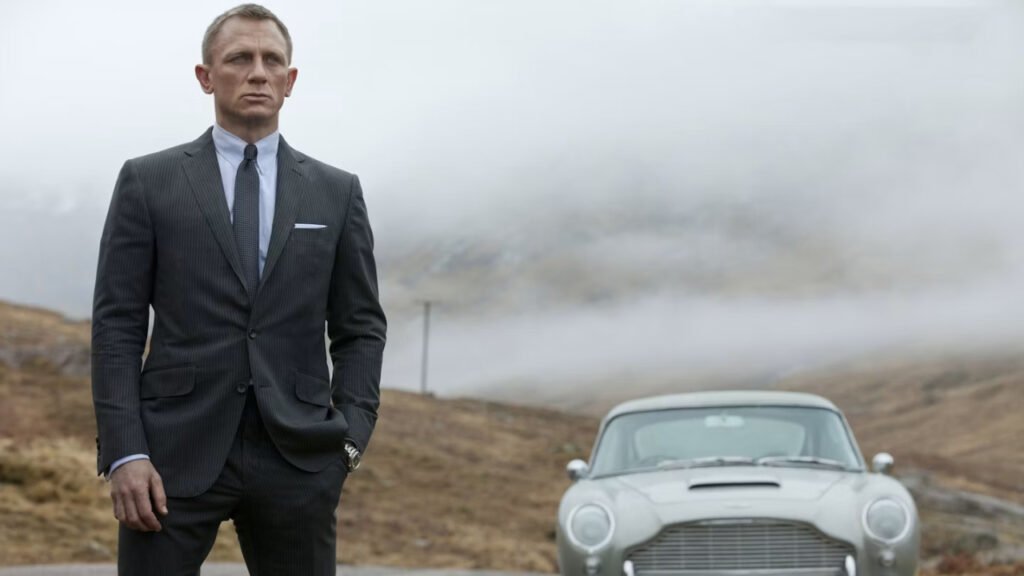
By the early 2000s, EON Productions had reached a conclusion it had spent decades trying to avoid. Simply replacing the actor was no longer enough. The Bond formula itself needed to change.
‘Die Another Day’ had performed well financially, but its invisible cars, over-reliance on CGI, and increasingly cartoonish action convinced producers Barbara Broccoli and Michael G. Wilson that the franchise had drifted too far from Ian Fleming’s original vision. At the same time, audiences had embraced a new generation of spy thrillers led by Matt Damon’s Jason Bourne, whose grounded action and emotionally scarred protagonist felt far removed from Bond’s increasingly extravagant adventures.
Rather than trying to compete with Bourne by making another traditional Bond film, the producers made the boldest creative decision in the franchise’s history. They abandoned the existing timeline altogether and returned to the very beginning of Bond’s career.
Daniel Craig’s Casting Divided Fans
Finding the next James Bond proved every bit as controversial as reinventing the franchise itself. After Pierce Brosnan’s departure, rumors linked nearly every major British actor to the role. When Daniel Craig was officially announced in October 2005, however, the reaction was immediate and overwhelmingly negative.
Many fans argued Craig didn’t resemble the Bond they had grown up watching. He was blond, more rugged than polished, and lacked the traditional aristocratic appearance associated with the character. British tabloids quickly gave him the nickname “James Blonde,” while online campaigns appeared urging EON Productions to reconsider the casting.
Craig largely ignored the criticism.
Instead of responding publicly, he focused on preparing for the role. He underwent months of intensive physical training and worked closely with director Martin Campbell to build a version of Bond that felt younger, less experienced, and more physically vulnerable than audiences had ever seen.
‘Casino Royale’ Started Everything Again
Released in 2006, ‘Casino Royale’ wasn’t simply another sequel. It restarted Bond’s story from the beginning, showing him shortly after earning his 00 status.
For the first time, audiences watched Bond make mistakes, lose fights, and struggle emotionally with the demands of his profession. The film stripped away many of the familiar franchise elements, placing greater emphasis on character development than on elaborate gadgets or larger-than-life villains.
Craig’s Bond relied on brute force as much as intelligence. His fights left visible injuries, his decisions carried consequences, and his relationship with Treasury agent Vesper Lynd became the emotional heart of the story. Their romance ultimately reshaped Bond forever.
When Vesper died during the film’s climax, the betrayal and heartbreak transformed the optimistic young agent into the emotionally guarded operative audiences had known for decades. Rather than treating Bond’s origin as a checklist of iconic moments, ‘Casino Royale’ explained why he became the man viewers recognized from earlier films. The response completely silenced Craig’s critics.
The film became one of the highest-reviewed entries in franchise history, proving that James Bond could evolve without abandoning the qualities that made him iconic.
A More Human James Bond
Craig’s era differed from every previous Bond because it embraced long-form storytelling. Earlier films largely functioned as standalone adventures. While recurring characters occasionally returned, audiences could watch almost any Bond film without needing to know what happened previously.
Craig’s five films instead told one continuous story. ‘Quantum of Solace’ (2008) picked up only minutes after ‘Casino Royale’ ended, following Bond as he sought answers about Vesper’s betrayal while uncovering the shadowy organization known as Quantum.
‘Skyfall’ (2012) shifted the focus inward, exploring Bond’s relationship with M and questioning whether aging field agents still had a place in modern intelligence work. Rather than presenting Bond as an unstoppable hero, the film examined his physical limitations, emotional scars, and lingering trauma.
The story culminated in one of the franchise’s most personal conflicts as Bond defended his childhood home against former MI6 agent Raoul Silva. The emotional weight of Judi Dench’s final performance as M helped elevate ‘Skyfall’ beyond a traditional spy thriller. The film also marked an extraordinary commercial milestone.
Released during the franchise’s 50th anniversary, ‘Skyfall’ became the first Bond film to surpass $1 billion at the worldwide box office. It earned widespread critical acclaim, won two Academy Awards, including Best Original Song for Adele’s “Skyfall”, and reaffirmed James Bond’s place among modern blockbuster franchises.
The Road To Bond’s Final Mission
Craig’s remaining films continued expanding the serialized approach. ‘Spectre’ (2015) reunited several villains and organizations introduced throughout the previous films, while finally bringing Ernst Stavro Blofeld back into the official series after decades of legal complications surrounding the character’s rights.
Although the film received a more mixed reception than its predecessor, it completed many of the narrative threads that had begun in ‘Casino Royale’. Craig’s final appearance faced an unusually difficult journey before audiences ever saw it.
Originally scheduled for release in 2020, ‘No Time to Die’ suffered repeated delays because of the COVID-19 pandemic. Rather than releasing the film on streaming platforms, MGM and EON insisted that Bond deserved a theatrical release, postponing it for more than a year. When it finally arrived in 2021, the film delivered something no previous Bond adventure had ever attempted.
James Bond’s Greatest Sacrifice
For decades, one assumption defined the franchise. James Bond always survived. No matter how impossible the situation appeared, audiences knew 007 would ultimately escape, defeat the villain, and return for another mission.
‘No Time to Die’ deliberately broke that tradition.
After discovering he had a daughter and finally allowing himself to build a family, Bond sacrificed his own life to prevent a bioweapon from reaching the people he loved. Mortally trapped on the villain’s island, he remained behind as Royal Navy missiles destroyed the facility, ending Daniel Craig’s version of James Bond once and for all.
The decision shocked audiences around the world. No previous official Bond film had definitively killed the character, and many longtime fans questioned whether such an ending was even possible within the franchise.
Barbara Broccoli later explained that Craig’s era had always been conceived as a complete story with a beginning, middle, and end. Because the producers had rebooted Bond in ‘Casino Royale’, they felt they had earned the freedom to conclude his journey in a way previous actors never could.
Despite Bond’s death, the film closed with a familiar promise that reassured audiences that the franchise itself remained immortal.
“James Bond Will Return.” The message confirmed what history had already demonstrated several times before. James Bond may change faces, personalities, and even timelines, but the world’s most famous secret agent always finds a way back.
The Rogue James Bond Movies And The Legal Battles That Changed 007 Forever
For many casual fans, the James Bond filmography seems straightforward. Twenty-five official films, six actors, and one continuous franchise produced by EON Productions. The reality is much messier.
Long before cinematic universes and complicated franchise rights became commonplace, James Bond found himself at the center of one of Hollywood’s longest-running legal disputes. Those courtroom battles eventually produced two films that exist outside the official Bond canon, confused generations of viewers, and even convinced Sean Connery to return to the role years after he thought he had left it behind. Understanding these “rogue” Bond movies means going back to the very beginning—before ‘Dr. No’ ever reached theaters.
Why There Are Two Unofficial James Bond Movies
The legal complications began with Ian Fleming’s very first Bond novel. Before Bond became a publishing sensation, Fleming sold the screen rights to ‘Casino Royale’ separately from the rest of his books. In 1954, the novel was adapted into a live American television production for the anthology series Climax!. Instead of British secret agent James Bond, audiences met an American intelligence operative named “Jimmy Bond,” played by Barry Nelson.
Although historically significant as Bond’s first screen appearance, the television adaptation had no connection to the film series that Cubby Broccoli and Harry Saltzman would launch years later. The rights remained separate even after EON Productions acquired the rest of Fleming’s novels. That unusual situation eventually led to the first unofficial Bond movie.
In 1967, ‘Casino Royale’ arrived in theaters as a lavish spy comedy starring David Niven, Peter Sellers, Ursula Andress, Woody Allen, Orson Welles, and several other major stars. Rather than adapting Fleming’s serious novel, the filmmakers transformed the story into an absurd parody that featured multiple characters claiming to be James Bond.
The film embraced the psychedelic style of the late 1960s, filling its runtime with surreal comedy, visual gags, and intentionally chaotic storytelling. Although it performed reasonably well at the box office, it bore little resemblance to either Fleming’s novel or the increasingly successful EON films starring Sean Connery.
To this day, the 1967 ‘Casino Royale’ remains one of the strangest chapters in Bond history.
The ‘Thunderball’ Lawsuit That Wouldn’t Go Away
The second unofficial Bond film has an even more complicated origin. During the late 1950s, Ian Fleming collaborated with Irish producer Kevin McClory and screenwriter Jack Whittingham on an original James Bond screenplay that eventually evolved into the novel ‘Thunderball’.
When Fleming published the book in 1961 without formally crediting his collaborators, McClory filed a lawsuit claiming significant portions of the story belonged to him. The courts largely agreed.
Rather than receiving ownership of James Bond himself, McClory secured valuable rights connected specifically to the ‘Thunderball’ story, including its plot, characters, and the criminal organization SPECTRE.
Although EON Productions reached an agreement allowing ‘Thunderball’ to become the fourth official Bond film in 1965, the settlement contained an important condition. Once that agreement expired, McClory regained the ability to produce his own adaptation. He spent years trying to launch a rival Bond franchise.
Sean Connery’s Unexpected Return
McClory’s opportunity finally arrived in the early 1980s. Instead of introducing a new actor, he persuaded Sean Connery to return as James Bond more than a decade after ‘Diamonds Are Forever’. The project became ‘Never Say Never Again’ (1983), a title inspired by Connery’s earlier promise that he would “never again” play Bond.
The production retold the basic story of ‘Thunderball’ while updating it for contemporary audiences. Connery’s return generated enormous publicity, particularly because the film opened during the same year as Roger Moore’s official Bond adventure, ‘Octopussy’.
For the only time in history, two different James Bond movies starring two different actors competed against each other at the box office. The media quickly dubbed the unusual showdown the “Battle of the Bonds.” Both films ultimately proved commercially successful, but ‘Octopussy’ narrowly earned more worldwide, reinforcing EON Productions’ position as the definitive home of James Bond.
Why These Films Aren’t Part Of The Official Series
Although both productions feature James Bond, neither is considered part of the official franchise. That distinction comes down to production rather than continuity.
The official Bond series has always been produced by EON Productions, first under Cubby Broccoli and Harry Saltzman, and later by Barbara Broccoli and Michael G. Wilson. Every film from ‘Dr. No’ through ‘No Time to Die’ belongs to that lineage. The two rogue productions exist outside that continuity because separate rights holders developed them independently.
The legal disputes surrounding ‘Thunderball’ continued for decades, delaying the return of SPECTRE and Ernst Stavro Blofeld to the official series. Those issues weren’t fully resolved until MGM acquired McClory’s remaining rights in the 2010s, finally allowing Blofeld to reappear in ‘Spectre’ (2015) after an absence of more than 40 years.
Looking back, those legal battles shaped Bond almost as much as the films themselves. They delayed stories, split character rights, created competing productions, and forced EON Productions to navigate decades of courtroom negotiations while continuing to reinvent cinema’s most famous secret agent.
Despite those obstacles, the official franchise endured, proving that James Bond’s greatest enemy wasn’t always a supervillain. Sometimes it was copyright law.
Why James Bond Has Endured For More Than 70 Years
Very few fictional characters remain culturally relevant for even a decade. James Bond has survived more than seven.
The world that Ian Fleming wrote about in the early 1950s barely resembles the one audiences live in today. The Cold War has ended, the Soviet Union no longer exists, smartphones have replaced coded telegrams, and cyber warfare has become just as important as espionage in the field. Throughout those changes, Bond has continued to evolve without losing the qualities that made him iconic in the first place.
That ability to reinvent itself has become the franchise’s greatest strength. Whenever the films lean too heavily into fantasy, the next era pulls Bond back toward realism. When audiences begin expecting a gritty spy thriller, the series gradually reintroduces larger-than-life villains, spectacular locations, and memorable gadgets. The pendulum has swung between those two styles since Sean Connery first introduced 007 in 1962, allowing every generation to discover its own version of James Bond.
The actors have changed, but certain traditions remain untouched. Bond still reports to M before every mission, receives an inventive new gadget from Q, shares playful exchanges with Moneypenny, introduces himself with the same famous line, and usually finds himself driving an Aston Martin before the credits roll. Those familiar elements create a sense of continuity even as each new actor brings a different interpretation to the role.
The Legacy Of 007
When Ian Fleming sat down at his typewriter in Jamaica in 1952, he couldn’t have imagined that the fictional spy he created would still dominate popular culture more than 70 years later.
James Bond has outlasted countless action heroes because the character constantly adapts without abandoning his identity. Sean Connery established the blueprint, Roger Moore embraced spectacle, Timothy Dalton rediscovered Fleming’s darker vision, Pierce Brosnan modernized Bond for the post-Cold War era, and Daniel Craig explored the emotional cost of living as 007. Each actor reflected the era in which they appeared while preserving the qualities audiences expected from Britain’s most famous secret agent.
The franchise has weathered casting controversies, legal disputes, changing political landscapes, and enormous shifts in filmmaking. It has survived the rise of superhero cinema, streaming platforms, and countless imitators, all while remaining one of the most successful and recognizable series in movie history.
No matter who eventually slips into the tuxedo next, one thing has remained true since 1962. The gadgets may evolve, the villains may become more dangerous, and the missions may grow more complicated, but James Bond continues to return whenever the world needs him.
After more than 25 official films and seven decades of adventures, 007 remains the benchmark against which every cinematic spy is measured.
Who Owns James Bond Today?
For more than six decades, EON Productions has guided every official James Bond film. Albert R. “Cubby” Broccoli established the franchise alongside Harry Saltzman before handing creative leadership to his daughter, Barbara Broccoli, and stepson, Michael G. Wilson.
Behind the scenes, however, the business surrounding Bond has changed considerably. Following Amazon’s acquisition of MGM in 2022, the James Bond library became part of Amazon MGM Studios. In 2025, Amazon MGM Studios and EON Productions announced a new joint venture overseeing the intellectual property, while Barbara Broccoli and Michael G. Wilson stepped back from day-to-day creative responsibilities after decades of steering the series.
The announcement marked one of the biggest behind-the-scenes changes in Bond history. For the first time since ‘Dr. No’, the future of the franchise would develop under a new creative structure, even though the Broccoli family’s influence remains woven into every era of 007.
As of 2026, Amazon MGM Studios has confirmed that a new James Bond film is in development, although the next actor to play 007 has yet to be officially announced.
Frequently Asked Questions About James Bond
Who created James Bond?
Ian Fleming created James Bond in 1952. The character first appeared in the novel ‘Casino Royale’, published in 1953.
What does 007 mean?
Bond belongs to MI6’s elite “00 Section.” Agents carrying the double-zero designation have the authority to use lethal force while carrying out government missions. Bond’s specific code number is 007.
How many official James Bond movies are there?
There are 25 official James Bond films produced by EON Productions, beginning with ‘Dr. No’ (1962) and ending with ‘No Time to Die’ (2021).
Who has played James Bond?
Six actors have officially portrayed James Bond in the EON film series:
- Sean Connery
- George Lazenby
- Roger Moore
- Timothy Dalton
- Pierce Brosnan
- Daniel Craig
Who played James Bond the longest?
Roger Moore appeared in seven official Bond films, the most of any actor. Daniel Craig portrayed Bond over the longest span of years, from 2006 to 2021.
Is James Bond based on a real person?
Not entirely. Ian Fleming drew inspiration from several intelligence officers he encountered during World War II, but James Bond is a fictional character rather than a direct portrayal of any single spy.
Why does James Bond change actors?
The producers have traditionally recast Bond whenever they believe a fresh interpretation is needed. Each actor plays the same iconic character, although Daniel Craig’s films introduced a separate continuity that began with Bond earning his 00 status.
What is the best James Bond movie?
The answer depends on personal preference, but ‘Goldfinger’, ‘Casino Royale’, ‘Skyfall’, ‘From Russia with Love’, and ‘On Her Majesty’s Secret Service’ are consistently ranked among the franchise’s finest entries.
You May Also Like
Add us as a preferred source on Google.