

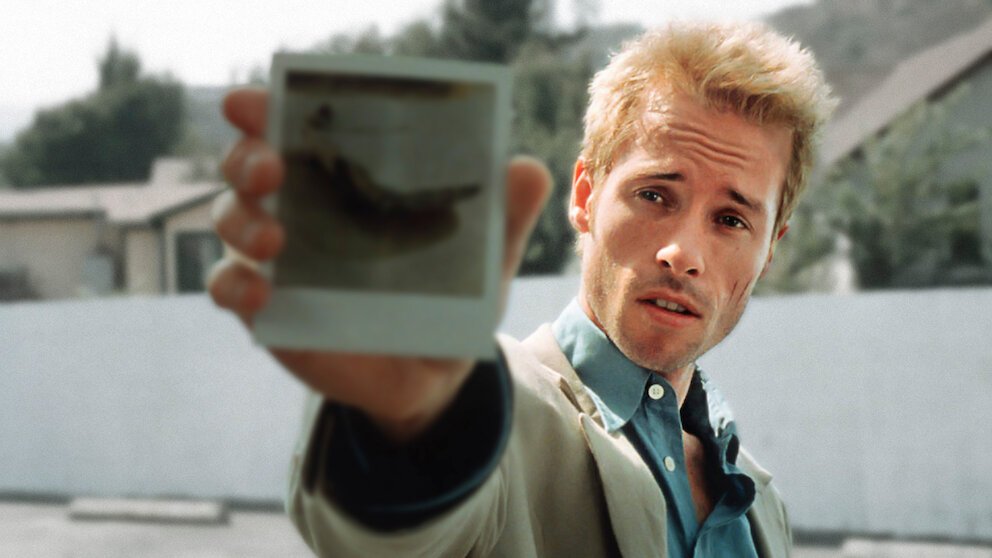
Memento is one of those films people claim to understand immediately after watching, and almost none of them do. Christopher Nolan’s 2000 psychological thriller follows Leonard Shelby, a man with anterograde amnesia who cannot form new memories, as he hunts for the man he believes killed his wife. Simple enough on paper. Except Nolan tells the whole story backward, which means by the time you reach the “beginning,” you’re already too far gone to trust what you’ve been shown.
Here’s what actually happened, and why the structure is the whole point.
Memento’s Chronological Timeline, From Start to Finish
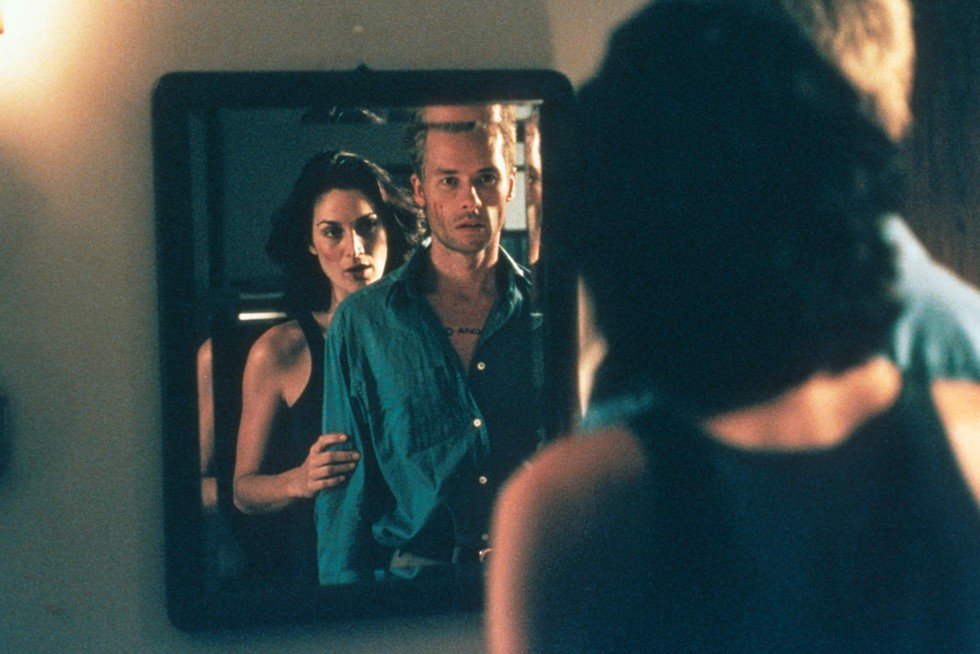
In the real order of events, Leonard and his wife were both attacked in their home. Leonard killed one of the attackers. His wife survived the initial assault but died later. Here is where the story splinters: Leonard’s condition means he has convinced himself she was killed that night, because accepting her actual fate is too painful to carry consciously.
Before the attack, Leonard worked as an insurance investigator. He handled a case involving a man named Sammy Jankis, a client who also claimed to have anterograde amnesia. Leonard concluded Sammy was faking. His wife, a diabetic, tested Sammy’s condition by repeatedly asking him for insulin injections, and Sammy kept complying. She died from the overdose.
Leonard’s memories of Sammy and his own wife have since collapsed into each other, to the point that Sammy Jankis’ story is actually Leonard’s story about himself, repressed and reassigned to someone else.
After his wife’s death, a corrupt cop named Teddy begins using Leonard as a weapon. Teddy manipulates Leonard’s notes and tattoos so that Leonard repeatedly hunts down and kills low-level drug dealers, believing each one is the man who killed his wife. Leonard has already found and killed the real attacker, a man named Jimmy Grants, likely more than once in memory but at least once on screen.
The film’s opening scene, shown in reverse, is Leonard killing Jimmy. The final scene of the film, chronologically the earliest, is Leonard making the conscious decision to give himself a false lead. He chooses to live inside the lie because the truth gives him nothing to wake up for.
More From Nolan: Is Love a Fourth Dimension? The Hidden Physics Behind Cooper and Murph’s Bond in ‘Interstellar’
Why Nolan Reversed the Timeline and What It Actually Does to You
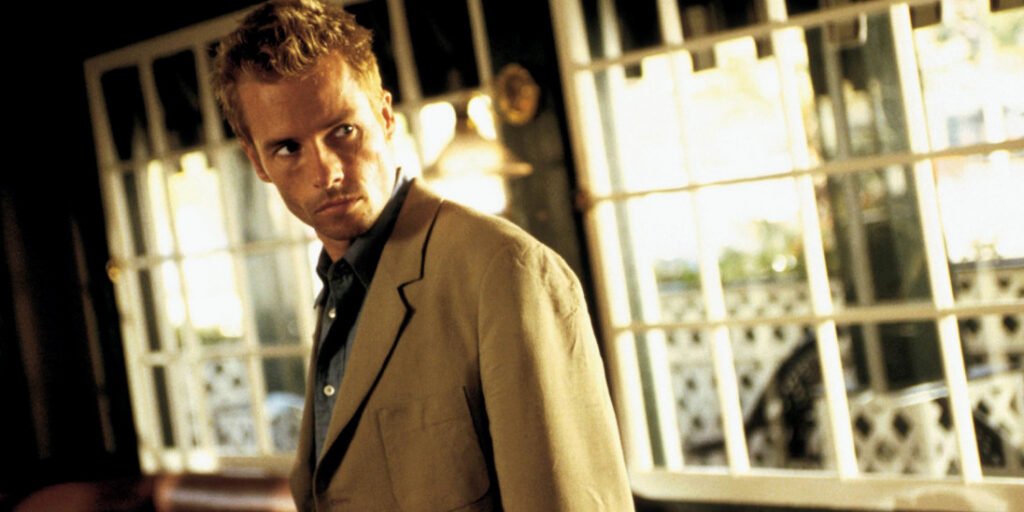
The backward structure is not a gimmick. It is the only way to make the audience feel what Leonard feels.
In a conventional narrative, the viewer accumulates information and builds toward understanding. Watching Memento in Nolan’s order, you lose information as the film progresses. Every scene strips away context rather than adding it. By the final frame, you understand less than you did when the credits rolled at the top. That disorientation is the experience of living in Leonard’s head.
More specifically, Nolan forces the viewer to share Leonard’s epistemological problem: how do you trust what you’re told when you can’t verify the chain of events that led here? Every clue Leonard has is one he gave himself. Every note is one he wrote. We watch characters manipulate him and only understand the manipulation retroactively, after we’ve already accepted the version Leonard was handed.
The reverse structure also reframes the question the film is asking. A forward narrative asks: Will Leonard find the killer? A backward one asks: what has Leonard already done, and does he know it? The horror is not what might happen. It is what it already has.
Nolan has said the structure came directly from his brother Jonathan’s short story “Memento Mori,” but the decision to fully commit to the reverse chronology was about forcing complicity. The audience, like Leonard, pieces together a version of events they believe is accurate. The film’s final reveal suggests both of them have been wrong the whole time.
Memento turns 26 this year, and it still works precisely because the backward timeline is not a decoration. Strip it out, and you have a moderately interesting neo-noir. Keep it, and you have a film that argues memory is not a record. It is a story you tell yourself, edited for reasons you will never fully understand.
You May Also Like :
Add us as a preferred source on Google.
Conversation