

Every time the credits roll on Hayao Miyazaki’s 2001 masterwork Spirited Away, a familiar itch crawls into the back of your brain. As Chihiro steps out of that moss-covered tunnel and slides back into the backseat of her parents’ dusty Audi, a deceptively simple question hangs in the humid air: Did any of that actually happen?
Spirited Away follows 10-year-old Chihiro Ogino, who is miserable about moving to a new suburban neighborhood. While taking a shortcut, her parents, played by Takashi Naito and Yasuko Sawaguchi in the original Japanese cast, stray into what looks like an abandoned amusement park.
After her parents gorge themselves on food meant for spirits and are cruelly transformed into giant pigs, Chihiro is trapped in a mystical bathhouse run by the wicked witch Yubaba. To survive, save her parents, and find her way back to the human world, she has to drop her whiny habits, take a job, and forge a fierce bond with a mysterious river spirit named Haku.
It’s the ultimate was it all just a dream? trap that fans have debated for over two decades. We see a petulant child tumble headfirst into a psychedelic bathhouse, ace her final test, rescue her parents, and walk out the other side. Was the spirit realm just a trauma response, a child’s vivid coping mechanism for the agony of packing up her bedroom?
Not quite. If you peel back the layers of Studio Ghibli’s folklore and look closely at the physical clues Miyazaki left behind, the “dream” theory completely falls apart.
The Physical Proof That Trashes the Dream Theory
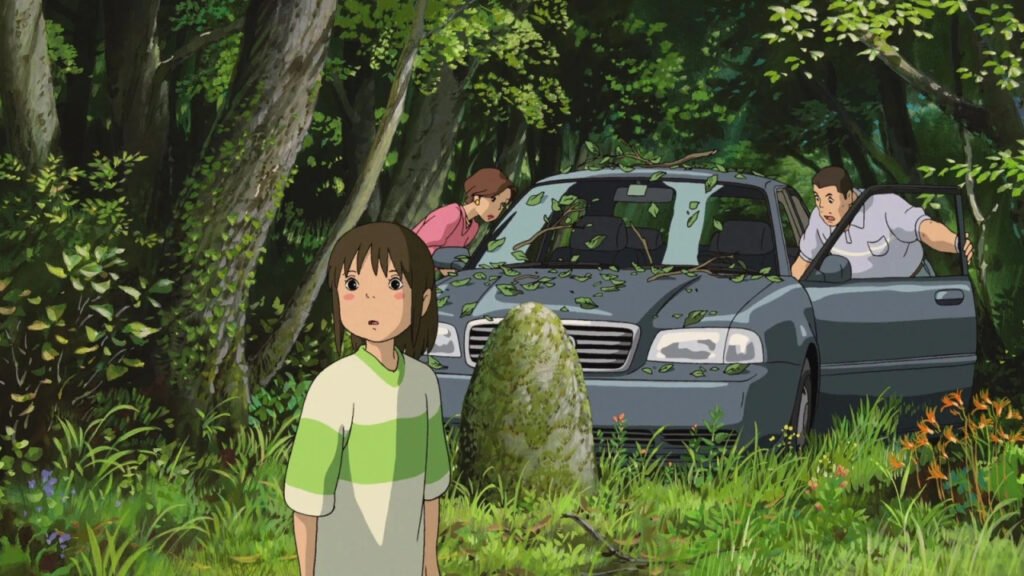
The easiest narrative cop-out in cinema history is the it was all a dream trope—think The Wizard of Oz or Alice in Wonderland. But Miyazaki and producer Toshio Suzuki are far too meticulous for cheap narrative parlor tricks.
Look closely at the environment when Chihiro returns. The car isn’t just dusty, but is covered in a thick, heavy layer of fallen leaves and debris that could not possibly accumulate in a matter of a few minutes. The tunnel that swallowed them up has transformed from a clean concrete archway into a crumbling relic buried beneath vines and time.
More importantly, there is Zenibaba’s parting gift: a thick, handmade hairband glittering with colorful beads. As Chihiro walks back to the car, the hairband catches the sunlight and flashes brightly. It is a tangible, physical artifact from a dimension that shouldn’t exist if her adventure was merely a figment of a stressed-out kid’s imagination.
As Zenibaba tells her later in the film, “Once you meet someone, you never really forget them. It just takes a while for your memories to return.”
Growing Up Isn’t a Hallucination: Understanding Chihiro’s Arc
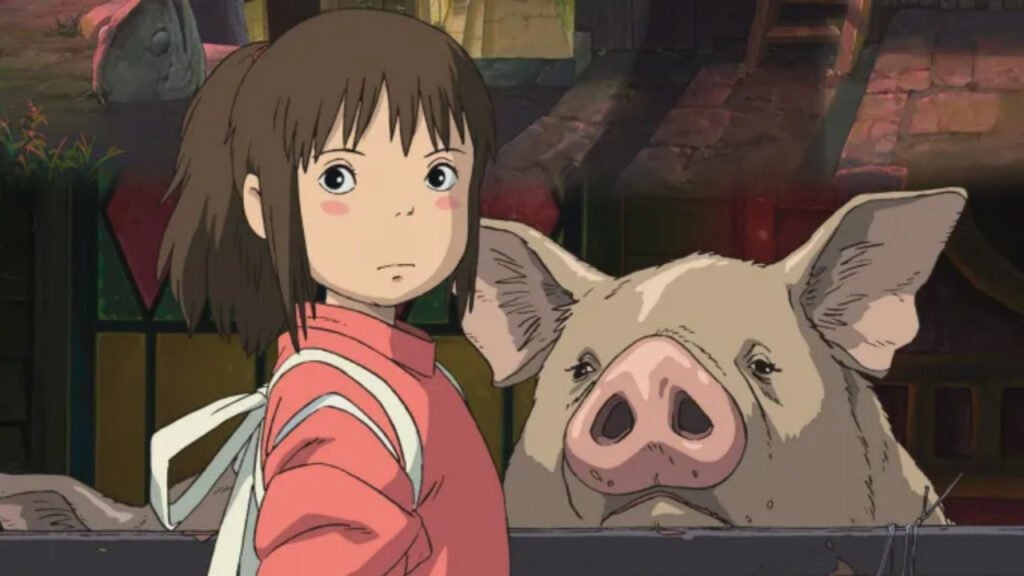
The real magic of Spirited Away isn’t whether the spirit world physically exists on a map; it’s what happens to Chihiro’s soul inside of it. At the start of the film, she is completely helpless, clinging to her mother’s arm, terrified of her own shadow, and utterly paralyzed by the prospect of a new school.
By the time she faces Yubaba’s final test, identifying her transformed parents out of a pen of identical pigs, she doesn’t rely on magic or brute force. She uses quiet, hardened intuition. She looks at the strangers and declares with absolute conviction: “None of them are my parents.”
Miyazaki has often spoken about how children’s films don’t need to talk down to their audiences, but reflect the genuine trials of growing up. He wanted to create a heroine who wasn’t a chosen warrior, an action star, or a magical princess, but an ordinary, ordinary girl who discovers an inner reservoir of grit she never knew she had.
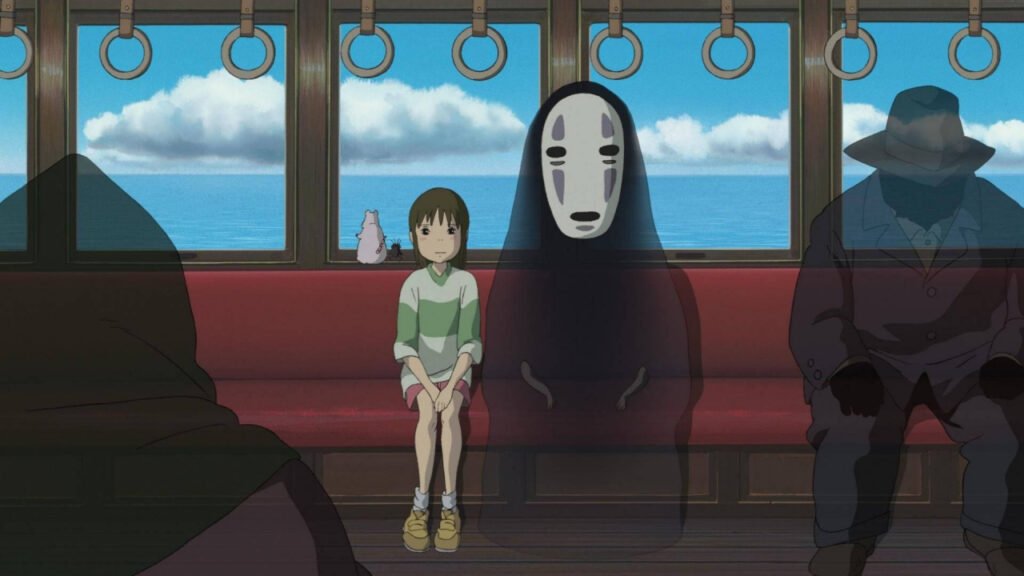
When Chihiro takes that legendary, silent train ride across the flooded plains alongside No-Face, she is traveling completely alone for the first time. It is the emotional and literal climax of the movie.
She isn’t a passive passenger anymore. She is the one protecting others, carrying the burdens of Bo and Haku on her small shoulders.
Read More: What Is Camp Miasma? The In-Universe Horror Series Explained
Forgetting Doesn’t Mean Nothing Happened
So, why do her parents remember nothing? Why does Chihiro look back at the dark tunnel with a blank, lingering stare at the very end?
Many find this frustrating, almost as if it cheapens the journey if she walks away with amnesia. But Miyazaki is making a profound point about human psychology and growing up. Think back to your own childhood. Can you remember every single interaction, every scraped knee, or every teacher who shaped your patience and resilience? Of course not.
We shed our specific memories as we age, but the imprint remains permanently baked into our character. Chihiro might not be able to draw a detailed picture of the bathhouse or recite Haku’s true river name, Kohaku, by the time she reaches her new home. But the core essence of who she is has fundamentally transformed.
When she climbs back into that car, her posture is different. Her eyes are clear. When her father nervously murmurs about the new house and school being a bit scary, Chihiro doesn’t cower in the backseat. She looks forward with a quiet, steady resolve and says, “I think I can handle it.”
The spirit world didn’t vanish because it was a dream. It faded because its job was done after turning a frightened little girl into someone ready to face the real world.
What was your initial reaction when you first saw Chihiro look back at that dark tunnel? Did you think she would remember, or were you heartbroken that she left it all behind?
You May Also Like:
Add us as a preferred source on Google.