

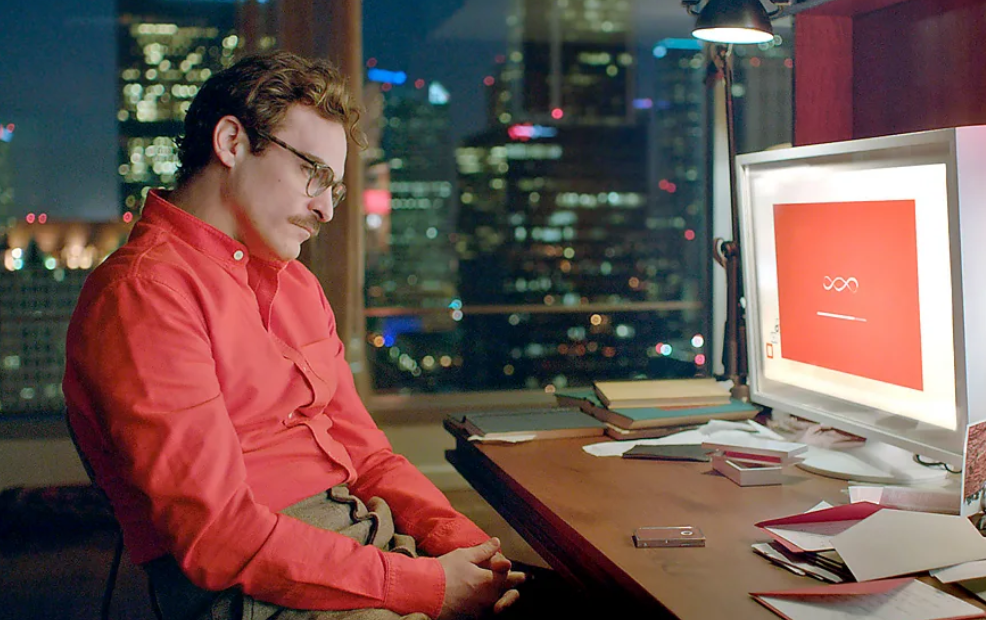
Two films. Two directors. One devastating thesis: that real connection is the rarest, most fragile thing in the world and that losing it might be what finally teaches you who you are.
Spike Jonze’s Her (2013) and Sofia Coppola’s Lost in Translation (2003) are separated by exactly a decade, and on the surface, they couldn’t look more different. One is a sun-bleached science fiction romance about a man falling in love with an AI. The other is a slow, jet-lagged character study set in a Tokyo hotel.
But watch them back to back, and something clicks into place. These two films are in deep conversation with each other, and Her might be the most intimate response to Lost in Translation that cinema has ever produced.
Both Films Are Really About the Same Kind of Loneliness
The emotional architecture of Lost in Translation and Her is almost identical. Both center on a man, Bob Harris in Coppola’s film, Theodore Twombly in Jonze’s, who is emotionally withdrawn, quietly brilliant, and utterly adrift inside his own life. Bob is a fading movie star sleepwalking through a Tokyo whisky commercial. Theodore is a professional letter-writer who composes intimacy for strangers while experiencing almost none of his own.
Neither man is cruel or broken in any obvious way. That’s what makes both films sting. They’re portraits of a very specific, very modern loneliness: the kind that sets in not from isolation, but from proximity to people who can no longer reach you.
And in both films, what saves them, temporarily, incompletely, is an unexpected relationship with a woman who sees them clearly and doesn’t flinch.
‘Her’ Picks Up Exactly Where ‘Lost in Translation’ Leaves Off
Here’s where it gets interesting. Lost in Translation ends with Bob and Charlotte’s goodbye. We don’t hear what Bob whispers into Charlotte’s ear on that Tokyo street. We’re not supposed to. The point is the feeling, something real passed between them, and now it’s over, and they both have to carry it forward into lives that will never quite fit right again.
Her opens in the aftermath of exactly that kind of ending. Theodore is finalizing his divorce from Catherine, a warm, brilliant woman he once loved completely and then, somehow, stopped being present for. We watch him grieve something he didn’t fully appreciate until it was already gone.
If Bob Harris had a few more years and a near-future Los Angeles, he might look a lot like Theodore Twombly. Her is what happens after the credits roll on Lost in Translation.
Scarlett Johansson Is the Bridge Between Both Worlds
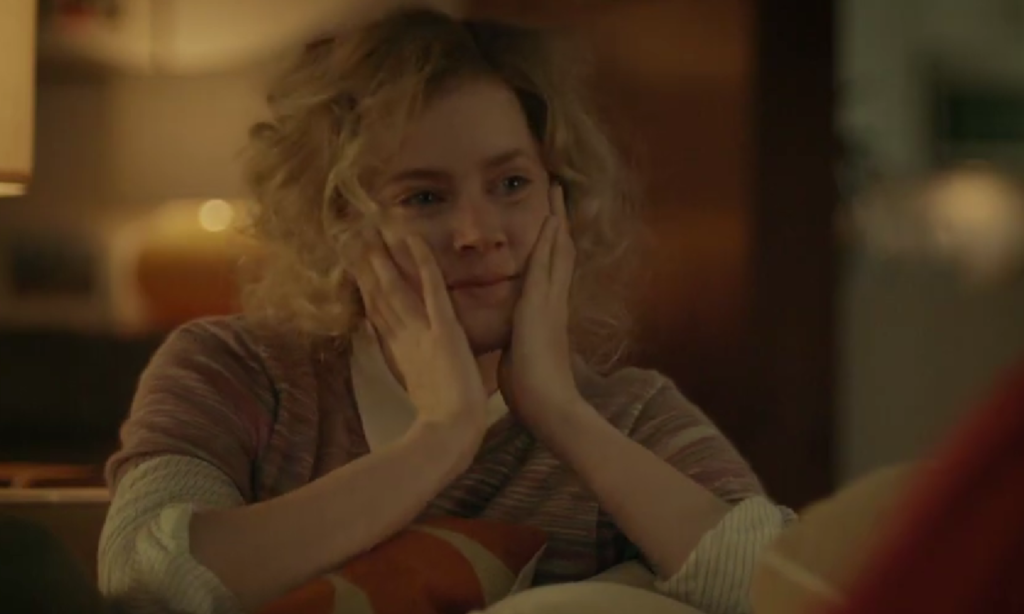
It’s almost too perfect that Scarlett Johansson appears in both films and that her role evolves in a way that tracks the thematic journey from one to the other.
In Lost in Translation, she plays Charlotte: young, searching, present in every scene but never quite seen by the men around her. She’s the one feeling it while everyone else goes numb. In Her, she’s entirely disembodied, a voice, an intelligence, a presence without form. Samantha, the AI, has no body to be overlooked. She exists purely as consciousness, as connection, as the emotional core of the relationship.
It’s a wild inversion. Charlotte was a woman treated like an abstraction. Samantha is an abstraction that becomes undeniably, achingly real. Johansson’s casting across both films reads less like a coincidence and more like a deliberate echo.
What Both Films Ultimately Argue About Love
Neither Lost in Translation nor Her ends happily, but both end honestly. The relationships at their centers weren’t mistakes. They were necessary. Bob needed Charlotte to remember he was still capable of feeling something. Theodore needed Samantha to crack him open enough to finally grieve his marriage, forgive himself, and show up for his life.
Both films argue that love doesn’t have to be permanent to be transformative. That incompleteness isn’t failure. That the point of connection isn’t always to stay, sometimes it’s to wake you up.
That’s a rare and specific belief about human relationships. The fact that Coppola and Jonze, a decade apart, arrived at the same conclusion says something about both of them and about what we keep looking for in the dark of a movie theater.
You May Also Like:
Add us as a preferred source on Google.
Conversation