

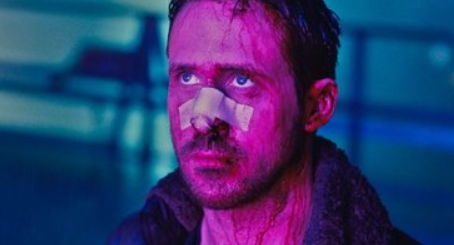
When Denis Villeneuve agreed to direct Blade Runner 2049, he genuinely thought it might end his career. He said so himself. And looking at what he was taking on, it’s hard to argue with him.
Ridley Scott‘s original Blade Runner isn’t just a beloved film, it’s one of the most influential science fiction movies ever made. It invented a visual language that a hundred films have imitated, and none have matched.
Sequels to films like that don’t just risk failure, they risk erasure, the kind where the new thing is so bad it recolors how you remember the original. Villeneuve knew all of this, walked in anyway, and somehow delivered one of the finest sequels in cinema history. Understanding how he did it is the key to understanding why Dune was never really a surprise.
Why Blade Runner 2049 Was the Most Dangerous Bet of Villeneuve’s Career
By 2017, Villeneuve had built one of the most impressive mid-budget resumes in Hollywood. Prisoners, Sicario, Arrival, each of them a slow-burn masterpiece, each proof that he could find the human nerve inside a genre thriller.
But Blade Runner 2049 was something else entirely. It was his first truly big-budget film, a sequel to a movie he openly called one of his all-time favorites, and a project with a margin for error basically zero.
He admitted as much at the BFI London Film Festival, saying he told himself that making a sequel to his favorite film was “a beautiful way to end my career.” He wasn’t being glib. He meant it.
The film cost upwards of $155 million to make and needed somewhere around $400 million just to break even. It made $267 million. By any financial measure, it was a flop. Villeneuve himself later said he “flirted with disaster” and “put myself into massive artistic danger.”
And yet, critically, the film was untouchable. A Metacritic score in the mid-80s. Universal acclaim. Roger Deakins finally won his long-overdue Oscar for cinematography. And a reputation that has only grown in the years since, with many now calling it superior to the original.
What Blade Runner 2049 Actually Proved About Villeneuve as a Filmmaker
The hardest thing about making a legacy sequel isn’t the budget or the pressure. It’s the temptation to play it safe, to give audiences the shapes and sounds they remember and hope that nostalgia does the rest. Villeneuve refused to do that.
Instead of trying to recreate the neon-drenched noir atmosphere of Scott’s film, he asked himself how that world would have evolved, both sociologically and geopolitically, across three decades. The result is a film that feels genuinely descended from the original without ever being trapped by it. Every frame breathes with the same soul as Scott’s vision, but nothing settles for imitation.
That instinct, to honor a world without being consumed by it, is exactly the instinct that made Dune work.
Frank Herbert’s novel had been called unadaptable for decades. David Lynch tried in 1984, and the result was a well-intentioned disaster. Villeneuve approached it the same way he approached Blade Runner 2049, with deep reverence and zero nostalgia, and built something that felt entirely new while staying completely faithful to what made the source material matter.
The pattern here is not recklessness. It’s a very specific kind of courage, the courage to take on something that matters deeply to you, knowing it could go badly, because the alternative, watching someone else handle it, is worse. That’s what drove Blade Runner 2049, and it’s what drove Dune. Both were projects Villeneuve loved too much to leave to someone else.
The miracle of Blade Runner 2049 isn’t that it’s a great film, though it is. The miracle is that it’s a great film made under conditions that would have broken most directors, by a filmmaker who bet everything and somehow walked away with his artistic credibility not just intact but larger than before. Dune got the headlines. But Blade Runner 2049 is where Villeneuve proved he was built for exactly this kind of impossible task.
You May Also Like:
Add us as a preferred source on Google.
Conversation