

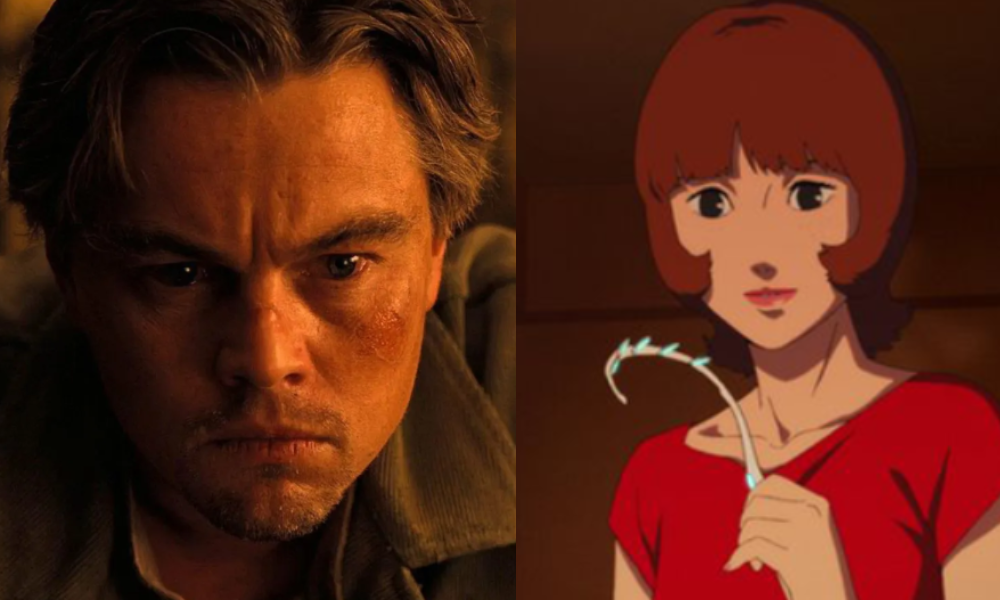
While Christopher Nolan‘s Inception is often hailed as the definitive dream heist film, Satoshi Kon‘s 2006 masterpiece Paprika arguably offers a far more profound exploration of the subconscious. While Nolan focuses on the structural mechanics of dreams, architecture, physics, and logic, Kon dives into the chaotic, irrational, and deeply personal nature of the human psyche.
The narrative follows Dr. Atsuko Chiba, a reserved therapist who uses a device called the DC Mini to enter patients’ dreams under her alter-ego, “Paprika.” When the technology is stolen, the boundary between reality and the collective unconscious begins to dissolve. This allows Kon to examine how our suppressed desires and fears manifest when the “filters” of our waking life are removed.
Paprika vs. Inception: Comparing Dream Logic and Subconscious Depth
In Inception, Dom Cobb and his team treat the dream world like a series of physical levels that must be navigated with military precision. The rules are rigid: if you die, you wake up; if you fall, the “kick” brings you back. This makes for a compelling thriller, but it treats the mind as a puzzle to be solved rather than a living, breathing entity.
In contrast, Paprika presents dreams as a surreal parade of cultural icons, repressed trauma, and non-linear imagery. The film’s central antagonist, Chairman Inui, believes that dreams are the last sanctuary for the human soul, free from the constraints of technology and society. The visual of the Great Parade, a terrifyingly colorful march of appliances and religious symbols, perfectly captures the cluttered, overwhelming nature of a mind untethered from reality.
Furthermore, Inception uses dreams primarily as a setting for an external mission, whereas in Paprika, the dream is an extension of the character’s identity. Dr. Chiba’s struggle to reconcile her cold, professional self with the vibrant, impulsive Paprika is the emotional core of the film. This internal conflict highlights a psychological truth: we are often different people in our dreams than we are in the light of day.
Character Arcs: How Kon Explores Identity and Trauma
The character of Detective Konakawa Toshimi provides the most direct link to the film’s psychological depth. Tormented by recurring dreams of a hallway and a movie theater, Konakawa is a man haunted by his past failures and his abandoned passion for filmmaking. Through his interactions with Paprika, we see a therapeutic process that is messy and unpredictable, unlike the surgical precision of Cobb’s “extraction.”
Unlike Nolan’s characters, who are largely defined by their skills (the Architect, the Forger, the Chemist), Kon’s characters are defined by their flaws and neuroses. Even the genius inventor of the DC Mini, Dr. Tokita, is portrayed as a child in a giant’s body, unable to see the ethical consequences of his creation. His obsession with the DC Mini reflects a psyche that prioritizes curiosity over human safety, leading to the film’s chaotic climax.
Ultimately, Paprika suggests that the human psyche cannot be controlled or mapped out. While Inception ends with a question about whether a top is still spinning, Paprika ends with the realization that the dream and the dreamer are one and the same. By embracing the irrationality of the mind, Kon creates a cinematic experience that feels closer to the dream experience than Nolan’s structured heist.
You May Also Like:
Add us as a preferred source on Google.
Conversation