

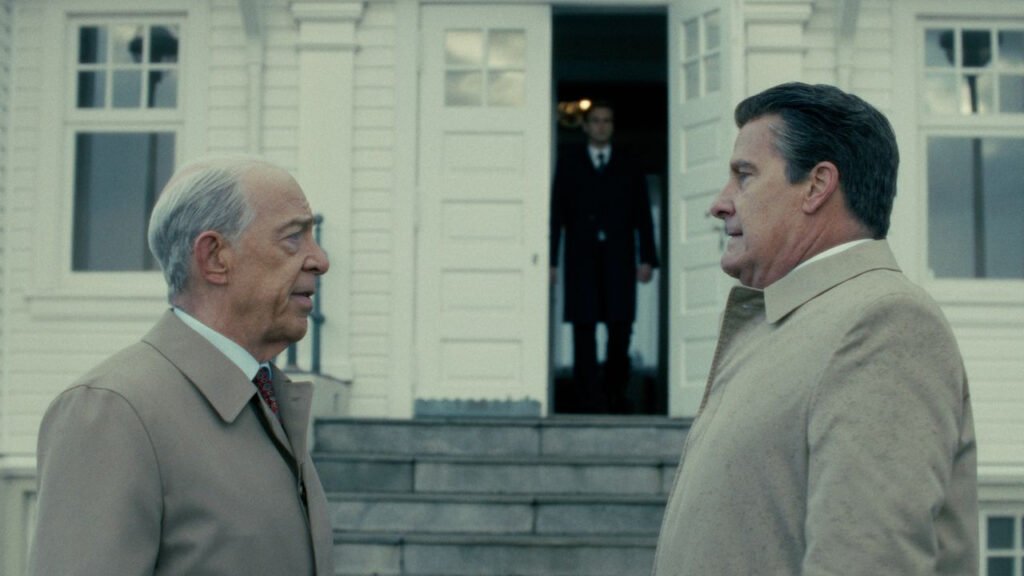
The Brink of War arrived in theaters on August 14, 2026, bringing one of the most dangerous moments of the Cold War to the big screen. Directed by Michael Russell Gunn, the political thriller stars Jeff Daniels as U.S. President Ronald Reagan, Jared Harris as Soviet leader Mikhail Gorbachev, and J.K. Simmons as Secretary of State George Shultz.
The film follows the tense negotiations between Reagan and Gorbachev during the October 1986 Reykjavík Summit, where the two leaders came remarkably close to agreeing on sweeping nuclear disarmament.
What Really Happened At The 1986 Reykjavík Summit?
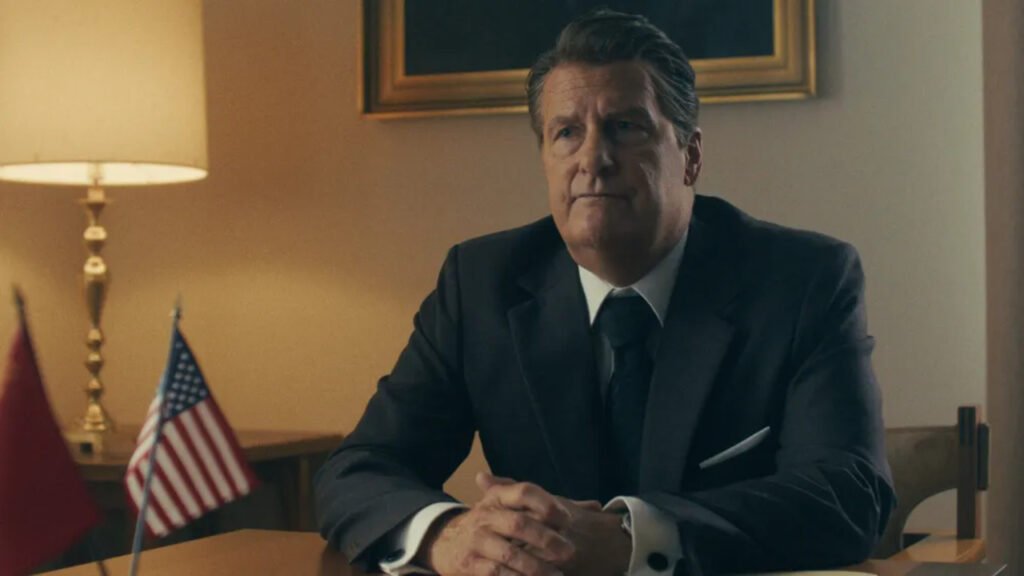
The answer is yes: The Brink of War is based on a real historical event, although the film naturally dramatizes conversations and private moments for the screen. The Reykjavík meeting really happened on October 11 and 12, 1986, and it produced one of the most extraordinary arms-control breakthroughs of the Cold War.
However, Reagan and Gorbachev had arrived in Reykjavík without expecting to negotiate a complete nuclear disarmament agreement. The meeting was intended to prepare the ground for broader discussions, but the negotiations quickly moved much further than either side initially anticipated.
Official U.S. historical records describe Reykjavík as one of the most dramatic episodes in Cold War summit diplomacy, with the two leaders putting forward proposals that could have eliminated all U.S. and Soviet ballistic missiles.
The discussions became so ambitious that the two sides reached common ground on reducing their strategic nuclear arsenals by 50 percent. They also discussed eliminating intermediate-range nuclear weapons and eventually moving toward the complete removal of nuclear weapons.
The idea was extraordinary given the period. The United States and Soviet Union were still locked in an intense military rivalry, yet their leaders were sitting across from each other discussing what a world without nuclear weapons could actually look like.
That is the central historical tension behind The Brink of War. Gunn has explained that much of the film’s dialogue came from the actual declassified transcripts of the summit. He has said that former Secretary of State George Shultz personally introduced him to the historical material, giving the filmmaker a direct route into the conversations that shaped the screenplay.
Gunn later described reading the transcripts and discovering that the real exchanges were already dramatic enough that he did not need to invent much. Jared Harris has similarly said that Gunn would sometimes assure the cast that seemingly unbelievable lines were genuine exchanges between the two leaders.
That commitment to the historical record also influenced the production. The filmmakers shot portions of the movie at Höfði House in Reykjavík, the same location where Reagan and Gorbachev held their historic meeting. The setting gives the film an unusually direct connection to the event it portrays.
The movie’s dialogue reflects the extraordinary stakes. Reagan’s line, “Why don’t we just get rid of all of them? Every single nuclear weapon on earth. Gone,” captures the scale of the discussion. At the same time, Gorbachev’s response, “This is a fantasy! You have come in here with a fantasy!” reflects just how difficult the proposal was.
Why Did Reagan And Gorbachev Fail To Reach A Deal?
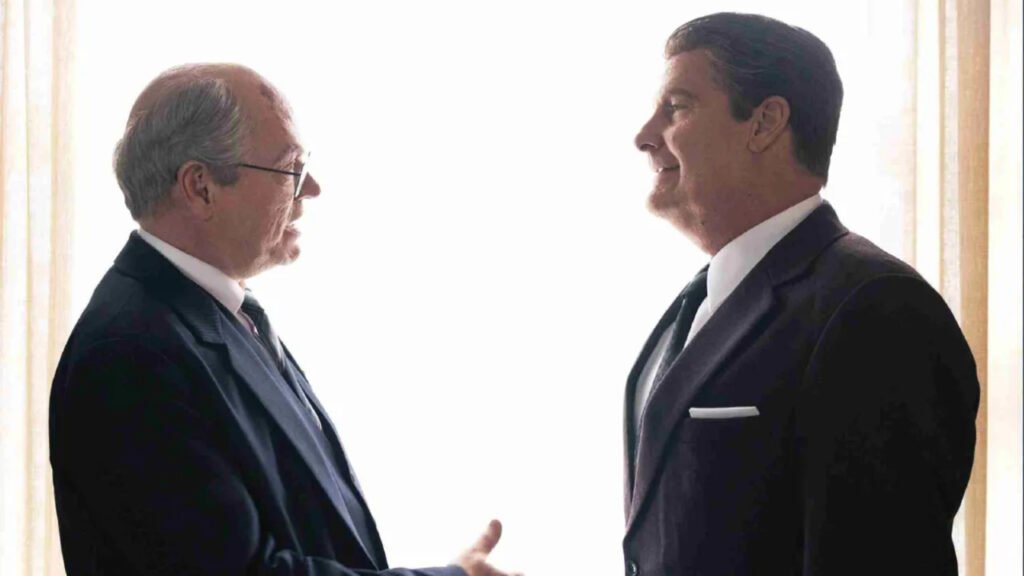
The negotiations ultimately broke down over the Strategic Defense Initiative, or SDI, Reagan’s ambitious missile-defense program that had become one of the biggest sources of tension between Washington and Moscow. Gorbachev feared that a successful American missile shield could undermine the existing nuclear balance by allowing the United States to defend itself against Soviet missiles while retaining its offensive arsenal.
Gorbachev therefore wanted strict limits on SDI. His position included keeping the two countries bound by the Anti-Ballistic Missile Treaty for 10 years and restricting SDI activity during that period largely to laboratory research. Reagan was unwilling to accept those conditions. He was prepared to delay deployment while nuclear weapons were being reduced, but he did not want the Soviet Union to dictate the limits of American research and development.
That disagreement was enough to prevent the historic deal. No formal agreement came out of Reykjavík, even though the summit dramatically expanded the areas where Washington and Moscow had found common ground. Reagan later defended his position, arguing that SDI was important to maintaining American security and encouraging the Soviet Union to negotiate.
The summit’s failure, however, did not make Reykjavík meaningless. The discussions helped establish the framework for the negotiations that followed, and Reagan and Gorbachev continued working toward arms-control agreements. In December 1987, the two leaders signed the Intermediate-Range Nuclear Forces Treaty in Washington, eliminating an entire class of ground-launched missiles in Europe.
That is why the real Reykjavík Summit remains so fascinating. The leaders did not leave Iceland with the agreement they wanted, but they demonstrated that two superpowers with enormous reasons to distrust each other could sit in the same room and seriously discuss ending the nuclear arms race. The Brink of War turns that remarkable failure and breakthrough into its central drama.
You May Also Like
Add us as a preferred source on Google.