

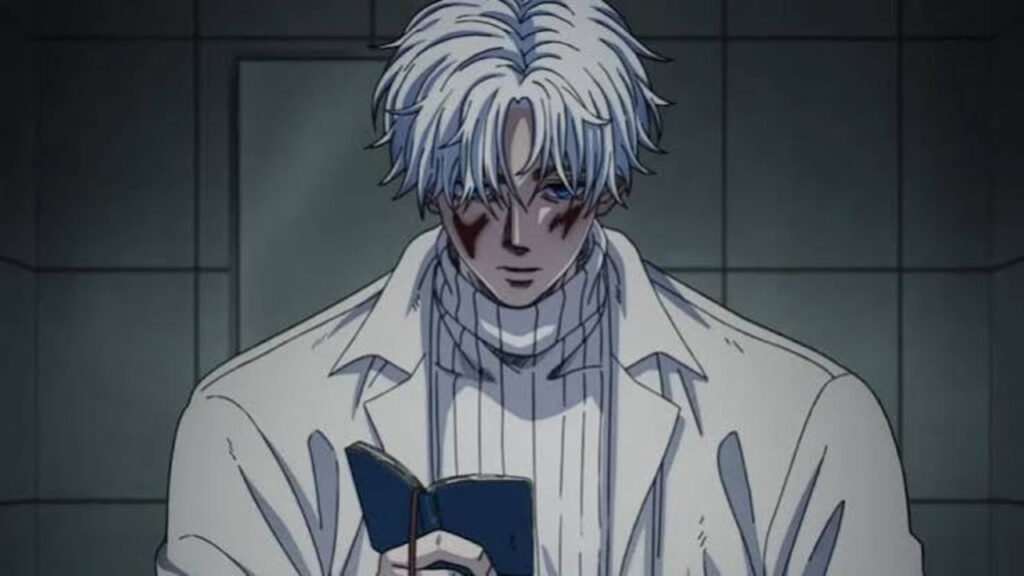
Kei Uzuki has already survived being stabbed through the chest multiple times, and he keeps coming back with a different face and a different skill set every time. Fans watching Sakamoto Days have spent chapters trying to figure out if this is a superpower, a trauma response, or both at once.
The answer sits at the center of what makes Uzuki the manga’s most unsettling antagonist so far. Unlike most Order fighters, whose gifts are physical mutations or trained techniques, Uzuki’s power comes from his mind breaking apart. That makes him one of the only villains in the series whose ability is also his diagnosis, and the story treats that overlap as the whole point.
Dissociative Identity Disorder Is the Ability
Uzuki lives with Dissociative Identity Disorder, and Sakamoto Days frames it as the direct source of his combat power. Under extreme stress, his mind splits off a new persona modeled on someone he has personally fought or watched fight, and that persona arrives with the full combat profile of the original.
This isn’t a vague power boost. When Uzuki manifests Takamura, he doesn’t just get stronger. He becomes Takamura, mimicking the swordsman’s fighting style closely enough to threaten characters who could otherwise handle Uzuki’s base form without much trouble.
The same goes for his Rion persona, which carries a completely different temperament and skill set from Uzuki’s default cold, methodical killer mode.
The catch is that these personas need a trigger. Uzuki appears to require both extreme psychological pressure and a prior connection to the person he’s copying, which is why his library of alternate selves is built entirely from people who mattered to him in high-stakes, often violent moments.
Related: Who Is Rion Akao? The Death That Started Sakamoto Days’ Final War
Why Sakamoto and Akira Refuse to Accept Rion
The Rion persona is where the series pushes hardest on the horror of Uzuki’s condition, and it’s also where the story gets its most emotional gut punch. Rion was someone Uzuki cared deeply about before losing him, and the persona lets Uzuki talk, fight, and think as though he had never died.
Sakamoto rejects this outright, telling Uzuki flatly that the real Rion would have killed him without hesitation, which cuts far deeper than any physical attack in their fight. Akira, Rion’s own niece, delivers a similar rejection, insisting that Uzuki accept that Rion is gone rather than cling to a copy built from grief.
That pushback matters because it reframes Uzuki’s power. Every persona is a copy based on memory, not a resurrection, and the people who knew the originals best are the ones forcing that distinction on him.
Uzuki’s rare physiology, including a mirrored heart condition that has let him survive attacks that should have killed him outright, only adds to the sense that he shouldn’t be functioning at all, let alone fighting at this level. Between the copied combat skills and the body that refuses to die, Sakamoto Days has built a villain whose biggest threat is how much of himself he’s already lost.
Where this goes next depends entirely on whether Uzuki can keep generating new personas or whether his fractured mind finally runs out of people to become. Either way, the fallout from the Takamura and Rion arcs is still shaping the fights ahead in Sakamoto Days‘ latest chapters.
You May Also Like:
Add us as a preferred source on Google.
Conversation