

Lionsgate and director Destin Daniel Cretton have officially launched a worldwide casting search for Team 7 for the live-action Naruto adaptation. Announced in July 2026, the open casting call covers Naruto Uzumaki, Sasuke Uchiha, and Sakura Haruno, placing the franchise’s three central characters at the center of one of Hollywood’s biggest anime adaptations.
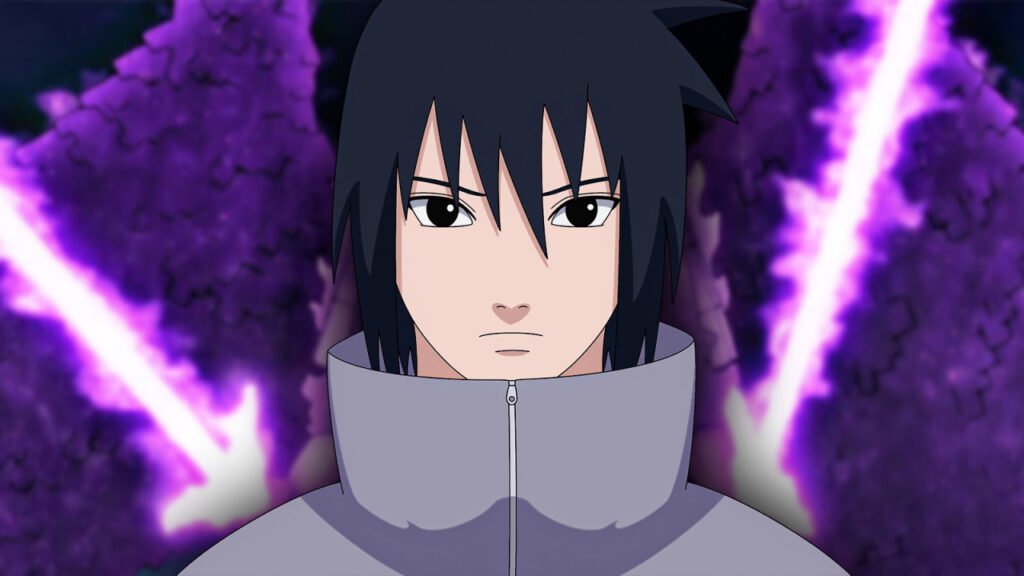
However, casting Sasuke presents a different challenge from the other two leads. The role combines a specific visual design, restrained emotional acting, technically demanding action choreography, and a relationship with Naruto that carries much of the story. Each of those elements must work together for the adaptation to reflect the character as he appears throughout the manga.
Masashi Kishimoto Faced the Same Challenge While Creating Sasuke
Sasuke was not part of Masashi Kishimoto‘s original concept for Naruto. The character was introduced after editor Kosuke Yahagi suggested giving Naruto a direct rival. That decision shaped the central conflict of the series and established one of manga’s defining rivalries.
Later explained in interviews and manga volume notes, that Sasuke became the most difficult character for him to design and draw. Among the series’ main cast, he consistently required the most revisions before reaching a final appearance.
The difficulty came from Sasuke’s age and personality. Kishimoto wrote him as someone who carried himself with unusual maturity despite being the same age as Naruto and Sakura. While drawing him, Sasuke often looked older than intended, prompting repeated corrections. A live-action adaptation faces the same balance. The actor must fit the age of Team 7 while naturally conveying the composure that defines the character.
Sasuke’s Personality Leaves Little Room for Misinterpretation
Sasuke’s personality is built around loss. After witnessing the destruction of the Uchiha clan, he dedicates himself to becoming strong enough to confront his brother, Itachi. That goal shapes his decisions throughout much of the story.
Those experiences make Sasuke quiet, emotionally guarded, and focused almost entirely on revenge. Unlike Naruto, who openly expresses his emotions, Sasuke rarely reveals what he is thinking, making subtle performance choices essential in live action.
has repeatedly described Sasuke as a fundamentally pure person rather than a traditional villain. His loyalty to his family remains constant even as grief and isolation influence his choices. An actor, therefore, has to communicate those emotions without changing the character’s reserved personality or reducing him to constant anger.
The Action Requires Precision
Daniel Cretton’s previous films place significant emphasis on performers executing detailed action choreography. His work on Shang-Chi and the Legend of the Ten Rings relied on clear martial-arts movement and extended fight sequences that highlighted precision rather than rapid editing.
Sasuke’s fighting style follows the same principles. From his earliest appearances, he is presented as a prodigy whose movements are efficient, disciplined, and technically refined rather than unpredictable or forceful.
The Sharingan increases those physical demands. The ability allows Sasuke to observe, anticipate, and replicate an opponent’s techniques with exceptional accuracy. To make that ability believable, the actor must demonstrate balance, posture, coordination, timing, and controlled movement throughout the choreography, rather than relying entirely on stunt performers.
Team 7 Depends on the Naruto and Sasuke Dynamic
Masashi Kishimoto designed Naruto and Sasuke as opposing forces that develop together throughout the series. Their rivalry shapes both characters and remains central to the story from the beginning to the end.
That relationship depends on more than competition. The two characters challenge each other’s beliefs, share similar experiences of loneliness, and repeatedly shape each other’s decisions even as they take different paths.
Because of that, Sasuke cannot be cast independently of Naruto. The actors must create a relationship that reflects rivalry, trust, resentment, and mutual understanding across the film. Matching that chemistry while meeting the visual, emotional, and physical demands of the role makes Sasuke one of the adaptation’s most demanding characters to cast.
You May Also Like
Add us as a preferred source on Google.
Conversation