


The ending of Todd Phillips’ Joker has divided audiences since 2019, and the debate hasn’t cooled. Did Arthur Fleck really inspire a city-wide revolution, or did none of it happen the way we saw it?
The film raises that question honestly. From the very first scene, Joker plants seeds of doubt about what is real and what exists only inside Arthur’s fractured mind. By the final act, those seeds have grown into something genuinely unsettling.
Every Clue That Arthur’s Story Might Be a Delusion

The most obvious tell is the relationship with Sophie Dumond, played by Zazie Beetz. Arthur builds an entire romantic storyline with her across the film’s second act. They go on dates. She attends his comedy show. She’s there when he visits his sick mother in the hospital.
Then, in one of the film’s coldest scenes, we discover Sophie has no idea who Arthur is. She’s terrified when he shows up at her apartment. The entire relationship was a fabrication, something Arthur’s mind constructed to fill a void. Phillips confirmed in interviews that this was intentional, a signal that Arthur’s narration cannot be trusted.
That reveals and reframes everything. If Arthur invented a relationship wholesale, what else did he invent?
The talk show fantasy sequence reinforces this. Arthur daydreams about appearing on Murray Franklin’s show and being embraced by the host like a son. When he actually does appear on the show, he murders Murray on live television. The gap between what Arthur imagines and what actually happens is the film’s central tragedy.
READ MORE: Why the Joker Actually Wins in The Dark Knight: The Ending Explained
What the Final Scene in Arkham Is Actually Telling You
The film ends not with Arthur on the hood of a police car, arms outstretched, crowd cheering below. It ends with him in Arkham State Hospital, speaking to a therapist he seems to find amusing. He tells her she wouldn’t understand the joke he’s laughing about. Then he walks down a white hallway, leaving bloody footprints behind.
That Arkham scene is set at a different point in time than the rest of the movie. The implication is significant. Arthur is already institutionalized when he tells the story we’ve been watching. Which means the entire film could be the story Arthur tells himself, the version where he finally mattered, finally fought back, finally became something more than a broken man nobody saw.
Phillips has never confirmed the film is entirely in Arthur’s head, and that ambiguity is deliberate. The riot, the murders, the clown masks spreading through Gotham, these events are presented as real within the film’s world. But the Arkham framing asks you to sit with the possibility that a deeply unreliable narrator has been guiding you the whole time.
The Joker Origin Question and Why the Film Refuses to Answer It
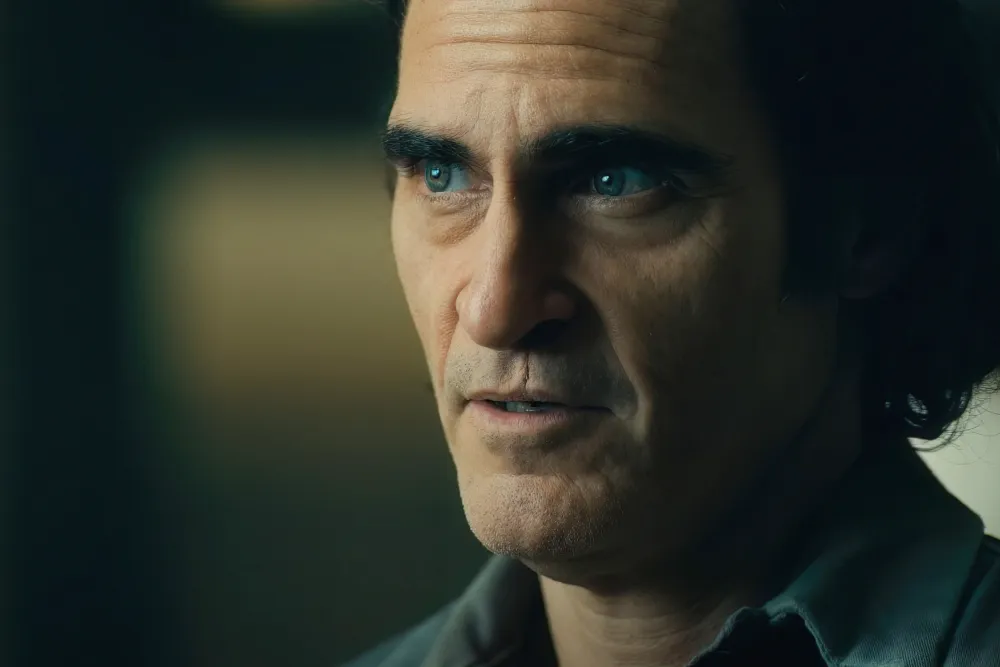
One layer of the ending that often gets overlooked is what it means for the broader DC mythology. Joker flirts with being a Batman origin story. Young Bruce Wayne appears. Thomas Wayne looms over the plot. The riots that close the film are the same riots in which Bruce’s parents are killed.
But the film deliberately avoids locking itself into canon. Is Arthur Fleck the Joker? Or is he just someone who inspired the idea of the Joker, a symbol that eventually took on a life of its own? The final scene in Arkham suggests Arthur himself might not know the answer, or might not care. The Joker stopped being a person and became a mask the moment Gotham put it on.
That ambiguity is the point. Phillips and Joaquin Phoenix weren’t making a comic book movie. They were making a character study about a man so invisible to society that the only way he could be seen was by burning everything down, or by imagining that he did.
The bloody footprints at the end don’t belong to a supervillain. They belong to someone who finally, in his own mind, got the last laugh.
Joker: Folie a Deux, the 2024 sequel starring Joaquin Phoenix and Lady Gaga, revisited Arthur’s story and continued to interrogate the line between his reality and his fantasy.
You May Also Like
Add us as a preferred source on Google.
Conversation