

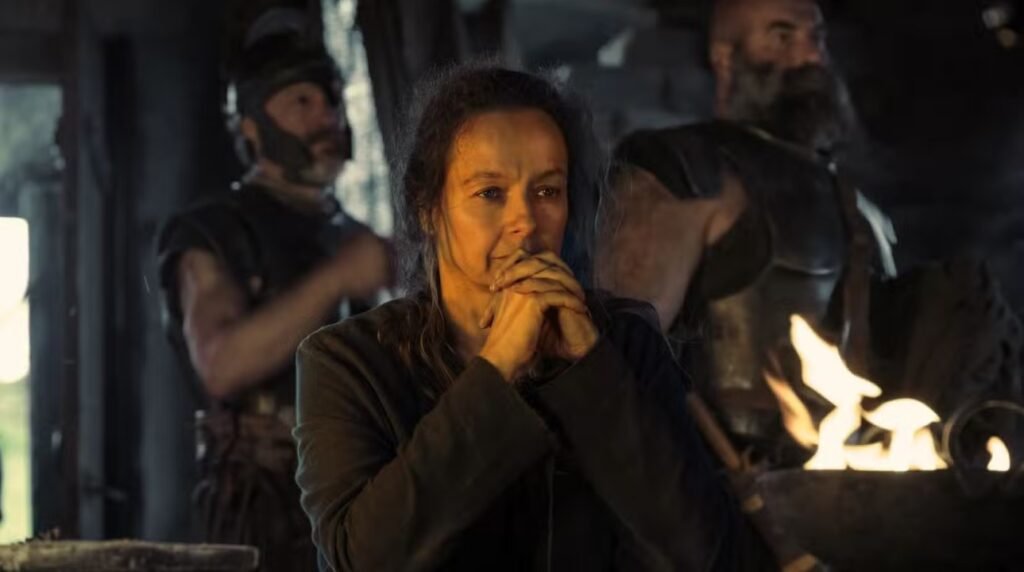
Christopher Nolan‘s The Odyssey has a scene in Circe’s cabin that audiences are still talking about, and the question is simple. Why do Odysseus‘ men turn into pigs? The answer starts with Homer, but Nolan changes the reason behind it.
The transformation is one of the oldest episodes in Greek mythology, and the film keeps its core intact. What changes is the mood, with critics calling it the scariest scene of Nolan’s career. More people are seeing it too, with the film past $1.77 billion worldwide, Nolan’s biggest hit, and the highest-grossing R-rated movie ever.
Where Circe’s Pig Curse Comes From in Homer’s Odyssey
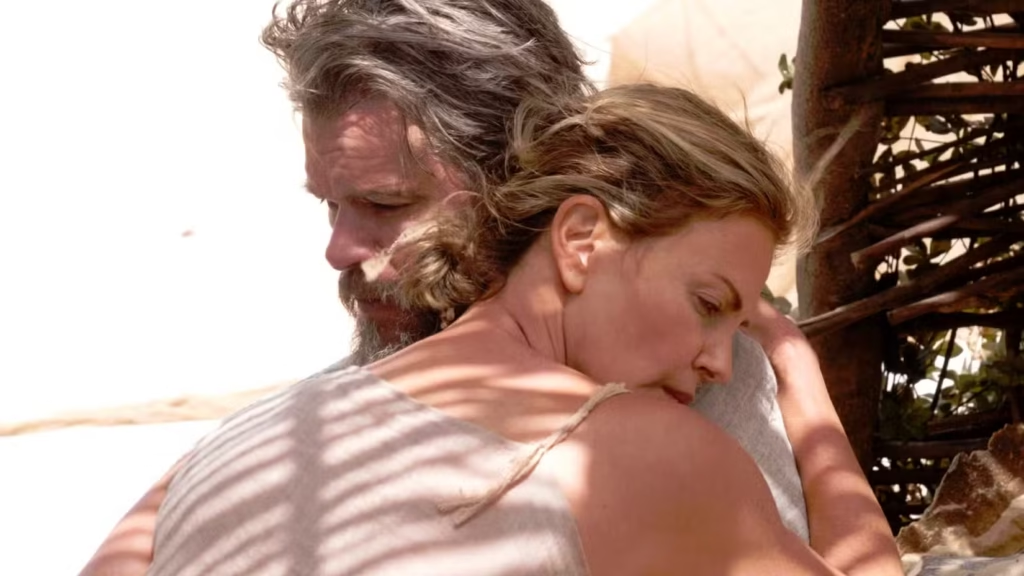
In Book 10 of Homer’s poem, Circe is a sorceress living on the island of Aeaea. Odysseus’ men are drawn to her home by her singing, and she feeds them a mix of barley, cheese, honey, wine, and drugs. She then touches each man with her wand and turns him into a pig, though their minds stay human.
Odysseus avoids the same fate because Hermes warns him and hands him a protective herb called moly. With it, he resists her magic and forces her to undo the curse. He then stays on Aeaea for a full year before sailing for home.
Homer’s Circe plays the gracious hostess until the trap closes, and that image has made her shorthand for dangerous, seductive power for nearly 3,000 years. Nolan strips the hospitality away entirely.
Read More: Christopher Nolan Reveals the Martin Scorsese Film That Shaped ‘The Odyssey’
Why Nolan’s Circe Turns the Men Into Pigs
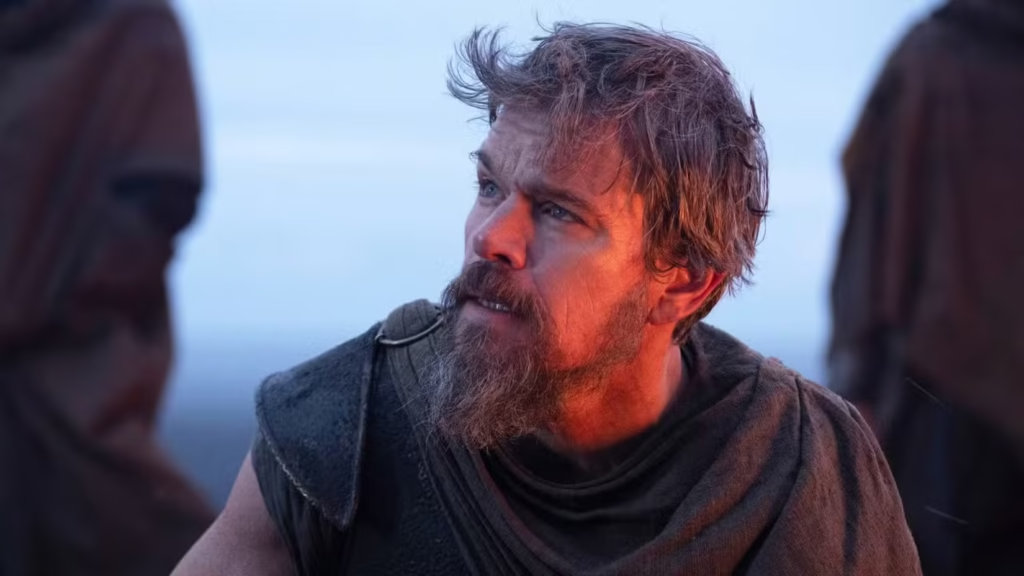
Samantha Morton’s Circe lives alone with her animals and is quick to assume the worst of Odysseus’ crew, as though travelers like them have burned her before. While Odysseus hunts along the shoreline, his men devour her stew and begin to change. The film treats the transformation as Circe exposing what the men truly are.
Nolan clearly sees her as central, comparing Morton’s performance to Heath Ledger’s Joker and calling it the “fulcrum” of his retelling, according to the Los Angeles Times. Meanwhile, Morton has said she started humming during the scene without planning to, and when Nolan said nothing, she kept doing it.
The sequence itself was made without CGI, according to Morton, with the camera lingering as Circe’s hands stretch and mold the men’s skn into pig faces, marking it arguably one of the scariest scenes of Nolan’s career.
View this post on Instagram
The scene carries weight beyond the shock. Odysseus’ crew has spent ten years at war, and we read the curse as the film’s sharpest comment on what that has left behind in them. Circe’s magic works by revealing something that was already there.
The Odyssey arrives on digital, 4K Ultra HD Blu-ray, and DVD on November 17, 123 days after its July 17 theatrical debut. However, Universal has not announced a Peacock date yet.
You May Also Like:
Add us as a preferred source on Google.
[…] Related: Why Do Odysseus’s Men Turn Into Pigs? Circe’s Magic Explained […]