

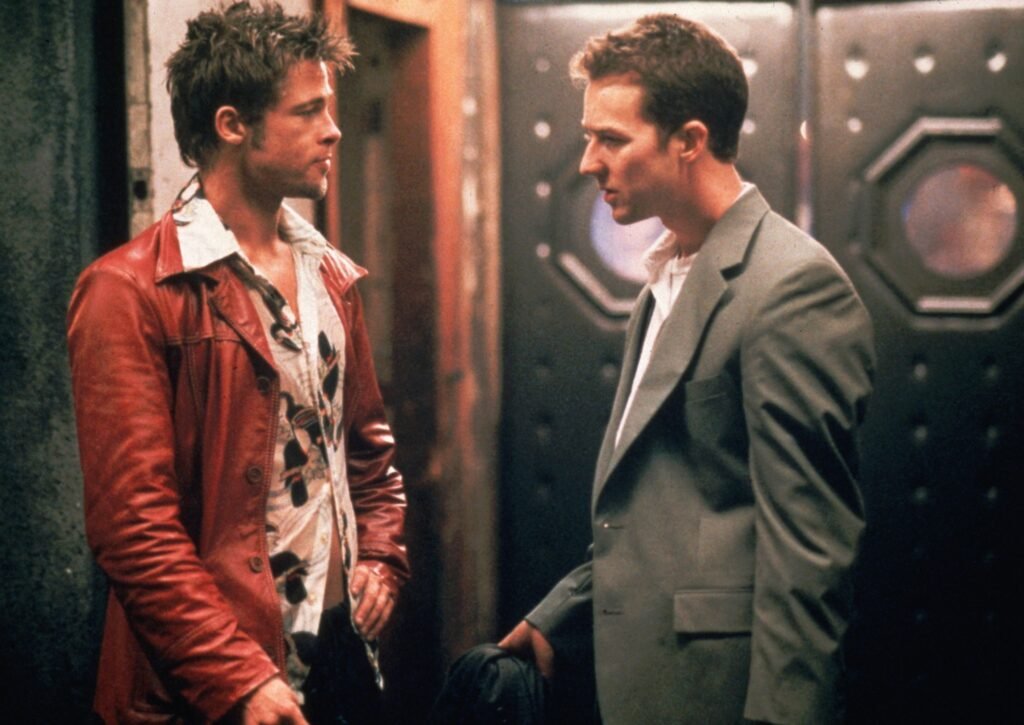
Most people who talk about Fight Club are either missing the point completely or arguing with someone who is. After 25 years, David Fincher’s adaptation of Chuck Palahniuk’s novel still gets reduced to the same tired debate: is it a manual for male rage, or a critique of it?
The answer has always been right there on screen. The film is not celebrating Tyler Durden. It is diagnosing him. And more importantly, it is diagnosing the emptiness that created him.
The Narrator Is the Point, Not Tyler
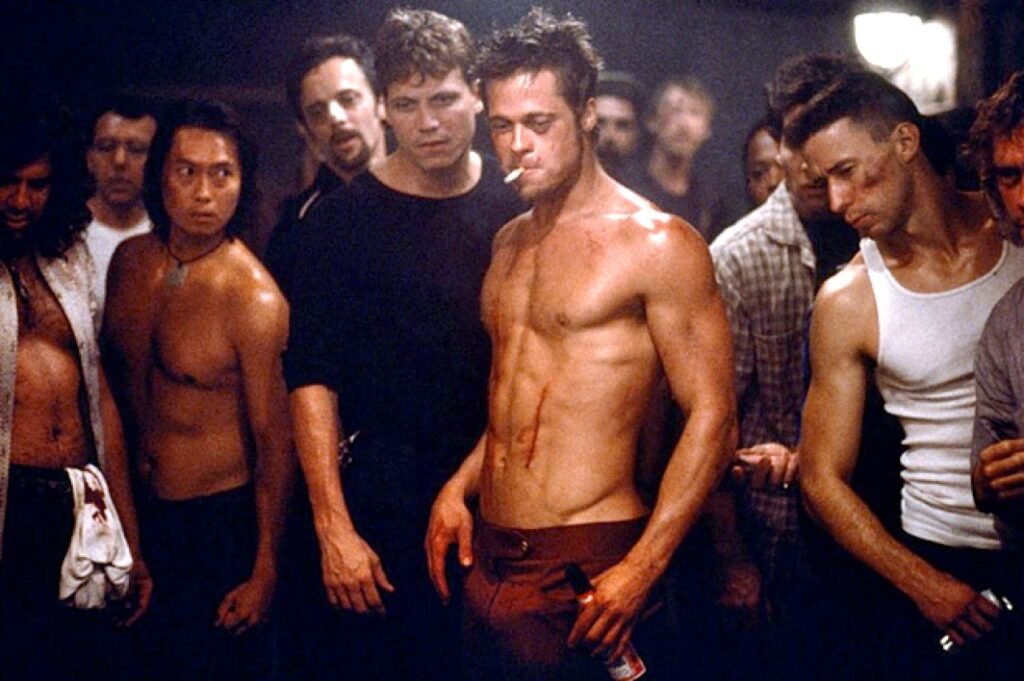
Here is the thing that gets glossed over constantly: Tyler Durden is not the protagonist of Fight Club. The Narrator is. And the Narrator is a deeply unwell man who has constructed an idealised version of himself out of everything he was told he was supposed to want to be.
Tyler is magnetic, physical, fearless, sexually confident, unbothered by the system. He is, in the most literal sense, a fantasy. The film spells this out in the third act, but it has been telling us the whole time. Every scene Tyler is in is a scene the Narrator is imagining. Every piece of Tyler’s philosophy is the Narrator’s own repressed frustration given a face and a voice.
What the film is actually doing is showing us what happens when a man has no language for his own pain. The Narrator cannot name what is wrong with him. He cannot process his alienation, his loneliness, or his sense of purposelessness through any framework society has given him. So he invents a person who seems to have it all figured out. That invention then takes over his life and nearly destroys everything around him.
That is not a celebration of Tyler Durden. That is a tragedy about the Narrator.
What the Film Gets Genuinely Right
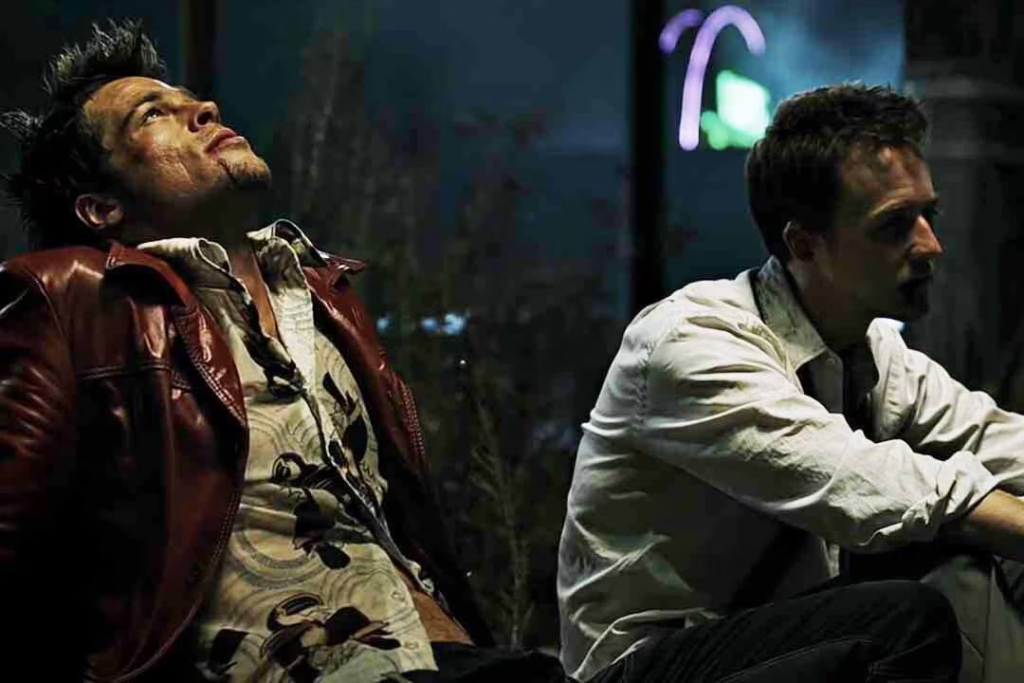
Fight Club understands something about a certain kind of male experience that most films do not bother with. The opening act is a portrait of consumerism as a substitute for identity. The Narrator furnishes his apartment from catalogues, describes his possessions in brand terms, and feels nothing. He attends support groups for illnesses he does not have because it is the only place he can cry.
That sequence is not played for laughs. It is genuinely sad. And it is the film’s most honest observation: that men who have been told their worth lies in what they own and how stoic they are will eventually break in one direction or another.
The fight club itself, before it becomes Project Mayhem and slides into fascism, gives the Narrator something real. Physical presence. Consequence. Connection with other men who are also quietly falling apart. The film does not say this is healthy. It says this is what happens when nothing else is available.
Bob, the man with gynaecomastia from testosterone treatments who becomes one of the fight club’s first casualties, is the film’s emotional anchor. His death is the moment the Narrator begins to wake up. The system Tyler built consumes the very people it claimed to liberate.
The film’s final act is not ambiguous about any of this. The Narrator literally shoots himself in the face to kill Tyler. That is not a triumphant ending for toxic masculinity. It is a man destroying the part of himself that had been doing the most damage.
Fight Club is not a film about men who need to hit each other. It is a film about men who have never been taught how to be honest about anything, and what that costs them. That distinction matters. And it is one that the conversation around this film has been avoiding for over two decades.
With Fight Club’s 25th anniversary continuing to draw renewed critical attention, now is as good a time as any to actually reckon with what Fincher and Palahniuk put on the page and on the screen. The first rule might be not to talk about it. But the more useful rule is to actually watch it.
You May Also Like:
Add us as a preferred source on Google.
Conversation